When evaluating weld quality, a dependable set of tools for bend tests, fillet checks, and precision measurements is essential. This guide highlights select welding devices and gauge sets that help verify weld integrity, measure fillet dimensions, and support routine maintenance tasks. From versatile MIG welders to dedicated fillet gauges and digital readouts, the following products cover common needs in a hands-on workshop. Each pick is evaluated for ease of use, accuracy, and value for American DIYers and professionals alike.
| Product | Brand | Key Use |
|---|---|---|
| HITBOX 140A MIG Welder | HITBOX | Flux core welding, lift TIG, stick |
| HITBOX 140A MIG Welder Gasless | HITBOX | Dual-voltage MIG, flux core, 3-in-1 welding |
| RIVERWELD 7 Piece Fillet Weld Set Gage | RIVERWELD | Fillet leg and throat measurement |
| RIVERWELD Digital Readout Welding Gauge | RIVERWELD | Angle and height display for weld checks |
| YESWELDER MG-11 Fillet Gages | YESWELDER | Fillet weld size verification |
HITBOX 140A Mig Welder Machine 110v 3 in 1
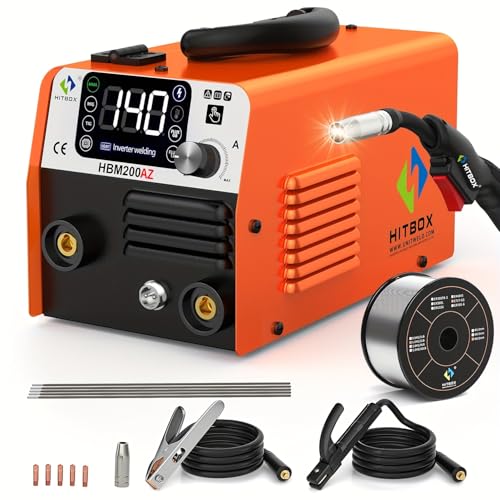
The HITBOX 140A MIG welder is a compact, multi-process unit designed for versatility in sheet metal and light fabrication. It features a one-knob intelligent control system that automatically adjusts welding current for a consistent bead. The device supports flux-core MIG welding, lift TIG, and stick welding, making it suitable for a range of materials, including thin steel and stainless steel. The 140A output is paired with adjustable current and feed control, enabling better control over weld quality for bend tests and fillet joints alike. Safety protections include overcurrent, overvoltage, and overheating shutdown, complemented by a fan cooling system to extend service life.
Key considerations for bend test work: reliable current control, stable arc during fillet and butt welds, and portability for on-site checks. This HITBOX model emphasizes user-friendly operation and a compact form factor, which is helpful for quick bend tests and in-shop adjustments. While not a dedicated metrology device, its solid arc performance and protective features support consistent welds needed when evaluating bend integrity in practice.
HITBOX 140A MIG Welder Gasless 110V/220V 3 In 1

This dual-voltage MIG welder is designed for flexibility in a shop that requires both 110V and 220V options. It supports Flux Core MIG, Lift TIG, and Arc/MMA welding, giving users the ability to tackle varied materials and thicknesses. With adjustable wire feed speed and power settings, the operator can tailor welds for bend tests, fillets, and butt joints. A 60% duty cycle at 120 amps helps maintain performance during longer sessions, contributing to consistent welds when evaluating bend test results. Note that some TIG torch configurations may require additional accessories.
From a bend test perspective, the ease of switching modes and controlling heat input is valuable. This unit provides a straightforward interface for setting up test welds, achieving stable arcs, and qualifying weld pass criteria without complex reconfigurations. The robust build and protective features help reduce downtime caused by overheating during rigorous testing sequences.
RIVERWELD 7 Piece Fillet Weld Set Gage MG-11

Fillet weld gauges are essential for confirming weld geometry in bend tests and structural joints. This 7-piece set from RIVERWELD provides fillet leg and throat measurements, with both metric and inch markings on each side for quick cross-referencing. The gauges help verify weld profiles against drawing specifications and are especially useful when inspecting joints that must pass bend tests or fatigue screenings. The sturdy build and clear scale markings support accurate checks, enabling repeatable quality control in a workshop or field setting.
For bend test scenarios, having precise fillet gauges accelerates the validation of fit-up and bead size. These gauges work well alongside basic welding equipment, offering a complementary metrology capability that reduces subjective assessments and improves confidence in test outcomes. They are compact, portable, and designed for frequent use in daily welding workflows.
RIVERWELD Digital Readout Welding Gauge

This digital gauge adds a modern measurement layer to bend test workflows. With a body display offering angle readings and height/distance cues, it simplifies checking weld bevels, fillet heights, and component alignment. The device supports quick metric-to-inch conversions and zero-setting at any position, reducing setup time and increasing measurement reliability. Such features can streamline the quality assurance process for welds subjected to bend tests, especially when precise clamp positions and joint angles matter for testing outcomes.
Compared to traditional manual gauges, this tool provides faster feedback and reduces interpretation errors during critical bend assessments. It’s a practical complement to welder sets, fillet gauges, and standard measurement tapes, helping ensure that test specimens meet geometric criteria with repeatable accuracy.
YESWELDER MG-11 Fillet Gages Set

The YESWELDER MG-11 gauge set provides a seven-piece fillet gauge collection with both inch and metric references. Fillet leg and throat measurements are clearly etched, enabling swift confirmation of weld geometry against joint specifications. This kind of gauge is particularly useful during bend tests where the integrity of fillet welds and throat dimensions directly influence performance under load. The compact and portable design makes it a staple in shop kits and on-site testing kits where bend criteria must be monitored consistently.
In bend test workflows, having reliable fillet gauges from YESWELDER facilitates quick pass/fail decisions and reduces measurement guesswork. The combined metric and inch options support use with various drawing standards, ensuring accuracy across different project requirements. The kit’s portability and organized presentation help teams maintain a repeatable testing routine.
Buying Guide: Key Purchase Considerations For Bend Test And Weld Verification
- Process versatility: If you perform multiple welding types (MIG, TIG, stick), consider multi-function machines that cover core needs without requiring separate units. Dual-voltage options add flexibility for different shop setups and on-site work.
- Arc reliability and control: For bend tests and fillet checks, stable arcing and precise current control improve repeatability. Widgets with adjustable feed speed and power settings help dial in welds for different materials and thicknesses.
- Metrology complement: A mix of gauges (fillet, depth, digital readouts) supports thorough weld verification. Digital gauges speed up measurements and reduce human error, while traditional fillet gauges provide quick, tactile checks.
- Durability and protection: Look for units with built-in safety protections (overcurrent, overvoltage, overheating) and sturdy construction, especially for field work and longer testing sessions.
- Portability and space: Compact welders and lightweight gauges suit small shops or mobile job sites. Ensure the kit includes clearly marked scales and durable cases for organization.
- Compatibility with standards: Fillet gauge sets should offer both metric and inch scales to align with common engineering drawings, customer specs, and industry codes.
- Cost-to-value balance: While high-end units provide features, affordable multi-tool setups that include essential gauges often meet the needs of hobbyists performing bend tests and weld inspections.
- Maintenance needs: Consider equipment with straightforward maintenance requirements, accessible spare parts, and clear safety instructions to minimize downtime during test programs.
In summary, for a practical approach to welding bend test work, combine a capable MIG welder (or two for versatility) with a selection of gauge tools that cover fillet checks and angle measurements. This combination supports reliable weld quality assessments, repeatable test results, and efficient shop workflow across common bend and fillet scenarios.