When choosing a viscosity meter for paint, coatings, or related liquids, accuracy, ease of use, and data options matter. This guide highlights five capable devices that help verify coating viscosity before spraying, coating, or finishing. Each product is evaluated for portability, measurement method, and practical benefits in real-world painting and coating workflows.
Below is a quick overview of the selected items to help you compare at a glance. The table lists the product name, brand, and a few defining strengths.
| Product | Brand | Strengths |
|---|---|---|
| TCP Global Brand SG244 Liquid Thickness & Viscosity Measuring Cup Ford # 4 | Master Airbrush | Portable, quick viscosity checks; simple gravity flow cup |
| HomeRight C900205M Viscosity Paint Consistency Cup | HomeRight | Dial-in spray atomization; pre-paint viscosity verification |
| VTSYIQI Stormer viscometer Viscosity Tester | VTSYIQI | Digital rotary with color touchscreen; real-time data |
| Digital Rotary Viscometer with 4 Rotors and Temperature Probe | GOYOJO | RS232 data, temperature probe, multi-rotor options |
| Liquid Consistency Thickness Cup, Viscosity Measuring Cup | Psyqtsuary | Portable, gravity-based, quick viscosity checks |
TCP Global Brand SG244 Cup For Viscosity

The Ford #4 viscosity cup in the SG244 kit is a portable instrument for measuring the viscosity or thickness of liquids such as paint, varnish, lacquer, and inks. It is designed to help users verify coating viscosity before application, supporting better atomization and a smoother finish. This type of cup uses gravity to regulate the flow of a known liquid volume through a bottom orifice, providing repeatable timing data for viscosity calculation. The device is widely used for quick field checks where speed matters and accuracy is driven by consistent flow times.
Key usage notes include timing the flow of a measured volume through the orifice and comparing results across batches or batches of coatings. As a simple tool, it pairs well with spray equipment calibration workflows, offering a straightforward path to ensuring your coatings spray evenly, reducing issues like orange peel and dry spray. It is especially suitable for hobbyists and professionals who need fast viscosity checks on-site.
In practice, this cup helps ensure the coating is neither too thick nor too thin for the spray equipment in use. While it delivers quick, actionable data, it does not replace more advanced lab viscometers for complex formulations. It remains a valuable component of a broader quality control approach that includes temperature awareness and consistency across batches.
HomeRight C900205M Viscosity Cup

The HomeRight viscosity cup is a practical tool for quickly checking the viscosity or thickness of paints, varnishes, stains, inks, and other liquids. By timing the flow of the coating through the cup, users can dial in proper atomization of their spray equipment prior to spraying. The device relies on gravity to deliver a timed flow, providing a repeatable measure that helps optimize spray performance and coating consistency. Color variations of the cup may be observed, but fundamental operation remains consistent across models.
This cup supports pre-application checks that reduce common spray issues and improve spray pattern quality. It is well-suited for painters, refinishing professionals, and DIY enthusiasts who want reliable viscosity measurements without complex instrumentation. The simplicity of use makes it a good companion for routine maintenance and quick-quality checks in shop environments.
While highly usable, the HomeRight model is best employed as part of a broader system that also considers temperature effects, substrate compatibility, and nozzle selection. It does not provide digital readouts, but its straightforward timing method makes it accessible for quick decision-making in real-world painting situations.
VTSYIQI Stormer Viscometer

The VTSYIQI Stormer viscometer is a digital rotational viscometer featuring a 5-inch color touch screen and a KU-value display. It emphasizes convenient data presentation and real-time trend tracking, which is helpful for monitoring viscosity changes during formulation, mixing, or thinning. The device supports reading KU, CP, G, and temperature, and it presents data in a user-friendly interface that reduces the guesswork often involved in viscosity assessment of paints and inks. It is designed for more detailed viscosity work, including ongoing monitoring for quality control.
With a digital rotary design, this unit provides clear numeric outputs and trend visuals. It is a strong option for laboratories, paint manufacturers, and workshops that require more advanced data capture, including temperature to understand viscosity under varying conditions. As with any digital instrument, calibration and proper maintenance help ensure accuracy and repeatability across multiple testing sessions.
Users should be mindful of the setup requirements, including proper rotor selection and calibration intervals. The Stormer model is most valuable when paired with a stable temperature environment and a workflow that benefits from on-screen trend visualization and digital data capture for reporting or regulatory compliance.
Digital Rotary Viscometer With 4 Rotors

The Digital Rotary Viscometer from GOYOJO is a feature-rich instrument designed for precise viscosity measurements of inks, paints, coatings, adhesives, greases, and cosmetics. It includes a temperature probe, an RS232 data interface, and compatible software for data management. The instrument supports multiple rotors and speeds, enabling a wide viscosity range from low to high. Real-time curves, data saving, and the ability to connect to a computer for storage and report generation are key advantages for lab environments and production facilities.
Performance figures claim a measurement accuracy of approximately ±3% with a wide range from very low to very high viscosity (10 mPa·s to 200,000 mPa·s). The built-in LED display and soft-touch screen simplify operation, while automatic rotor-speed matching helps new users select appropriate measurement configurations. Users should plan for data management needs and weather the device’s higher price tag with the value of deeper data insights and traceability in manufacturing workflows.
Liquid Consistency Cup By Psyqtsuary
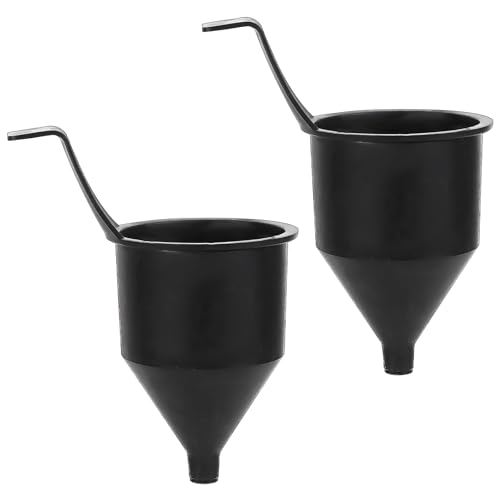
The Psyqtsuary liquid consistency thickness cup is a portable viscosity measuring tool designed to determine the flow time of liquids like paint, varnish, and lacquers. It uses gravity to regulate the flow of a known volume through a bottom orifice, allowing quick viscosity estimation. By confirming viscosity prior to application, users can achieve proper atomization and a smooth, professional-looking finish. The device is compact and suitable for field use or small shops where fast checks are beneficial.
Overall, the Psyqtsuary model emphasizes quick checks and practical accuracy in everyday painting tasks. Its simplicity makes it accessible for hobbyists and professionals who need fast decision data without extensive instrumentation. As with other gravity-based cups, maintaining clean orifices and controlling temperature improves the reliability of results across different liquids and environmental conditions.
Buying Guide
When selecting a viscosity meter for paint and coatings, consider these factors to ensure you get the right tool for your workflow:
- Measurement method: Gravity-based cups are fast and simple for on-site checks, while digital viscometers offer higher precision and data logging for lab-style workflows.
- Viscosity range and rotor options: If you expect a wide range of liquids, choose a model with multiple rotors or a broad range (low to high viscosity) to cover paints, coatings, inks, and adhesives.
- Temperature compensation: Temperature affects viscosity. Devices with built-in temperature probes or temperature compensation provide more reliable comparisons, especially for coatings that cure or thicken as they warm or cool.
- Data connectivity: For production or QC environments, consider models with RS232/USB/SD storage or software for data management and traceability.
- Portability: On-site checks benefit from compact, lightweight cups; larger benchtop viscometers suit lab settings with higher precision requirements.
- Calibration and maintenance: Regular calibration ensures accuracy. Look for instruments with clear calibration instructions and accessible spare parts or standards.
- Substrate considerations: Some devices are optimized for paints, varnishes, and inks; others also measure pastes or gels. Choose based on your material types.
- Budget and total cost of ownership: Consider not only the purchase price but also maintenance, consumables, and data management requirements over time.
- Ease of use: For frequent checks, a simple interface and quick-read timing may be more valuable than highly technical features.
In practice, many users adopt a combination approach: a gravity-based cup for quick field checks and a digital viscometer for in-depth formulation work and quality control. Whichever route you choose, pairing viscosity measurement with temperature awareness and consistent testing protocols will yield the most reliable results for paint, coatings, and related liquids.