Choosing the right vacuum chamber is essential for stabilizing wood, removing air and moisture, and achieving a durable, high-quality finish. This guide highlights five top options from reputable brands designed for wood stabilization, resin degassing, and related applications. Each product emphasizes strong construction, reliable vacuum performance, and clear visibility through tempered glass lids. Read on to compare capacities, features, and how they fit different project needs.
| Product | Brand | Capacity | Key Benefit |
|---|---|---|---|
| VEVOR 5 Gallon Vacuum Chamber | VEVOR | 5 Gallon | Large interior for bubble-free stabilization |
| BACOENG 5 Gallon Vacuum Chamber | BACOENG | 5 Gallon | High vacuum, durable stainless steel with glass lid |
| Orion Motor Tech 2 Gal Vacuum Chamber | Orion Motor Tech | 2 Gallon | Comprehensive kit with pump and accessories |
| PB Motor Tech 5 Gallon Vacuum Chamber Kit | PB Motor Tech BMT | 5 Gallon | Complete degassing kit with robust pump |
| BACOENG 3 Gallon 4.5 CFM Vacuum Chamber | BACOENG | 3 Gallon | Strong chamber with high-flow pump and clear lid |
Introduction notes: The selections above balance capacity, build quality, and practical features such as tempered glass lids, reliable seals, and strong vacuum pumps. These attributes matter for wood stabilization, resin degassing, and other vacuum-involved processes. The following sections provide deeper details on each product, including setup considerations and how their features translate into real-world results.
VEVOR 5 Gallon Vacuum Chamber

The VEVOR 5 Gallon model features a spacious interior designed to produce purer, bubble-free crafts and wood stabilization results. Its glass lid is corrosion-resistant and paired with a 304 stainless steel chamber for durability. The design supports degassing silicone, resin, polyurethane, and vacuum extraction tasks. It offers a robust framework capable of handling longer stabilization cycles and larger wood pieces while maintaining clear visibility during the process.
BACOENG 5 Gallon Vacuum Chamber

This 5-gallon BACOENG kit pairs a strong stainless steel chamber with an 11.5 inch interior diameter and a tempered glass lid for clear process monitoring. The unit includes a 4.5 CFM pump and a silicone gasket designed for long-term use, making it suitable for stabilizing wood and degassing volatile compounds. The design emphasizes a tight seal and steady performance, even with extended degassing runs. It’s well-suited for larger projects that require consistent vacuum over time.
PB Motor Tech 5 Gallon Vacuum Chamber Kit

PB Motor Tech offers a complete degassing package with a 5-gallon stainless chamber and a 4.5 CFM vacuum pump. The kit includes a tempered glass lid and a reinforced rubber hose, ensuring straightforward setup and reliable operation for extended stabilization tasks. The copper motor construction supports efficient evacuation and durability, with a focus on wood stabilization and related resin or oil degassing workflows.
BACOENG 3 Gallon 4.5 CFM Vacuum Chamber
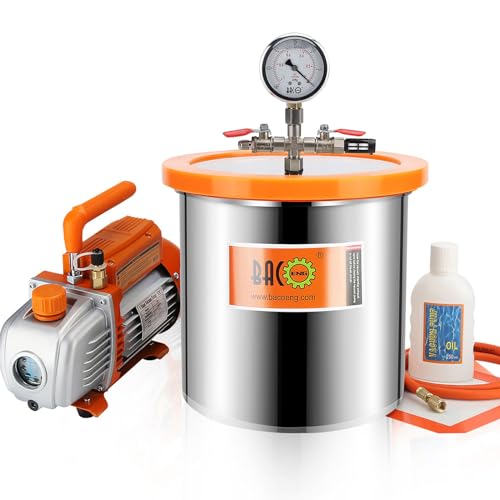
This compact BACOENG model pairs a 3-gallon stainless steel chamber with a tempered glass lid and a 4.5 CFM vacuum pump for fast evacuation. The 0-30 inHg gauge and a silicone gasket rated for high-cycle use support repeated stabilization tasks with excellent visibility through the lid. It’s a good fit for smaller wood pieces or hobby projects where space is a consideration but reliable degassing remains essential.
Orion Motor Tech 2 Gal Vacuum Chamber
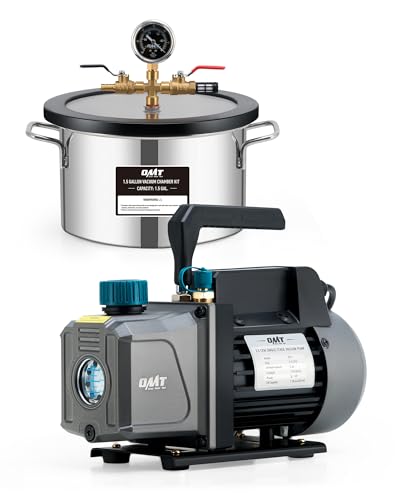
The Orion Motor Tech 2 Gal kit provides a compact, all-in-one setup ideal for wood stabilization on a smaller scale. It includes a 1/4 hp vacuum pump with an all-copper motor and a 2-gallon chamber made from sturdy stainless steel. The tempered glass lid offers clear process visibility, while the 1/4 in. SAE and 3/8 in. SAE connections support flexible hose integration. This option suits hobbyists and small workshops seeking a dependable starter package with room to grow.
VEVOR 3 Gallon Vacuum Chamber

The VEVOR 3 Gallon model emphasizes a balanced size and performance, with a corrosion-resistant glass lid and 304 stainless steel chamber. It’s designed to handle wood stabilization, silicone degassing, and resin degassing while maintaining airtight seals with threaded connections. The unit’s compact footprint makes it a practical choice for smaller shops that still require reliable, repeatable vacuum cycles for wood stabilization projects.
Buying Guide: Key Purchase Considerations
- Chamber size and workload: Choose capacity based on typical project size. Larger chambers (5 gallons) suit bigger pieces or batches, while 2–3 gallon units fit smaller pieces and test runs.
- Vacuum pump power and reliability: Look for pumps rated around 3.5–4.5 CFM with a -29.92 inHg capability for strong degassing performance. Copper motors generally offer better durability and heat resistance.
- Construction and seals: Stainless steel chambers with silicone gaskets and tempered glass lids provide durability and good visibility. Ensure gaskets are designed for high-cycle use.
- Seal integrity and leak resistance: A reliable airtight system minimizes leak rate over time. Threaded connections and rubber seals at gauge points help maintain vacuum stability.
- Ease of use and maintenance: Kits with comprehensive accessories (hoses, quick connections, gauges) reduce setup time. Consider whether you want an all-in-one kit or modular components to customize.
- Monitoring and visibility: Tempered glass lids allow real-time observation of processes like defoaming and resin degassing, aiding process control and consistency.
- Materials compatibility: If your workflow involves volatile solvents or resins, prioritize corrosion-resistant chambers and lids to prolong life and maintain performance.
- Noise and heat management: Look for pumps with efficient heat dissipation and lower noise levels, especially for extended degassing sessions in shared spaces.
- Budget versus scale: While larger units offer capacity, a compact, well-built model may meet most hobbyist and semi-pro needs at a lower upfront cost and footprint.
These considerations help compare models across the essential dimensions of capacity, durability, and practicality, ensuring a choice aligned with wood stabilization goals and workflow preferences.