When precision matters, a reliable temperature dry block calibrator is essential for verifying thermometers, thermostats, and temperature sensors. This guide highlights top models, compares core features, and offers practical buying tips to help you choose the right instrument for lab, field, or industrial use. Each highlighted product is designed to deliver stable, repeatable temperatures across a defined range, with safety and usability considerations in mind.
| Product | Brand | Temperature Range | Power |
|---|---|---|---|
| CEM BX150 Dry Block | CEM | 33°C to 300°C | 115V |
| Fluke 9100S-D-156 HDRC | Fluke | 35 to 375°C | 115V |
| Fluke 9100S-A-156 | Fluke | Hi-Temp Block A | 115V |
| Fluke 9009-B-156 | Fluke | –15 °C to 350 °C | 110V |
| Fluke 9100S-C-156 HDRC | Fluke | 35 to 375°C | 115V |
Note: The table above presents a quick snapshot of core capabilities. For each model, always consult the manufacturer documentation for detailed specifications, safety guidelines, and accessories.
CEM Dry Block Calibration BX150 Handheld Dry-Well
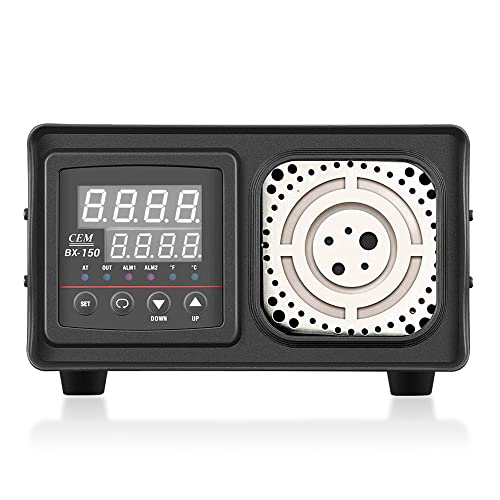
The BX150 by CEM is a handheld dry-well designed for high-temperature calibration needs. The unit operates across a broad range from 33°C up to 300°C (91.4°F to 572°F), making it suitable for calibrating a variety of sensors and thermometers used in industrial environments. Important safety notes include staying aware that probes may become hot during operation and after switching off, and that the unit should be cooled before storage. Probes and inserts should be placed on heat-resistant surfaces, and only dry-block holes should be used for temperature probes. The device emphasizes caution when removing hot inserts at high temperatures. This model is intended for dry-block operation without liquids in the holes.
Fluke Calibration 9100S-D-156 HDRC

The Fluke 9100S-D-156 HDRC handheld dry-well offers a compact, portable solution for hi-temperature calibrations. It features RS-232 interface compatibility with the 9930 Interface-it v3.81 software, enabling streamlined data transfer and documentation. Marketed as one of the world’s smallest and lightest dry-well calibrators, it is designed for field and bench calibration tasks, with a focus on portability. Its build supports precise temperature delivery in the specified 35 to 375°C range, and it is manufactured to ensure consistent performance in diverse environments.
Fluke 9100S-A-156 Dry-Well Hi-Temp
Fluke’s 9100S-A-156 Dry-Well is celebrated for being among the world’s smallest, lightest, and most portable hi-temperature dry-wells. It emphasizes portability without sacrificing the core capabilities needed for reliable calibrations. The unit is designed for use in locations where space is limited, yet precision is essential. It is also notable for its United States origin, contributing to a trusted manufacturing pedigree. The model prioritizes ease of transport and setup while delivering accurate temperatures within its operational range.
Fluke Calibration 9009-B-156 Industrial Dual-Block

The Fluke 9009-B-156 dual-block dry-well offers versatile calibration capabilities with two wells per block, enabling simultaneous comparison checks. It supports a wide temperature span from –15 °C to 350 °C in a single unit, making it particularly useful for laboratories performing multiple calibrations concurrently. The enclosure is rugged, lightweight, and water-resistant, designed to withstand demanding environments while maintaining calibration accuracy. The dual-well design enhances throughput and reduces downtime in busy calibration labs.
Fluke Calibration 9100S-C-156 HDRC
The Fluke 9100S-C-156 HDRC is another compact handheld hi-temperature dry-well option. It emphasizes portability, with features such as an RS-232 interface using the 9930 Interface-it v3.81 software for streamlined data handling. Like its HDRC siblings, this model targets field and bench calibration tasks requiring reliable performance within a 35 to 375°C temperature window. The handheld design supports quick setup and mobility without compromising calibration integrity.
Buying Guide: Key Purchase Considerations
- Temperature range and stability — Ensure the unit covers your target calibration temperatures with tight stability and fast warm-up times to minimize drift between checks.
- Block configuration — Single-block vs dual-block designs affect throughput. Dual-block units enable simultaneous reference checks, reducing setup time for multiple sensors.
- Portability vs benchtop use — Handheld/compact models are ideal for field calibration or small labs, while benchtop units may offer larger inserts and more stable performance.
- Accuracy and certification — Look for stated accuracy, calibration certificates, and traceability to national standards (e.g., NIST, UKAS) to ensure regulatory compliance.
- Power and compatibility — Verify voltage (115V, 110V) and connector compatibility with your facility’s electrical infrastructure. Consider models with RS-232 or modern USB interfaces for data logging.
- Safety features — Prioritize units with clear heat management, temperature alarms, and safe handling instructions to prevent burns and equipment damage.
- Maintenance and spare parts — Check availability of inserts, wells, and replacement parts, as well as ease of cleaning and lubrication requirements.
- Durability and environment — For harsh environments, choose rugged enclosures, water resistance, and materials suited to your lab’s humidity and dust levels.
- Ease of use and documentation — Clear operation manuals, software compatibility, and intuitive controls reduce training time and errors during calibration tasks.
- Cost of ownership — Consider not only the upfront price but also consumables, warranty terms, service availability, and potential downtime.
Choosing between models often hinges on whether you need ultimate portability for field work or higher-throughput performance in a busy lab. Dual-block units offer time savings when calibrating many sensors, while single-block devices frequently excel in compact spaces or tight budgets. For multi-sensor environments, a combination of a portable hi-temperature unit and a robust benchtop model can provide flexibility across applications.