Finding the right surface grinding wheel for aluminum means balancing stock removal, heat management, and wheel life. This guide reviews five top options designed to work with aluminum and soft metals, highlighting grit, hardness, and load resistance. Each wheel listing includes essential specs and how it performs on common aluminum tasks, from deburring to precision shaping. Read on to compare performance, durability, and suitability for bench or angle grinders.
| Product | Brand | Grit/Size | Key Benefit |
|---|---|---|---|
| Norton 6-Inch Aluminum Oxide Grinding Wheel | Norton | White aluminum oxide, Very Fine | Good for deburring and tool sharpening at up to 4140 RPM |
| BHA 4.5″ Grinding Wheels (5 Pack) | BHA | AC24T Aluminum Oxide & Silicon Carbide | Load-resistant with aggressive material removal |
| uxcell 7-Inch WA Wheel | uxcell | 120 WA | High stability and high grinding rate |
| POWERTEC 6-Inch 150 Grit Wheel | POWERTEC | Aluminum Oxide, 150 Grit | Versatile for blades, bits, chisels with durable finish |
| AmaCupid 6-Inch Wheel | AmaCupid | 80 Grit, 3/4″ thick | Hard materials grinding with low heat and self-sharpening |
Norton 6-Inch Aluminum Oxide Grinding Wheel

Norton Premium Bench and Pedestal Grinder Wheels use white aluminum oxide designed for deburring and tool sharpening. Suitable for soft carbon steels and tool steels, these wheels perform well on bench and pedestal grinders up to 4140 RPM. The wheel is optimized for soft metals and alloys, delivering clean finishes with reduced heat buildup during grinding.
With a focus on durability and precision, Norton wheels support consistent stock removal and smooth operation. Applications include deburring, edge restoration, and light shaping on aluminum parts, making them a solid all-around choice for hobbyists and shop environments that demand reliable results.
BHA 4.5″ Grinding Wheels (5 Pack)

This 5-pack provides 4-1/2″ x 1/4″ x 7/8″ depressed-center wheels with AC24T aluminum oxide and silicon carbide grains. The blend is designed for load resistance and aggressive cutting on aluminum and other soft metals. The combination supports higher stock removal per pass while maintaining wheel integrity under heat and friction.
The load-resistant composition helps prevent wheel loading and glazing, promoting consistent grinding performance across multiple passes. Ideal for users who need multiple wheels for various aluminum parts, including automotive components and light extrusion work.
uxcell 7-Inch Aluminum Oxide Wheel WA 120 Grit
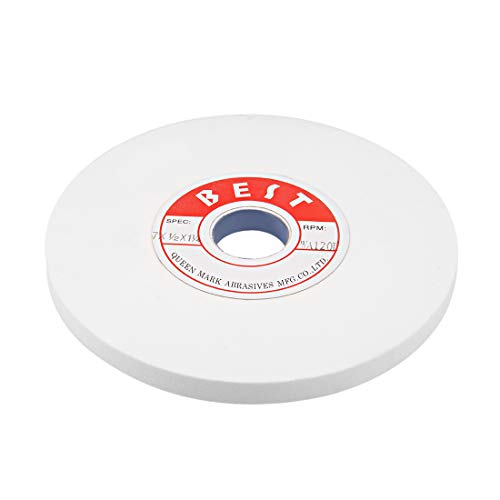
uxcell’s 7-inch WA 120 grit wheel emphasizes stability and high grinding efficiency. Constructed from corundum with uniform particle distribution, it resists wear and tear while delivering a steady material removal rate. This wheel is suitable for surface grinding tasks on aluminum with a focus on consistent finishes and reduced heat generation.
Its design supports smooth operation and helps maintain flat surfaces during grinding, making it a practical option for hobbyists and professionals working on aluminum components requiring precise surfaces.
AmaCupid Bench Grinder Wheel 6 Inch

AmaCupid’s white aluminum oxide wheel is designed for sharpening hardened and high-carbon steels as well as other hard tools. With a 6-inch diameter, 1/2-inch arbor, and 3/4-inch thickness, this wheel targets hard materials, offering good hardness, self-sharpening behavior, and resistance to heat. It aims to achieve precise tool shaping and edge refinement on aluminum-related tooling when paired with compatible machines.
The wheel’s composition emphasizes low heat generation and durability, supporting extended grinding sessions while preserving tool integrity. It suits metalworking tasks that require sharp edges and clean finishes on aluminum-oriented tooling.
Buying Guide: Key Considerations For Aluminum Grinding Wheels
- Grit and hardness: Finer grits (like 120 WA or 80) yield smoother finishes but remove material slower. For deburring and edge shaping on aluminum, a balance between stock removal and surface finish is ideal.
- Load resistance: Aluminum and soft metals tend to cause wheel loading. Look for wheels with formulations that minimize loading and glazing, such as blends of aluminum oxide and silicon carbide.
- Wheel type and thickness: Deburring and light grinding benefit from thinner wheels, while heavier material removal may require thicker wheels with robust backing to prevent breakage.
- Arbor size and compatibility: Confirm the wheel’s arbor and bore match your grinder (commonly 1/2″ or 5/8″). Ensure the wheel thickness and overall diameter fit your machine’s clearance.
- RPM rating: Use wheels rated for your grinder’s RPM. Exceeding the rating can cause wheel failure or poor performance, especially at high speeds.
- Product lifespan and wear: Some wheels are designed for extended life with better heat management. Consider tool steel or alloy casting projects where repeated grinding is common.
- Load prevention and safety: Select wheels with reinforced materials or better fiberglass backings to resist wheel loading and reduce the risk of wheel separation.
- Versatility: If you work with a variety of metals, a wheel with flexible grain composition can handle aluminum, brass, and copper without needing multiple wheel types.
When selecting a wheel, match your machine’s grinder type (bench or angle), your typical aluminum work (deburring, shaping, or finishing), and your tolerance for heat and distortion. For best results, use proper safety gear, secure the workpiece, and follow manufacturer guidelines for mounting and operation.