Finding the right insulated shipping box is essential for preserving the quality of perishable items during transit. This guide highlights five top styrofoam-based options that balance durability, insulation, and eco-conscious reuse. Each pick is evaluated for 24, 48, or 72-hour shipments, helping you choose the best fit for your cold-pack needs without overspending on packaging waste.
Summary of chosen products:
| Product | Brand | Key Benefit | Typical Use |
|---|---|---|---|
| Insulated Cold Shipping Box with Foam Cooler Inside Dimensions: 17 ³⁄₁₆” x 10 ³⁄₁₆” x 8 ¼” | EPE | Durable polypropylene construction with recyclable components | Longer shipments for mixed perishables |
| Insulated Cold Shipping Box with Foam Cooler (Small) | EPE | Compact, reusable option with full recyclability | Smaller shipments or samples |
| Insulated Shipping Box 7x7x6 Inches (2 Pack) | Bugzy Bugs | Secure temp control with 5-piece Styrofoam inserts | Small items requiring strong insulation |
| EmmChill SF12A EcoFriendly Insulated Shipping Cooler (Pack of 2) | EmmChill | Bio-stable polyurethane foam with U.S. manufacturing | Breast milk, biotech, frozen foods |
| CH-BOX Insulated Shipping Boxes with Liners 4 Pack (15″ x 10″ x 11″) | CH-BOX | Aluminum foil liners for superior heat transfer reduction | Perishable foods and frozen items |
Insulated Cold Shipping Box With Foam Cooler Inside Large

The large theBOXcold from EPE features a robust polypropylene shell designed for enhanced durability and insulation beyond standard styrofoam coolers. It supports multiple shipping durations, including 24-hour, 48-hour, and 72-hour timelines, making it suitable for a variety of cold-pack requirements. Reusability is a core focus, with washable components that encourage eco-conscious practices and a 100% recyclable composition after its life cycle. This option is ideal for customers who need a sturdy, reusable box for longer-distance shipments of temperature-sensitive goods.
Key considerations: durability of PP shell, compatibility with standard cooling packs, and long-term reuse potential. For businesses shipping longer routes or higher-value perishables, this box can reduce waste while maintaining consistent temperatures across transit.
Insulated Cold Shipping Box With Foam Cooler Small

This smaller EPE box mirrors the large model’s design but in a compact footprint, offering the same emphasis on durability and recyclability. It’s optimized for smaller shipments where space or weight is a constraint, yet reliable insulation remains critical. The reusable nature helps cut overall packaging waste for light to medium-volume cold-pack operations. Businesses delivering samples, single-serve items, or small-batch perishables may prefer this size for efficiency and cost control.
Key considerations: fitting into carrier constraints, suitability for single-serve or sample orders, and the ability to pair with standard ice packs or gel packs for reliable temperatures.
Insulated Shipping Box 7x7x6 Inches (2 Pack)

Bugzy Bugs offers a two-pack of 7x7x6 inch insulated shipping boxes, each containing a five-piece Styrofoam insert setup to maximize temperature retention. This configuration suits small, sensitive shipments where space efficiency matters and the added inserts enhance insulation and protection. The design supports safe handling of items requiring stable temperatures during transit, with a focus on compact packages that still perform reliably in transit scenarios.
Key considerations: kit completeness (inserts included), small-footprint suitability, and ease of stacking or routing through standard shipping channels. It’s a practical choice for micro-batches and high-value small items that demand controlled temperatures.
CH-BOX Insulated Shipping Boxes With Liners, 4 Pack
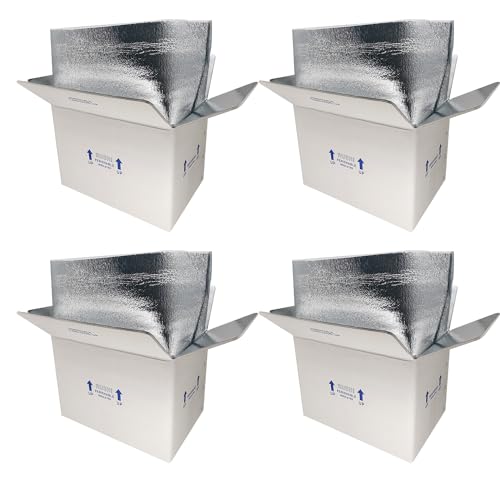
CH-BOX provides a four-pack set of 15″ x 10″ x 11″ insulated shipping boxes with liners. The inner dimensions are thoughtfully designed to balance capacity and insulation, with outer dimensions of 15 x 10 x 11 inches after sealing. The foil-backed liners help retard heat transfer, making these boxes well-suited for perishable foods, frozen breast milk, or other temperature-sensitive items. A reliable option for businesses that ship multiple cartons in a batch while maintaining temperature control throughout transit.
Key considerations: liner performance, inner volume versus outer footprint, and batch shipping efficiency. For operations that require consistent performance across several shipments daily, these boxes offer a robust solution with proven insulation alongside moisture resistance from the liners.
Buying Guide: Key Purchase Considerations
Choosing the right insulated shipping box depends on several factors. Consider the following perspectives to ensure you pick a model that aligns with your shipping profile:
- Insulation and material: Polypropylene shells combined with foam inserts generally offer durable protection and good thermal resistance. Some options emphasize poly liner or aluminum foil liners to reduce heat transfer further. Assess the required temperature range and transit duration to pick the right insulation level.
- Size and capacity: Dimensions must match your product footprint and packing needs. Smaller boxes save space and weight but may limit the number of items per shipment. Large boxes support bigger perishable goods but may incur higher shipping costs.
- Reusability and sustainability: Reusable, washable designs lower waste and can reduce long-term packaging costs. Look for boxes marketed as recyclable with components that can be recycled after use.
- Durability and handling: A sturdy shell protects contents during rough handling and stacking in transit. Consider boxes with secure closures and resilient latches or seals if available.
- Compatibility with cold packs: Ensure the box accommodates standard gel packs or dry ice, and verify whether liners or inserts are included for optimal insulation.
- Regulatory and safety considerations: For items like breast milk or biotech samples, ensure the box design supports sanitary handling and complies with applicable shipping guidelines.
- Batch shipping needs: If you ship many items, a multi-pack option with consistent insulation can streamline operations and reduce packaging variability.
- Cost versus value: While price is a factor, balance upfront cost with durability, reuse potential, and the likelihood of reducing product spoilage during transit.
Across these selections, businesses that ship perishable or temperature-sensitive products can gain predictability in delivery outcomes by prioritizing boxes with strong insulation, recyclable components, and options that fit their shipment volume. The five highlighted products provide a spectrum—from larger, reusable designs to compact, insert-enhanced models—helping you tailor your packaging to your operational needs without compromising on protection during transit.