Choosing the right sprocket for ANSI #40 conveyor chains is essential for reliable power transmission, smooth operation, and long equipment life. This guide reviews five solid options, highlighting steel construction, hub design, bore size, and tooth count to match common industrial setups. Each product differs in bore, teeth, and mounting style, so selecting the best fit depends on shaft diameter, load, and maintenance needs.
Overview table of selected products:
| Product | Teeth | Bore | |
|---|---|---|---|
| CHR #40 Sprocket 12T | 12 | 1″ | B-Hub, carbon steel, ANSI 40 compatibility |
| CHR #40 Sprocket 15T | 15 | 1″ | B-Hub, durable carbon steel |
| CHR #40 Sprocket 21T | 21 | 1″ | B-Hub, high-strength steel |
| uxcell 14T Idler | 14 | 1/2″ | Two bearings, hardened teeth, #45 steel |
| Saelno 12T Sprocket | 12 | 1″ | 1045 steel, hardened teeth, B Type |
CHR Precision 12-Tooth #40 Roller Chain Sprocket

Designed for ANSI #40 roller chains, this CHR Precision sprocket features 12 teeth and a 1″ finished bore, making it a reliable replacement for industrial drive systems, conveyors, and agricultural machinery. Constructed from carbon steel, it offers strength and wear resistance under heavy loads. The B-hub mounting with a set screw provides secure shaft installation and consistent alignment, supporting smooth power transmission in ongoing operations.
CHR 15-Tooth #40 Sprocket with 1″ Bore

This 15-tooth CHR #40 sprocket is built for ANSI #40 chains with a 1″ bore, offering a solid replacement for standard industrial drive assemblies. Carbon steel construction ensures durability and resistance to wear, while the B-hub design with set screws enables secure mounting. It maintains dependable engagement and consistent power transfer in demanding environments.
CHR 21-Tooth #40 Sprocket with 1″ Bore

The 21-tooth CHR #40 sprocket is designed for ANSI #40 chains with a 1″ finished bore. It provides robust performance for continuous duty applications such as conveyors and manufacturing lines. Carbon steel construction delivers rigidity and wear resistance, while the B-hub with set screw ensures secure shaft engagement for precise alignment during operation.
uxcell 14-Tooth Idler Sprocket, 1/2″ Pitch

uxcell provides an idler sprocket set with 14 teeth, suitable for ANSI #40 / DIN 08A chains, and a 1/2″ pitch with a 12mm bore. It features two precision bearings (6201Z) allowing smooth rotation, and is made from hardened #45 steel processed for wear resistance. This tensioner-style sprocket helps maintain proper chain tension and alignment in fixed-position installations.
Jeremywell 21-Tooth Sprocket, B Type

Jeremywell’s 21-tooth Sprocket features a B Type hub and is sized for ANSI #40 chains. The bore is not explicitly stated in the listing snippet, but the B Type hub design supports secure mounting and reliable chain engagement. This model targets industrial drive setups requiring dependable power transfer and alignment.
Saelno #40 Sprocket, 12-Tooth, 1″ Bore
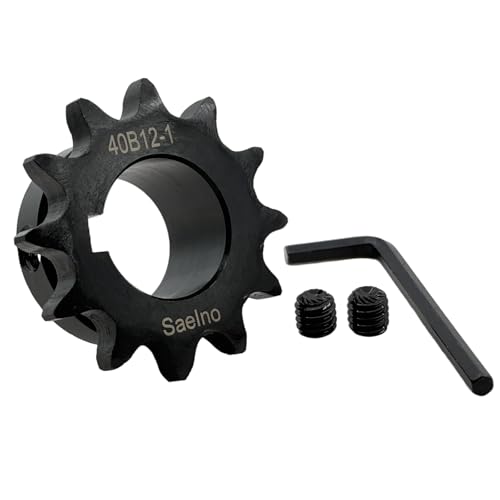
Saelno’s 12-tooth #40 sprocket is sized for ANSI #40 chains with a 1″ bore and includes a 1/4X1/8 keyway plus two set screws at 90 degrees. Made from ANSI 1045 carbon steel with hardened teeth (HRC38-42), it emphasizes wear resistance and corrosion protection with a blackened finish. Ideal for durable, long-life chain drive systems.
BDYAQGC 10 Tooth Front Sprocket for Coleman Mini Bikes

This 10-tooth front sprocket is designed for small off-road platforms and mini bikes, featuring compatibility with 420 chain systems and a 1″ bore in many setups. The listing highlights fitment for a range of scooters and mini bikes, with included hardware such as sprocket keys and master links to facilitate installation. While targeted at smaller machines, it illustrates the breadth of ANSI #40 compatibility in compact formats.
Buying Guide: Key Considerations For Selecting Conveyor Chain Sprockets
When choosing a sprocket for ANSI #40 conveyor chains, consider bore size, hub design, and tooth count to balance strength, alignment, and chain engagement. A 1″ bore is common for many industrial drives and offers easy coupling with standard shafts, while a B-type hub with set screws helps prevent slippage under heavy loads. Teeth count affects torque transmission and chain wear; more teeth can distribute load better and reduce stress on individual links, at the cost of reduced clearance in tight spaces.
Material and construction impact longevity. Carbon steel provides high strength and wear resistance, but environments with moisture or chemicals may require corrosion-resistant finishes or coatings. Hardened teeth improve resistance to surface wear, especially in continuous operation. For idler sprockets, bearing quality and alignment accuracy influence smooth operation and maintenance cycles.
Compatibility is critical. Verify that the sprocket matches ANSI #40 chain pitch (1/2″ for some variants), bore, and hub style. In fixed installations, attention to keyway dimensions and set screw positioning ensures reliable engagement and minimizes shaft movement. For conveyors with variable loads, select sprockets known for durability and consistent tooth pitch to maintain tension across the system.
Maintenance considerations include inspecting for wear, checking set screws for tightness, and confirming proper lubrication. In the event of misalignment or premature wear, replacing with a matched set or upgrading to a higher-tooth-count variant can help restore performance. Suppliers often offer a range of tooth counts to tailor the solution to specific conveyor lengths, speeds, and load profiles.
Summary: When evaluating options, prioritize a robust carbon steel body with a secure B-hub mounting, confirm bore compatibility with your shaft, and select a tooth count that aligns with your conveyor’s speed and load requirements. Idler sprockets can help manage tension, but primary drive sprockets should emphasize precise alignment and durable engagement for long service life.