When handling chemicals, reliable spill containment is essential to protect people, property, and the environment. This guide reviews top spill trays designed for laboratories, classrooms, and workshops, highlighting materials, capacities, and features that help prevent leaks and simplify cleanup. The selections below emphasize alkali and acid resistance, durability, and practical design for daily use in various settings.
Summary of chosen products:
| Product | Brand | Key Benefit | Capacity |
|---|---|---|---|
| TOPPERFUN 3Pcs Chemical Reagent Containment Tray | TOPPERFUN | Alkali and acid resistant; versatile sizes | Small/Medium/Large |
| Kingdder 10 Pcs Polypropylene Containment Tray | Kingdder | Heat resistant; stackable; durable | Various sizes |
| Modular 2 Drum Spill Pallet | Cjgyz | Heavy-duty, forkliftable; modular stackable | 20 gallon sump |
| Deamoser Spill Containment Pallet | Deamoser | Large capacity; UV-stabilized; durable | Large capacity |
| Pinkunn Spill Platform | Pinkunn | Stackable; 20 gallon capacity; chemical resistant | Large platform |
TOPPERFUN 3Pcs Chemical Reagent Containment Tray

The TOPPERFUN set provides an alkali- and acid-resistant tray option, suitable for chemical classrooms and labs. Made of plastic, these trays offer stable, reliable performance and are versatile for various tool trays and containment needs. The 3-piece assortment supports different equipment sizes and experimental setups, helping keep work areas clean and organized.
Kingdder 10 Pcs Polypropylene Containment Tray
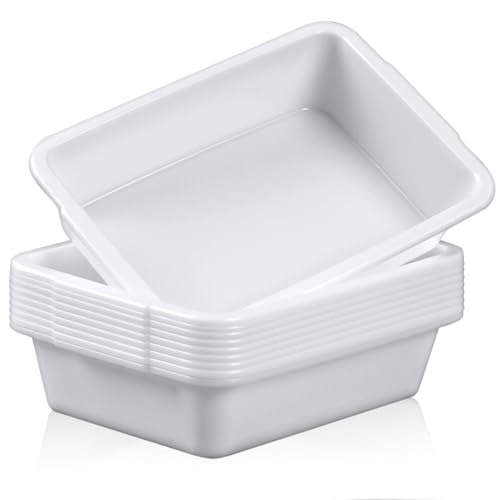
Kingdder offers a ten-piece polypropylene containment set with a large 16 x 11 x 3.5 inch footprint per tray. The heat-resistant material withstands freezing to autoclaving temperatures, making it suitable for sterilizing, drying, and storing lab equipment. Its tapered walls enable stackable storage, while raised edges minimize overflow and spills, aiding daily lab tasks and equipment handling.
Modular 2 Drum Spill Pallet

Engineered from high-density polyethylene, this industrial-grade spill pallet supports up to 2000 lbs and features a 20-gallon sump for drips and leaks. Its UV-stabilized construction resists harsh chemicals, and the modular interlocking design saves storage space. A low profile of 4 inches makes it easy to move and integrate into busy workspaces.
Deamoser Spill Containment Pallet
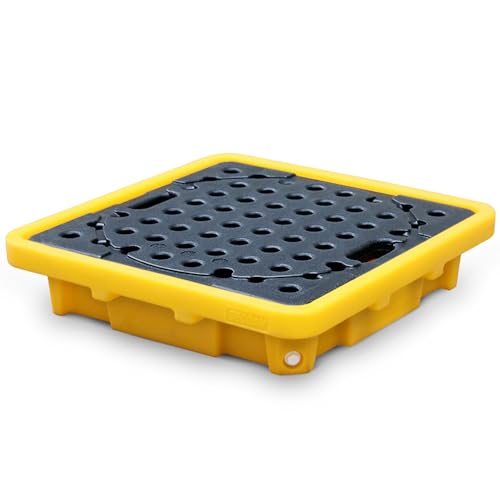
Deamoser’s pallet combines large spill capacity with durable polyethylene construction. The design emphasizes overflow prevention and secure containment, ideal for workshops and facilities dealing with multiple fluids. The unit’s robust build provides dependable performance under daily use, with easy cleaning and maintenance in mind.
Pinkunn Spill Platform

Pinkunn’s spill platform emphasizes overflow capacity and stackability. With a 20-gallon spill capacity and durable polyethylene construction, it resists UV exposure and chemical degradation. The platform’s modular design allows scalable setups, making it suitable for labs with evolving containment needs.
Buying Guide: Key Purchase Considerations And Comparisons
When selecting spill trays for chemicals, consider the following factors to match your environment and workflows:
- Material and chemical compatibility: Plastic (HDPE/PP) is common for chemical containment due to chemical resistance and ease of cleaning. Verify compatibility with acids, bases, solvents, and oils you handle.
- Capacity and spill collection: Assess total capacity (gallons or liters) and the expected spill frequency. Larger trays reduce overflow risk in busy areas, while modular pallets save space when not in use.
- Durability and construction: Look for UV stabilization for outdoor or light-exposed areas, reinforced bottoms for heavy loads, and raised edges to prevent leaks.
- Temperature tolerance: For workflows involving heat or autoclaving, choose trays rated for wide temperature ranges to prevent warping or degradation.
- Stackability and portability: Stackable trays save storage space; models with handles or forklift accessibility aid movement in busy labs or production floors.
- Ease of maintenance: Smooth, non-porous surfaces resist staining and are easier to clean. Interlocking designs should be secure and simple to assemble.
- Environmental and safety considerations: Recycled content and recyclability can influence sustainability choices, while leak-proof designs enhance on-site safety and compliance.
- Size compatibility: Ensure dimensions fit your shelving, benches, or containment carts. Consider both individual trays and multi-piece sets for flexibility.
In practice, labs typically balance cost, durability, and capacity. Heavy-duty industrial pallets are favored in production environments with frequent spills and heavy liquids, while classroom and small lab settings benefit from compact, stackable trays that simplify storage and handling. For facilities handling a wide range of chemicals, a combination of large containment pallets and smaller, modular trays often delivers the best coverage and versatility.