Solar powered bilge pumps provide a maintenance‑free, emission‑free way to remove water from boats, ponds, and other flooded areas. This guide highlights top solar‑powered options and practical alternatives, helping you compare performance, durability, and setup needs. Read on to find pumps that fit marine, agricultural, and DIY water features while prioritizing reliability and energy efficiency.
| Product | Brand | Key Use |
|---|---|---|
| 10W Solar Water Pump KIT | AEO | Solar fountain, fish pond, aquarium |
| BACOENG DC 12V Solar Water Pump | BACOENG | Submersible well pump, farm & ranch |
| Automatic Submersible Bilge Pump 12V 1100GPH | MAXZONE | Boat bilge and marine use with float switch |
| Attwood WaterBuster Portable Pump | attwood | Battery powered, portable water removal |
| Amarine Made DC 12V Farm & Ranch Solar Water Pump | Amarine Made | Submersible well booster, 12V solar option |
style=”margin-top:40px;”>10W Solar Water Pump KIT: DC Brushless Submersible

Offers a complete solar powered water pump solution with a 10 watt polycrystalline solar panel housed in a sturdy aluminum frame. The brushless motor is designed for continuous operation, supporting long service life beyond 20,000 hours. A simple, wiring‑free setup makes this kit ideal for fountains, ponds, and aquariums where sunlight is abundant. The system is optimized for low maintenance in outdoor environments, reducing reliance on grid power while delivering reliable water movement during sunny days.
style=”margin-top:40px;”>BACOENG DC 12V Solar Water Pump Submersible Well Pump
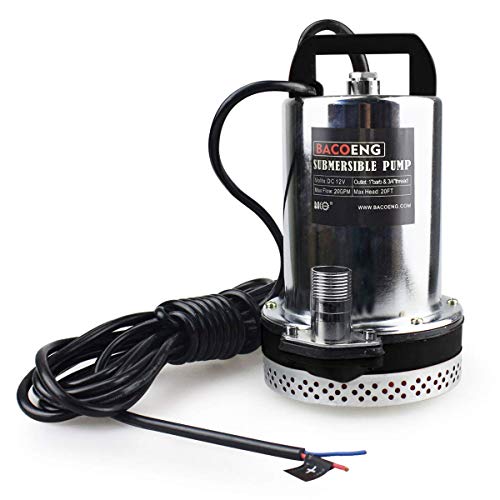
This 12V solar compatible water pump provides up to 20 GPM with a 20 ft lift. Built for durable operation, it features a simple structure, corrosion resistance, and easy maintenance. The pump is designed for reliable performance in solar powered setups or as a dependable submersible option for well and irrigation applications where energy efficiency and longevity matter. Its larger flow rate makes it suitable for small ponds and farm water transfer tasks when paired with a solar array or battery system.
style=”margin-top:40px;”>Automatic Submersible Bilge Water Pump 12V 1100GPH

With a 12V supply and a built‑in float switch, this 1100 GPH pump offers automatic bilge pumping for boats and marine applications. It includes a 1‑1/8 inch outlet and a compact form factor, making it suitable for tight spaces. The built‑in float switch eliminates the need for separate components and supports prompt water removal when bilge water rises above a preset level. It is a robust option for preventing water damage in marine environments, especially where grid power is unavailable or undesirable.
style=”margin-top:40px;”>Attwood WaterBuster Portable Pump
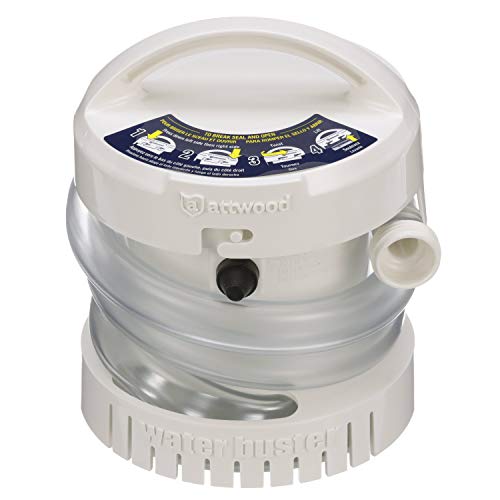
This battery powered, portable pump does not require a power cord, enabling use in boats, pool covers, aquariums, and other water removal tasks. It can operate for up to five hours on three D‑cell alkaline batteries, making it a flexible option for temporary or emergency pumping. While not solar powered, its portability and independence from mains power provide a valuable reference point when evaluating solar alternatives for off‑grid pumping needs.
style=”margin-top:40px;”>Amarine Made DC 12V Solar Water Pump Submersible

Model ZQB-12 offers a 12V DC submersible pump with a stainless steel motor, strong waterproof sealing, and electrical protection features designed for stability and longevity. With a maximum head around 26 ft and a 100 L/min capacity, this pump is suitable for ships, irrigation, and other 12V powered setups that can be solar assisted or battery backed. The robust construction supports use in marine and agricultural environments where reliability and efficiency are essential.
Note: The list includes a mix of solar‑powered, battery powered, and 12V pumps to illustrate how solar integration affects performance and setup. When choosing a solar powered bilge pump, consider how sunlight availability, battery storage, and wiring complexity influence long‑term operation and maintenance.
style=”margin-top:40px;”>Buying Guide: Solar Powered Bilge Pump Considerations
- Solar panel capacity and compatibility: Look for panels that provide sufficient wattage to meet the pump’s starting and running current. In sunny climates, higher wattage panels improve reliability during peak use; in shaded areas, higher efficiency panels help maintain performance.
- Pump performance metrics: Flow rate (GPH or L/min) and head (feet or meters) determine how much water can be moved and to what height. Bilge and pond environments benefit from pumps with moderate flow and enough head to overcome outlet restrictions.
- Power source configuration: Decide between solar‑direct (panel to pump), solar with battery storage, or battery‑only setups. Battery storage adds reliability during cloudy days but requires proper charging circuitry and maintenance.
- Durability and construction: Marine environments demand corrosion resistance, waterproof seals, and thermally robust motors. Look for IP ratings, stainless steel or brass components, and corrosion‑resistant housings.
- Float and automatic controls: An integrated float switch enables automatic operation when water rises, reducing energy use and preventing overflow. Ensure the switch is reliable in saltwater or freshwater contexts.
- Portability and installation: For boats or temporary setups, consider compact, battery‑powered, or portable options. Fixed installations may benefit from submersible designs with secure wiring and mounting.
- Maintenance and spare parts: Common wear items include impellers, seals, and seals. Choose models with readily available parts and simple disassembly for maintenance.
- System integration and safety: Ensure compatible connectors, wire gauges, and rain exposure protection. Use fuses or circuit breakers to prevent electrical faults in harsh environments.
- Noise and energy efficiency: Brushless motors generally reduce noise and improve efficiency, extending battery life when used with storage systems.
- Cost of ownership: While solar setups reduce ongoing energy costs, initial installation and battery replacement should be factored in. Consider the total lifetime value rather than upfront price alone.