Accessing clean water from deep wells is essential for farms, ranches, and remote properties. This guide highlights top solar-friendly deep well pump options that operate on DC power, battery systems, or solar panels. Each selection emphasizes durability, ease of installation, and suitability for off-grid water needs. The following five models come from trusted brands and are paired with straightforward capacity specs to help you compare performance and suitability for your water supply challenges.
| Product | Brand | Power Type | Key Advantage |
|---|---|---|---|
| ECO-WORTHY 12V DC Submersible Deep Well Pump | ECO-WORTHY | 12V DC | Low-voltage solar or battery compatibility; strong lift |
| JENENSERIES 500W DC 48V Solar Pump | JENENSERIES | 48V DC (solar-ready with MPPT) | High head, robust MPPT controller integration |
| ECO-WORTHY 24V Submersible Deep Well Water Pump | ECO-WORTHY | 24V DC | Direct solar/battery compatibility with longer cable |
| ECO-WORTHY 12V DC Submersible Well Pump with 10ft Cable | ECO-WORTHY | 12V DC | Direct solar/battery setup; easy integration for pumping into tanks |
| PWS JS3-2.1-120 Solar Deep Well Pump | PWS pump with solar | 48V DC (solar-ready) | Integrated sensors for automation and water shortage protection |
Note: All models listed support pumping from wells and can be paired with solar panels, batteries, or charge controllers to suit off-grid water solutions. When selecting, consider well depth, desired flow rate (GPM), lift (feet), and the availability of a suitable power source or solar array.
ECO-WORTHY 12V DC Submersible Deep Well Pump
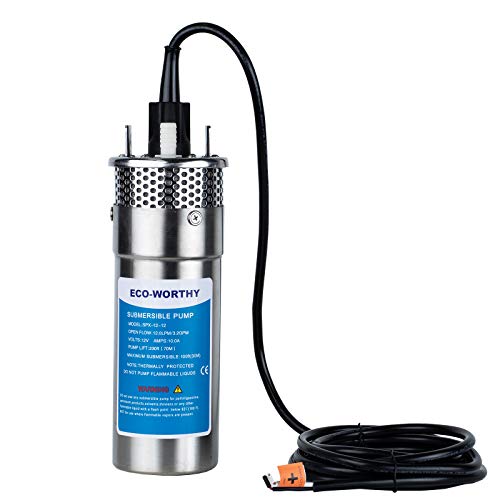
Powered for flexible water supply in remote locations, this DC pump supports solar panels and 12V battery systems. It can also run off certain car or boat batteries, expanding installation options. The pump offers a maximum flow of 3.2 GPM (12 LPM) with a lift up to 230 feet (70 meters), and comes with a 10-foot cable for versatile placements. Its simple hookup makes it suitable for livestock watering, garden irrigation, and filling water tanks when grid power is unavailable.
JENENSERIES Pump 500W DC 48V Solar Water Pump
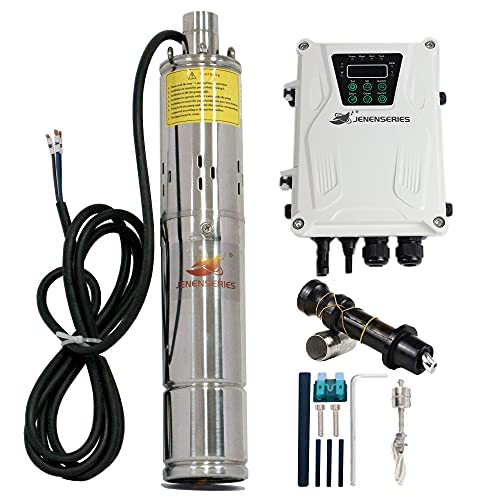
This 48V DC solar water pump uses a three-inch deep-well design with an MPPT controller and a float switch kit, enabling efficient operation with solar panels for home, farm, or industrial use. It supports a head up to 393 feet and a flow of about 7.9 GPM, making it suitable for deeper wells and higher-demand systems. The 304 stainless steel construction adds durability, and the MPPT-assisted energy conversion helps maximize solar efficiency in variable sunlight conditions. The system can be battery-backed for around-the-clock pumping as needed.
ECO-WORTHY 24V Submersible Deep Well Water Pump
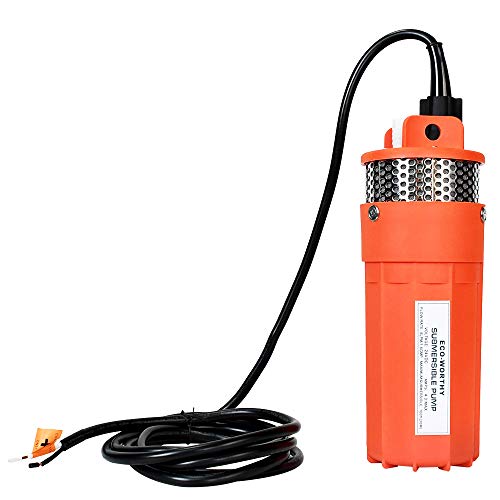
Designed for solar compatibility, this 24V deep-well submersible pump is suited for wells 4 inches in diameter or larger and can also service ponds or rivers with a pumping setup that feeds water tanks. The kit emphasizes straightforward installation, advising users to connect the pump’s polarity to a solar panel or battery through a controller. The 24V configuration can be favorable for higher-power solar systems and longer system runs when needed.
ECO-WORTHY 12V DC Submersible Well Water Pump

This model emphasizes solar readiness and practical deployment for wells of 4-1/8 inches or larger. The design supports direct connection to a 200W solar panel or a 12V battery, with guidance on solar pump system setup. It is well-suited for refilling water tanks, irrigating remote plots, and supplying water to livestock. A dedicated 10-foot cable facilitates flexible installation, simplifying placement in tight spaces.
3-Year Warranty Solar Water Pump 48V 540W
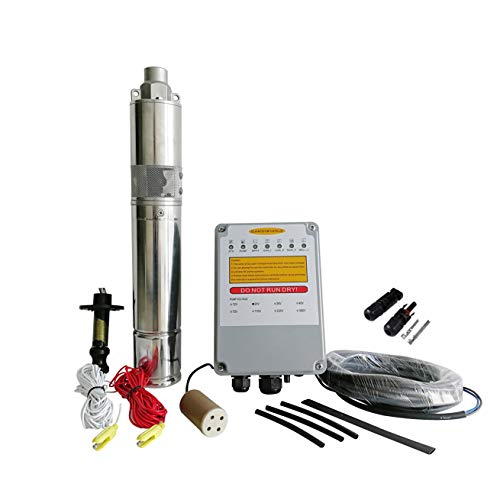
This 48V solar deep-well pump is built for robust performance with a 3/4 inch stainless steel deep-well housing. It is designed for use with solar panels and includes solar kit components and a controller. The unit emphasizes battery compatibility and long-term operation in off-grid scenarios. It’s positioned for reliable pumping in home, agricultural, or industrial projects, especially where solar energy is the primary power source.
Buying Guide
- Well depth and lift: Determine the maximum head required (ft) to reach your storage tanks. Deeper wells demand pumps with higher head ratings and often higher voltage configurations.
- Flow rate vs. power: Higher GPM pumps demand more power. Compare your daily water needs (livestock, irrigation, human consumption) with the pump’s flow rate to avoid under- or over-sizing.
- Power source options: Consider solar panels, batteries, or a hybrid setup. DC pumps under 24V are typically easier to wire directly to panels and batteries; higher-voltage solar options may require MPPT controllers for efficiency.
- Controls and automation: Look for features like water shortage sensors, float switches, and built-in control boxes. Such features reduce manual monitoring and help protect the pump during dry periods.
- Durability and materials: Stainless steel construction and IP68 ratings improve longevity in wet environments. Certifications and warranties provide added peace of mind for long-term use.
- Installation flexibility: Cable length, well diameter compatibility, and the ability to mount near storage tanks influence ease of setup and future maintenance.
- System integration: If expanding with solar, verify compatibility with your panels, charge controller, and battery bank. MPPT controllers can improve efficiency in fluctuating sunlight.
- Maintenance considerations: Look for pumps with protective features like thermal protection and auto-stop when water is insufficient to prevent dry running.
These considerations help compare solar, battery-assisted, and grid-tied deep well pumps. When planning, map out your water demand profile, climate, available solar resources, and maintenance schedule to select a system that delivers reliable, off-grid water access.