Choosing a reliable soft start kit can protect your air conditioning system, extend compressor life, and prevent nuisance power issues on generators or limited power supplies. The following picks are designed for American homes, RVs, and off-grid setups, delivering smooth startup and reduced electrical stress. Each model adapts to different BTU ranges, power sources, and installation needs, helping you pick a solution that matches your equipment and power availability.
| Product | Best For | BTU Range | Notes |
|---|---|---|---|
| MICRO-AIR EasyStart Flex 398 | Homes, RVs, commercial | Up to 72,000 BTU | High versatility; installation kit included |
| MICRO-AIR EasyStart Breeze 399 | RV setups with space constraints | Up to 15,000 BTU per unit | Compact, 2-unit setups possible with generator |
| SoftStart Home | Residential or off-grid homes | Up to 72,000 BTU | Generates smoother start with generators and solar |
| Coleman-Mach Soft Start Kit | Coleman-Mach units | Up to 75% start-up amperage reduction | Designed for exterior installation on specific series |
| SpartanStart | RV air conditioners up to 20K BTU | Up to 20,000 BTU | Inverter/generator compatibility, simple setup |
MICRO-AIR EasyStart Flex 398 – Premium 6-Ton Soft Start Kit

The EasyStart Flex 398 from MICRO-AIR is positioned as a versatile soft start kit for residential and commercial AC units. It targets systems up to 6 tons (72,000 BTU) and includes an installation kit for easier setup. The technology delivers a controlled, gentle startup that reduces mechanical stress and extends compressor life. It is particularly suitable for homes, RVs, and commercial applications that rely on generators or inverters, cutting startup current by up to 75% in many configurations. The Flex model supports 2-stage compressors and heat pump configurations for broader compatibility.
Key features
- Advanced MicroAir technology with included installation kit
- Reduces startup current to protect equipment and improve reliability
- Compatible with generators, inverters, and limited utility power
- Supports 2-stage compressors and heat pumps
Installation notes emphasize ease of use in varied environments, offering robust performance where power stability is a concern. For households facing frequent voltage dips or remote installations, Flex provides a stable start and steady operation, which can help minimize nuisance outages and provide smoother cooling cycles throughout the day.
MICRO-AIR EasyStart Breeze 399 – RV Soft Starter
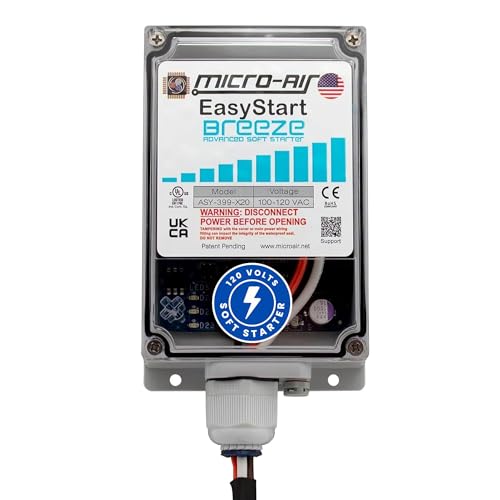
The EasyStart Breeze 399 is designed for RV air conditioners, offering a compact and easy-to-install solution for travel trailers and motorhomes. It supports RV AC units up to approximately 13,000–15,000 BTU and is compatible with a 2,200-watt generator in typical setups. The Breeze model emphasizes quieter start-ups and space efficiency, making it ideal for tight RV installations where minimizing noise and footprint matters. It can facilitate dual-unit configurations with appropriate power planning and a 30-amp connection for larger RV systems.
Key features
- Wide compatibility with common RV AC sizes
- Quieter, smoother compressor startup
- Compact design for easier installation
For RV owners, Breeze offers a practical balance of performance and portability, delivering reliable starts without drawing excessive current. The kit can help prevent generator overloading and reduce the likelihood of low-voltage trips on camp sites.
SoftStart Home – Residential Soft Start Kit
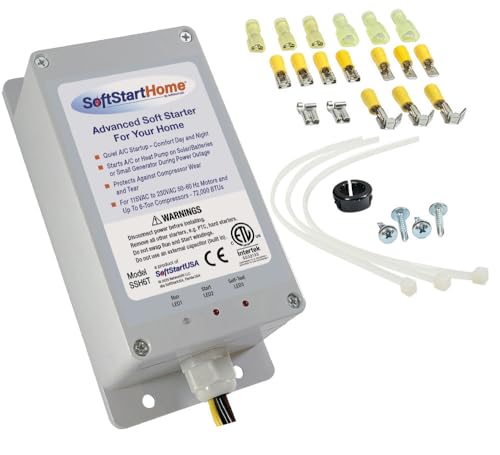
SoftStart Home provides a sophisticated soft-start solution for air conditioners and heat pumps, aiming to reduce startup power by up to 70%. It targets off-grid and backup power scenarios, as well as RVs and solar-powered installations. The device is designed to minimize inrush current, which can help maintain stable voltage during startup and extend compressor life by reducing peak heat buildup. The kit is advertised as straightforward to install within about 15 minutes, and it emphasizes compatibility with generator and solar-powered systems for reliable operation during outages or limited power conditions.
Key features
- Advanced soft-start technology for smooth startup
- Reduces inrush current significantly
- Works with generators, RVs, and solar-powered setups
In environments where power is variable, SoftStart Home offers a practical option to maintain comfort and protect equipment. It focuses on extending compressor life by easing startup stress in challenging electrical conditions.
SpartanStart – 20K BTU RV Soft Start

SpartanStart is aimed at RV air conditioning setups up to 20,000 BTU, offering a soft-start solution that reduces the strain on the compressor and energy draw during startup. The product emphasizes compatibility with a 2,200-watt generator or a similar inverter setup, enabling smoother operation without overtaxing the power source. Its features include generator anti-stall and preload, helping the system transition between power sources seamlessly. The package typically includes necessary connectors and mounting materials for straightforward installation on RV units.
Key features
- Soft-start for RV AC up to 20K BTU
- Generator and inverter compatibility
- Anti-stall and preload features to manage startup stress
SpartanStart provides a robust option for RV enthusiasts seeking stability when running ACs from limited power sources. It is designed to prevent abrupt power surges and to support reliable operation in varied camping environments.
Buying Guide: Key Considerations For Choosing A Soft Start Kit
When selecting a soft-start kit for air conditioners and RV systems, consider several factors to ensure compatibility, performance, and durability. The following perspectives provide a balanced view to inform your decision.
- BTU/tonnage compatibility: Verify the unit’s max BTU rating and whether multi-stage or heat-pump configurations are supported. Larger homes or commercial settings may require higher-capacity models like the Flex 398, while smaller RV units may fit Breeze 399 or SpartanStart.
- Power source compatibility: Assess generator or inverter availability. If you frequently rely on generators, confirm that the soft-start kit can handle the startup current without tripping breakers. For solar or mixed-use setups, ensure the kit supports limited utility power as described in the product specs.
- Installation considerations: Some kits include installation kits or require exterior mounting, which affects where you can place the device. Compact models may simplify installation in tight spaces, especially for RV applications.
- Noise and vibration: A quieter startup reduces cabin or living-area disturbance, particularly in RVs and small homes. Look for products that emphasize smoother compressor engagement and reduced vibrations.
- Durability and weather resistance: For outdoor installations, unibody enclosures or weatherproofing are important to withstand outdoor conditions and temperature fluctuations.
- Maintenance and reliability: Consider kits with straightforward maintenance and robust warranty coverage. Check for compatibility with common AC components like two-stage compressors and heat pumps.
- Cost-to-benefit: While prices aren’t listed here, compare installation effort, expected life extension for compressors, and energy efficiency gains. Higher upfront costs may be justified by longer equipment life and fewer power issues.
In summary, the best choice depends on your system type (home, RV, or commercial), your power supply constraints (generators, inverters, solar), and how much you value installation simplicity versus maximum BTU support. The models highlighted above provide a spectrum of options—from high-capacity Flex kits suitable for larger units to compact Breeze models ideal for RVs—so you can select a kit that aligns with your cooling needs and power availability.