When selecting a socket weld ball valve, reliability, flow performance, and ease of maintenance matter most. This guide highlights five top options designed for PVC and UPVC piping systems, including true union and socket weld configurations. Each choice emphasizes strength, corrosion resistance, and user-friendly features for water, irrigation, and industrial applications. Read on to compare design benefits, compatibility, and installation tips to help you choose the right valve for your project.
Quick comparison table
| Product | Brand | End Type | Key Benefit |
|---|---|---|---|
| Spears 3/4 PVC Socket Weld Utility Ball Valve | Spears Manufacturing | Socket Weld | Stem protection features reduce leakage if stem damaged |
| PVC Union Ball Valve, 3/4″ True Union Full Flow | Boltigen | Union | Easy disassembly for cleaning and maintenance |
| Sharpe Valves 39034 Series 3/4″ Socket Weld Ball Valve | Sharpe Valves | Socket Weld | Lockable lever and reinforced seats for reduced leakage |
| 2PCS PVC Union Ball Valve, 3/4″ True Union Full Flow | Boltigen | Union | Two-pack option for larger projects; easy cleaning |
| Hayward TB1075ST True Union Ball Valve, 3/4″ | Hayward | Union | Full port flow for higher efficiency |
Spears 3/4 PVC Socket Weld Utility Ball Valve
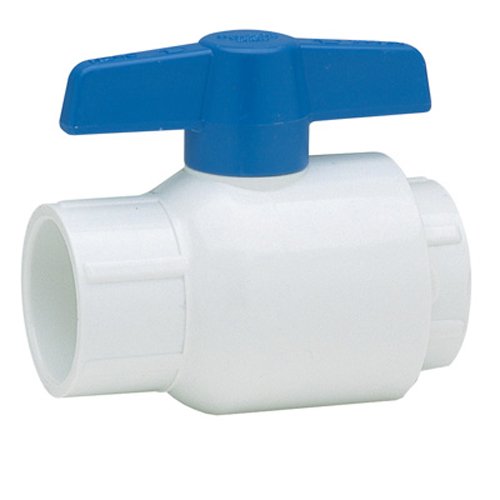
The Spears 3/4″ PVC socket weld ball valve is designed to minimize leakage in the event of stem damage. It features a stem engineering approach that helps prevent fluid escape and a special shear point to limit accidental breakage above the o-ring. This design supports high-strength performance, making it suitable for water systems and light industrial installations where dependable shutoff is essential.
Key features include stem protection against leaks, an engineered shear point to control breakage, and a compact form factor for easy installation in tight spaces. The valve supports standard 3/4″ socket weld connections and is compatible with common PVC piping materials used in irrigation, plumbing, and simple industrial lines. Consider this model when you need rugged reliability and a straightforward maintenance profile.
PVC Union Ball Valve, 3/4″ True Union Full Flow

This 3/4″ PVC union ball valve features unions on both sides, enabling disassembly for cleaning without breaking the piping connection. It offers a full port, delivering maximum water flow and compatibility with up to 150 PSI at 59°F (15°C). The device tolerates temperatures up to 131°F (55°C) and uses PVC body components with EPDM O-rings and PTFE seats, making it suitable for water, oil, and certain chemical exposures. A practical choice for maintenance-oriented projects where future serviceability is a priority.
Sharpe Valves 39034 Series 3/4″ Socket Weld Ball Valve

The Sharpe Valves 39034 series uses carbon steel for high tensile strength and durability, pairing a lockable stainless steel lever with a PVC sleeve for manual control. RPTFE 15% glass-reinforced seats reduce leakage risk, offering a robust option for higher-pressure or more demanding applications where precise shutoff is necessary. This model is compatible with socket weld connections and is designed for reliable operation in a wider range of environments.
2PCS PVC Union Ball Valve, 3/4″ True Union Full Flow

This 2-pack set matches the Boltigen 3/4″ true union valves, offering a convenient option for projects requiring two valves or staggered shutoffs. The union design again emphasizes serviceability, with full-port flow for unimpeded water passage. Built from PVC with EPDM O-rings and PTFE seats, these valves balance corrosion resistance with ease of maintenance, suitable for irrigation systems, water lines, and light industrial piping.
Hayward TB1075ST Series 3/4″ True Union Ball Valve

The Hayward TB1075ST offers a true union design with a PVC body and FPM seals, and a lever handle for straightforward on/off control. Its full-port configuration improves operating efficiency by allowing higher flow rates and reduced resistance. The valve is sized at 3/4″ and is designed for installation in water treatment, irrigation, and general water systems where reliable shutoff and easy maintenance are important.
Buying Guide: Key Purchase Considerations
Choosing the right socket weld or union ball valve involves evaluating several factors to match application needs and ensure long-term performance.
- End connection type: Socket weld vs. union. Socket weld valves provide compact, strong joints ideal for tight spaces but require welding skills and proper preparation. Union valves offer easy disassembly for cleaning and maintenance, at the cost of a slightly larger footprint.
- Material compatibility: PVC and UPVC valves are common for water, irrigation, and light chemical service. Consider EPDM O-rings and PTFE seats for chemical resistance and longevity, especially in challenging environments.
- Flow characteristics: Full-port design minimizes flow restriction, improving efficiency and reducing pressure drop. Ensure the valve size matches existing piping for optimal performance.
- Leak prevention features: Look for stem protection, reinforced seats, and lockable handles when shutoff control is critical or safety compliance is a concern.
- Pressure and temperature ratings: Check PSI and temperature ratings to ensure compatibility with your system’s operating conditions. Exceeding ratings can compromise valve integrity and performance.
- Maintenance considerations: Union designs simplify cleaning and service without disturbing piping. Assess access points, space constraints, and maintenance schedules when selecting valves for a project.
- Durability and application: Carbon steel or stainless components may be preferred for higher strength needs, while standard PVC valves are sufficient for most residential or irrigation projects.
- Budget and availability: Consider multi-pack options for larger installations or repetitive shutoff needs, balancing upfront cost with long-term maintenance savings.
In summary, socket weld ball valves provide compact, durable shutoff solutions, while union-based designs prioritize serviceability. The best choice depends on your project scope, maintenance plans, and the specific piping configuration you are integrating with. When selecting, verify compatibility with your piping system, operating conditions, and maintenance capabilities to ensure reliable performance over time.