When choosing a skid steer forestry mulcher, it’s essential to consider hydraulic power, working width, durability, and compatibility with your machine. This article highlights five top attachments designed to boost vegetation management, roadside clearing, and land reclamation projects. Each option is summarized below, followed by in-depth product sections and a practical buying guide to help you select the right mulcher for your fleet.
| Product | Brand | Key Benefit |
|---|---|---|
| 60” Hydraulic Forestry Mulcher Attachments for Bobcat Skid Steer Loader | Generic | High-pressure mulching with wide reach |
| 72” Drum Forestry Mulcher Attachments for Heavy Duty Skid Steer Loader | ADVOK | Heavy-duty clearing with broad coverage |
| MIVA 60” Hydraulic Forestry Mulcher Attachments | MIVA | Universal quick attach, robust build |
| MIVA 46’’ Hydraulic Drum Forestry Mulcher Attachment | MIVA | Compact yet capable in tight spaces |
| Heavy-Duty Skid Steer Loader With Track Design | Generic | Durable track system for unstable terrain |
The following sections profile each attachment, outlining its design, suitability, and notable features. Readers should assess machine compatibility, terrain conditions, and project scope to match the right mulcher to their operations. All information is based on product listings and manufacturer specifications provided by sellers.
60” Hydraulic Forestry Mulcher Attachments for Bobcat Skid Steer Loader

This heavy-duty drum mulcher is designed for ordinary skid steer loaders and woods work. It operates with a high-pressure hydraulic system to deliver efficient wood chipping and vegetation management. With a 60-inch working width, it significantly boosts clearing speed compared with manual tools, helping land clearing, roadside work, and farm projects progress faster. The unit is optimized for wooded terrain, enabling saplings, shrubs, and undergrowth to be mulched into fine material, reducing post-processing needs.
Key features include a 3000 PSI hydraulic pressure specification and a compact overall footprint that supports operation in tighter spaces. The attachment is tailored for fire lane creation and land reclamation, where debris haulage can be minimized because the mulch can serve as ground cover. This makes it attractive for projects seeking faster start times and reduced handling. Installation considerations include compatibility with mid-size skid steer loaders and straightforward mounting protocols to minimize downtime.
72” Drum Forestry Mulcher for Skid Steer
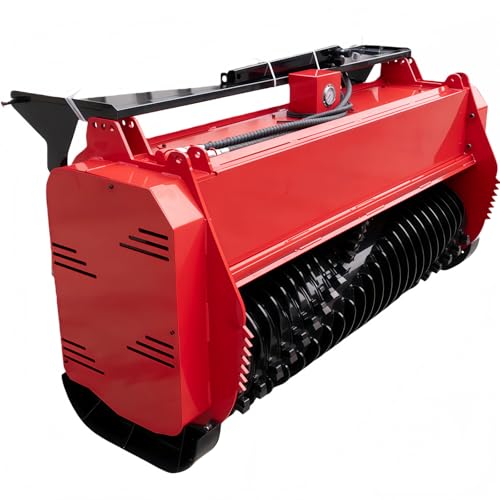
Engineered for heavy-duty land clearing, this 72-inch drum mulcher provides robust cutting capacity and a broad swath to tackle dense brush and saplings. The unit emphasizes compatibility with universal quick-attach systems and major skid-steer brands, enabling straightforward installation. Its dimensions and design optimize operator visibility and maneuverability in crowded job sites, including narrow woodlands or constricted spaces. The mulcher is built to endure extended clearing sessions, with a focus on reliable performance across varied terrain.
Performance highlights include its 60-inch clearing width philosophy translated into a larger frame for higher productivity. While the listing notes its compatibility broadly, users should verify hydraulic flow requirements and machine weight support to ensure safe operation. The attachment’s rugged construction and design aim to minimize downtimes and maximize throughput on challenging sites.
MIVA 60” Hydraulic Forestry Mulcher Attachments for Bobcat Skid Steer Loader

The MIVA 60-inch mulcher is built for stable performance on complex terrain, offering wide adaptability and robust construction. It emphasizes heavy-duty ground clearing, brush cutting, and vegetation management across landscapes such as farmland, roadside corridors, and forestry projects. The attachment is designed for universal quick attach compatibility, ensuring broad compatibility with popular skid steer brands, including Bobcat, CAT, and Kubota. The design focuses on efficient material processing and durable operation under demanding conditions.
Key attributes include a high-strength frame and reinforced components designed to handle tough vegetation and roots. The attachment’s teeth configuration and drive geometry aim to deliver reliable mulching action while preserving operator control. It is suitable for projects requiring frequent engagement in forested or semi-forested environments and seeks to minimize maintenance downtime through a simplified hydraulic drive system.
MIVA 46’’ Hydraulic Drum Forestry Mulcher Attachment

The MIVA 46-inch drum mulcher is a compact option built for skid steers over 1760 pounds. It highlights fast, efficient cutting with a 46-inch working width, suitable for dense brush, shrubs, and root systems. The attachment is designed to be compatible with major skid-steer brands via universal quick-attach systems, enabling quick installation and broad machine reach. Its hydraulic speed and torque range support effective mulching performance while maintaining reliability in agricultural, forestry, or roadside clearing contexts.
Design considerations include hydraulic pressure range and RPM responsiveness, which influence mulch fines and throughput. The compact footprint aids maneuverability in orchards, narrow lanes, and small-acreage sites. The unit’s build emphasizes durable materials and a sturdy frame to withstand continuous use in rugged terrains.
Heavy-Duty Skid Steer Loader With Track Design

This heavy-duty skid steer offers a track-based platform intended to improve stability and traction on uneven, muddy, or sloped terrains. The track design reduces ground disturbance and helps operators maintain control in challenging environments where wheeled units may struggle. This unit is described as compatible with a range of attachments, including forestry mulchers, backhoes, log grapples, and land levelers, enabling a multi-functional platform for vegetation management, earth-moving, and material handling tasks.
Considerations for track-equipped machines include soil compaction implications, maintenance of track systems, and transport logistics. Operators should verify track tension, ground pressure, and hydraulic capacity to ensure the machine can sustain mulching workloads. The track design is particularly advantageous in habitats where ground damage must be minimized or where superior flotation is needed for soft soils.
Buying Guide: Key Considerations For Picked Forestry Mulchers
- Hydraulic power and flow requirements: Confirm the machine’s hydraulic system capacity matches the mulcher’s pressure and flow ratings to avoid underperformance or component stress.
- Working width and height: A wider width increases clearing speed but requires stable ground and precise control. Check the machine’s reach and visibility to the work area.
- Durability and build quality: Look for reinforced frames, high-strength steel components, and robust tooth designs capable of handling rocks and roots without excessive wear.
- Compatibility and mounting: Ensure universal quick-attach compatibility or brand-specific mounts align with your skid steer or track loader. Verify bolt patterns, plate thickness, and safety guards.
- Terrain suitability: Track systems help on soft ground and slopes, while drum mulchers perform best in dense vegetation. Consider terrain type when selecting width, weight, and power.
- Maintenance and serviceability: Favor designs with accessible belts, easily replaceable teeth, and straightforward hydraulic connections to minimize downtime.
- Environmental impact: Mulchers reduce debris hauling by turning vegetation into mulch. Evaluate mulch quality and compliance with local firebreak and erosion control requirements.
- Operational safety: Assess guard design, debris ejection controls, and operator visibility. Ensure training and PPE recommendations align with project risk profiles.
When evaluating options, compare top-line specs such as hydraulic pressure (PSI), maximum RPM, weight, width, and attachment compatibility. Consider project timelines, terrain challenges, and equipment availability to determine whether a larger, higher-pressure mulcher or a lighter, more maneuverable unit best fits the job. Additionally, balance upfront equipment costs with long-term productivity gains from faster clearing and reduced manual labor.