Choosing the right sintered metal filter cartridge is essential for protecting sensors, extending equipment life, and ensuring clean, reliable gas streams. This article spotlights five top Amazon picks, covering stainless steel and titanium options with varying pore sizes and durability. Each product is evaluated on filtration precision, compatibility, regeneration capabilities, and broad industry applicability—from lab environments to industrial gas purification.
Summary of chosen products:
- BW Technologies GA-MFILTER Metallic Sintered Particulate Filter
- BANGTE 22160 Sintered Filter Cartridge
- TIBROMTACK Stainless Steel Sintered Porous Cup
- TIBROMTACK Stainless Steel Sintered Filter Element
- Microporous Titanium Filter Tubes (Titanium Sintered Cartridges)
BW Technologies Metallic Sintered Filter for Gas Detectors

This BW Technologies GA-MFILTER is a metallic sintered particulate filter designed for gas alert detectors. The filter helps keep dirt, dust, and moisture out of the sampling system, preventing clogging and ensuring accurate sensor readings. Its robust metal construction supports durable operation in field environments and shielded housings, making it suitable for industrial safety and environmental monitoring applications. Replacement parts can extend the service life of detectors in challenging atmospheres.
BANGTE 22160 Sintered Filter Cartridge, 5 Micron

This 5-micron sintered filter cartridge is compatible with SATA filter series 100, 200, 300, and 400. It functions as an interceptor to trap particles larger than 5 μm, reducing contamination in precision gas sampling workflows. The cartridge offers a maintenance interval of approximately six months, balancing filtration performance with practical service cadence in lab and industrial environments where dust and particulate ingress is a concern.
TIBROMTACK Stainless Steel Sintered Porous Cup
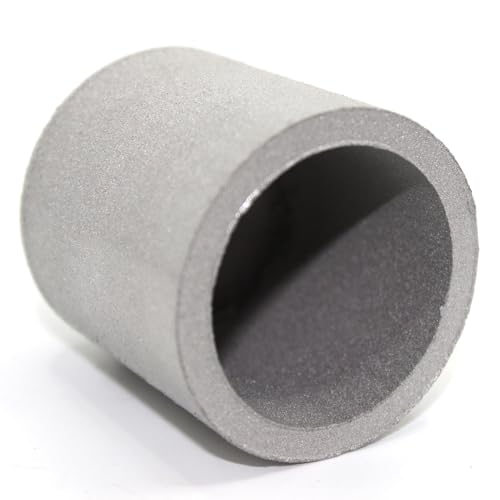
Designed as a stainless steel sintered porous cup, this cartridge features a 2 μm filtration media with a 50 mm diameter and 5 mm thickness, plus a ball-shaped bottom. It offers high strength, chemical stability, and good backwash regeneration. This makes it suitable for repeated cleaning and reuse in demanding filtration tasks across gas-liquid separation, chemical processing, and flow control systems where precise microfiltration is needed.
TIBROMTACK 316L Sintered Filter Element

This 316L stainless steel sintered filter element has a 5 μm pore size and a 19 mm diameter with 200 mm length, featuring 3/8 NPT and hex connections. It offers uniform porosity, strong chemical resistance, and robustness in humid or corrosive environments. The cartridge is designed for high penetration efficiency and stability under long-term use, making it suitable for pharmaceutical filtration, water treatment, and gas purification lines that demand reliable microfiltration.
TIBROMTACK Titanium Sintered Filter Tubes

These microporous titanium filter tubes are designed for high strength and exceptional corrosion resistance, suitable for tough chemical environments and high-temperature applications. The precise sintered structure intercepts tiny particulates, bacteria, and other impurities with high filtration precision. Common uses include pharmaceutical filtration, water treatment, gas purification, and metallurgical processes where titanium’s durability and inertness are advantageous.
Buying Guide: Key Purchase Considerations
- Filtration precision and pore size: Match the micron rating to the smallest particle you need to remove. Common options range from 2–5 μm for tight filtration to higher microns for coarse pre-filtration.
- Material compatibility: Stainless steel 316L offers strong chemical resistance and durability; titanium adds extreme corrosion resistance and high-temperature stability but may come at a higher cost. Consider the chemical nature of the gas stream and operating temperature.
- Pressure drop and flow compatibility: Sintered cartridges create pressure drop based on porosity and geometry. Ensure the unit supports the system’s flow rate without excessive resistance.
- Regeneration and maintenance: Some cartridges are designed for backwashing or cleaning to extend service life. Verify regeneration methods and recommended maintenance intervals.
- Compatibility with devices and fittings: Check connection types (NPT dimensions, barbs, or flanges) and ensure the cartridge interfaces align with existing housings and detectors.
- Operating environment: Consider outdoor, dusty, or humid environments. Metal cartridges generally perform better in harsh conditions but ensure proper sealing and corrosion resistance for your application.
- Cost of ownership: Material choice, replacement frequency, and ability to regenerate influence total cost. Titanium may offer longer life in aggressive environments but at a higher upfront price.
- Regulatory and industry context: For laboratory and medical settings, ensure compatibility with protocols and sterilization requirements if applicable.
When selecting a sintered metal filter cartridge, weigh filtration precision against system pressure, compatibility with gases, and maintenance feasibility. A well-chosen cartridge protects sensitive detectors, preserves process purity, and reduces downtime across industrial and laboratory environments.