Choosing the right silica sand for metal casting can affect detail, surface finish, and mold integrity. This guide highlights top silica sands used by hobbyists and professionals alike, with a focus on Petrobond, ultrafine foundry sands, and kiln-dried silica for high-temperature casting. Each product section provides key features to help you compare options for silver, gold, pewter, copper, and decorative metal casting.
Summary of Selected Products
| Product | Best For | Key Feature |
|---|---|---|
| Teton-Bond Petrobond Fine (130 Mesh) | High-detail metal casting | Clay-based, USA-made, compatible with precious and non-precious metals |
| 10 Lb Petrobond Casting Sand Ultra-Fine (190 Mesh) | Ultra-fine detail | Clay-based, near die-cast finish for jewelry and replicas |
| Teton supply co. Pure Silica Sand (120 Mesh) | High-temp foundry use | Kiln-dried, high-purity silica |
| 7 lbs Premium Ultra-Fine 400 Mesh Oil-Free Casting Sand | Intricate detail | Oil-free, ultra-fine to capture fine features |
| Teton-Black Olivine Fine-Mesh Water-Bonded Sand | Reusability and moisture control | 120 mesh olivine with bentonite, water-bonded |
Teton-Bond Petrobond Fine (130 Mesh)

Petrobond clay-based foundry sand designed for high-detail metal casting. This product is produced in the USA and is compatible with both precious and non-precious metals, making it suitable for intricate decorative and functional pieces. The blend aims to provide near-die-cast finishes with reduced surface defects.
10 Lb Petrobond Casting Sand Ultra-Fine (190 Mesh)

Ultra-fine Petrobond clay-based foundry sand designed to deliver highly detailed castings. It is compatible with a wide range of metals including gold, silver, pewter, aluminum, zinc, copper, brass, and bronze. This sand is known for achieving near-die-cast finishes ideal for jewelry, antiques, and statuary.
Teton Supply Co. Pure Silica Sand (120 Mesh)

Pure, kiln-dried silica sand with high-temperature performance for professional foundries. This sand is color-variant from tan to white and is intended for high-temp industrial uses where consistent particle size and dryness matter for mold strength and release.
Teton-Black Olivine Fine-Mesh Water-Bonded Foundry Sand

Fine-mesh olivine foundry sand with water-bonded moisture control. The 120-mesh olivine provides a premium mineral base for high-detail casting, and the water-bonded format helps retain mold moisture for consistent casting results across multiple pours.
7 lbs Premium Ultra-Fine 400 Mesh Oil-Free Casting Sand
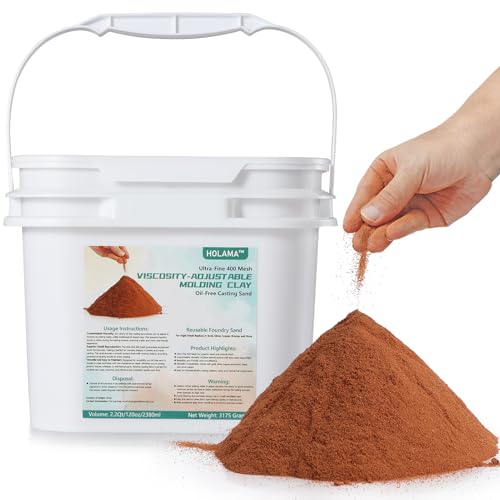
This oil-free, ultra-fine casting sand uses 400 mesh to capture minute surface details. Designed for highly precise replicas in metals such as silver, copper, and bronze, it requires careful binder and water management to avoid steam-related defects during pouring.
Rutland Silica Sand Decorative Fireplace Sand

Silica sand used as the base material in gas fireplaces and fire pits. While not a dedicated foundry sand, it offers a cost-effective option for decorative and base-layer applications, including mixing with other decorative fillers like fire glass for display purposes.
Buying Guide: Key Considerations For Selecting Silica Sand For Casting
- Particle size and mesh: Finer sands (e.g., 190–400 mesh) capture more detail but may heat transfer differently. Coarser sands (e.g., 120 mesh) offer strength for larger casts but less surface detail.
- Binder compatibility: Some sands are clay-based (Petrobond) and rely on binders, while others are oil-free or silica-only. Match binder type to your metal and pouring temperature to minimize defects and expansion.
- Moisture management: Water-bonded sands require careful moisture control to prevent steam-related defects. Kiln-dried sands reduce moisture risk but may need binders for structural integrity.
- Metal compatibility: Ensure the sand is suitable for the metals you cast (silver, gold, pewter, copper, bronze, aluminum, zinc). Some blends excel with precious metals, others with non-precious alloys.
- Reusability: Some foundry sands (like olivine-based or Petrobond) are designed for reuse with replenished binders, which can lower long-term costs for repeated casting cycles.
- Clay vs. clay-free: Clay-based sands (Petrobond) can deliver excellent detail with the right preparation but may require more handling. Oil-free sands minimize binder-related residues but demand precise process control.
- Material purity: High-purity silica reduces contaminants that can affect surface finish and alloy interactions. Kiln-dried options offer consistent dryness for predictable pours.
- Temperature stability: Silica sands should maintain integrity at your target pouring temperatures. For high-temperature alloys, select sands designed for foundry use and heat resistance.
- Cost and availability: For hobby projects, consider packaging (5–10 lb bags) and ease of acquisition. For professional foundries, larger quantities or bulk blends may be preferred.
- Safety: Silica dust exposure can be hazardous. Use proper ventilation and protective equipment when handling dry sands or grinding materials.