Whether you’re crafting custom jewelry, updating metalwork, or experimenting with textures, a reliable sheet metal rolling machine is essential. This guide highlights five top options that balance precision, versatility, and durability. Each entry explains what makes the model stand out, along with practical considerations to help you compare gear ratios, thickness ranges, and material compatibility. Explore how these 3-in-1 rolling mills transform malleable metals into sheets, wires, and half-round shapes with consistent results.
| Product | Brand | Key Feature |
|---|---|---|
| VEVOR Rolling Mill, 3″/76 mm | VEVOR | 0.1–7 mm thickness, 3-in-1 function |
| VEVOR Jewelry Press, 75mm | VEVOR | 0.03–6.5 mm thickness, 1:2 ratio |
| CTISMICE Rolling Mill, 3 in 1 | CTISMICE | 7 square + 9 half-round grooves, 0.03–6.5 mm |
| BEAMNOVA Rolling Mill Machine | BEAMNOVA | 3-in-1, hardened outer rolls |
| BIXIBIN Portable 3-in-1 | BIXIBIN | 0.03–6.5 mm, 3-in-1 rollers |
VEVOR Rolling Mill, 3″/76 mm Jewelry Rolling Mill

The 3-in-1 design lets users create thin sheets, square wires, and half-round shapes from malleable metals like gold and silver. The mill supports thickness adjustments from 0.1 to 7 mm via CNC-machined gears for accuracy. Built with durable components, the 45# steel rollers resist wear, while the gear housing is treated for corrosion resistance. This model emphasizes precision and long-term stability for jewelry makers seeking reliable shaping capabilities.
VEVOR Jewelry Press, 75mm Width

This 3-in-1 mill transforms metals into sheets, squares, and semicircles with adjustable thickness from 0.03 to 6.5 mm. Precision is aided by CNC-machined gears for superior accuracy. The rollers are crafted from 45# steel, delivering wear resistance and a smooth finish. It’s designed for crafting metal jewelry sheets, squares, and wires with a focus on fine-tuned control and consistent results across multiple tasks.
CTISMICE Rolling Mill, 3 in 1

This 3-in-1 rolling mill features a 142 mm wide roller set with 7 square grooves and 9 half-round grooves, plus a flat rolling area. The T-bar adjusts thickness from 0.03 to 6.5 mm, supported by a 6:1 gearbox for easier rolling. The compact steel framework and blue powder coating enhance durability and wear resistance, making it suitable for producing varied metal shapes with dependable consistency.
BEAMNOVA Rolling Mill Machine
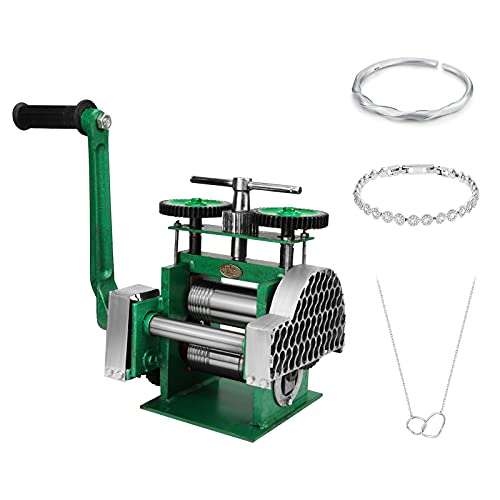
BEAMNOVA offers a heavy-duty 3-in-1 rolling mill with two hardened steel rolls and a powder-coated body. The outer rolls are hardened to around 60 HRC for improved deformation resistance. It can work with gold, silver, copper, aluminum, and other ductile metals to create thin sheets, wires, and grooves. The design emphasizes durability and precise control for frequent studio use.
BIXIBIN Portable 3-in-1 Rolling Mill

Crafted from iron and 45# steel with a baking enamel finish, this 3-in-1 rolling mill offers durable construction and rust resistance. It provides versatile rollers for sheets, square wires, and semicircles, with thickness adjustment from 0.03 to 6.5 mm. The design is suitable for DIY jewelry projects and small-batch metalworking tasks, delivering reliable performance across materials.
Buying Guide: Key Purchase Considerations
Purpose and versatility: If you need multiple outputs—sheets, wires, and semicircles—a 3-in-1 rolling mill is typically the best value. Consider whether you require textures or grooves, and ensure the model supports the material you plan to work with (gold, silver, copper, aluminum).
Thickness range and precision: Look for devices with a fine thickness range and a smooth adjustment mechanism. CNC-machined gears and a solid gearbox translate to more consistent results. Check the minimum and maximum thickness you can safely achieve for your projects.
Material and durability: Rolling mills use different steel grades and casings. Higher hardness and corrosion resistance extend tool life, especially in studio environments where frequent use is common. A heat-treated body and hardened rolls reduce deformation and scratches on metal.
Gear ratio and effort: Lower-effort operation comes from favorable gear ratios and ergonomic hand cranks. A 4:1 or 6:1 reduction helps reduce hand fatigue during long sessions. Ensure the handle maneuverability aligns with your workspace layout.
Size, weight, and workspace: Larger mills offer more grooves and broader rolling areas but require more space and strength to operate. For home studios, consider compact models with sufficient flexibility. A stable base reduces vibration and improves accuracy.
Compatibility and accessories: Verify whether the mill is compatible with a wide range of metals and thicknesses. Some models include additional grooves or accessories that expand capabilities. If you anticipate texture work or custom grooves, check available add-ons.
Price-to-performance: Compare features against cost, focusing on life expectancy, warranty, and the availability of replacement parts. A slightly higher initial investment can pay off with better precision and longevity over time.
User-friendliness: Especially for beginners, a straightforward adjustment process and clear markings help minimize setup time. Review user manuals or instructional videos to gauge ease of use and maintenance needs.