Choosing the right semi-electric pallet truck can boost productivity, reduce operator fatigue, and improve overall material flow. The following selections highlight a range of capacities, lifting heights, and design features to fit various warehouse layouts and pallet types. Below is a quick summary of the selected models to help you compare at a glance.
| Product | Brand | Capacity | Fork Size | |
|---|---|---|---|---|
| SUNMAX Semi-Electric Pallet Stacker | SUNMAX | 3300 lbs (1500 kg) | Unknown | 78 in (2000 mm) |
| VEVOR Electric Pallet Jack | VEVOR | 4400 lbs | 48 x 27 in | 7.5 in |
| Tory Carrier Full Electric Pallet Jack Truck | T Tory Carrier | 3300 lbs | 48 x 27 in | Includes battery/charging setup |
| DMC-FPPS 3300lbs Semi-Electric Pallet Truck | DMC-FPPS | 3300 lbs | 21.6 in wide, 550 mm overall | 8.07 in |
| HPDMC Semi Electric Pallet Jack Trucks | HPDMC | 3300 lbs | 21.6 in wide, 550 mm | 8.07 in |
SUNMAX Semi-Electric Pallet Stacker

The SUNMAX model combines a high load capacity with a substantial lifting height, designed for open-case pallets. Its 3300 lb (1500 kg) capacity supports heavy loads, while the 78 inch lifting height facilitates vertical storage and retrieval in warehouses with limited floor space. Note that the legs are fixed, so this unit is best suited for open-case pallet configurations on level floors. Durable polyurethane wheels contribute to smooth, steady operation on flat surfaces, reducing operator fatigue and maintenance needs.
VEVOR Electric Pallet Jack
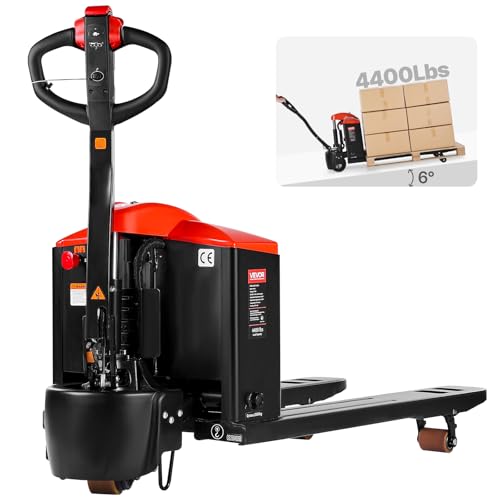
The VEVOR unit delivers a high loading capacity of 4400 lbs (2 tons) with a sturdy steel frame and reinforced forks. It features adjustable fork height (2.95 to 7.5 inches) and a throttle-based control for precise movement. The 48 x 27 inch forks fit most pallets, and the tapered ends support easy pallet entry. With a compact footprint and a turning radius around 52.76 inches, it remains maneuverable in tighter warehouse aisles and aisles with tight corners.
T Tory Carrier Semi Electric Pallet Jack Truck

This model emphasizes indoor efficiency with a 3300 lb capacity and 48″ x 27″ forks. It includes a lithium battery (24V/20Ah) and is designed for easy handling and operation, with a compact size and a multi-functional control handle that supports lifting, lowering, acceleration, and emergency features. The design favors ease of assembly and safe transit, making it suitable for daily warehouse tasks in controlled environments.
DMC-FPPS 3300lbs Semi-Electric Pallet Truck

The DMC-FPPS semi-electric pallet truck offers a 3300 lb loading capacity with a max fork lifting height of 8.07 inches and a min lowered height of 3.34 inches. Its design emphasizes compact lifting mechanics and stable operation, suitable for garages, shops, and warehouses where space is at a premium. A practical choice for lighter industrial environments or as a secondary handling solution on a shop floor.
HPDMC Semi Electric Pallet Jack

The HPDMC model mirrors typical semi-electric pallet jacks with a 3300 lb capacity and a similar fork width of 21.6 inches. It provides a practical blend of powered lifting and manual maneuverability, suitable for environments that require frequent pallet handling with moderate elevation and stable tracking across flat floors. The compact dimensions make it useful for narrow aisles and storage bays.
Apollo Full Electric Pallet Truck
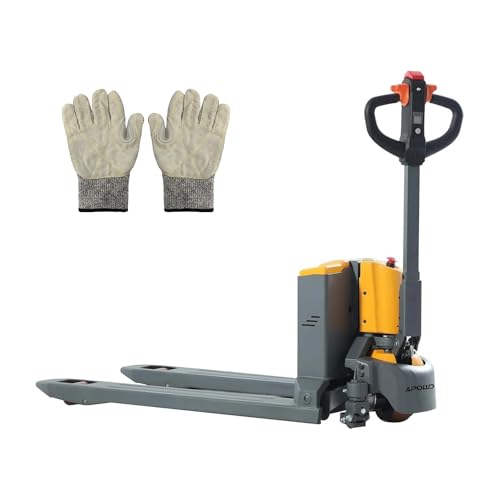
The Apollo full electric pallet truck weighs in with a higher load capacity of 4400 lbs and a 48 x 27 inch fork dimension. It features a 7.3 inch lifting height and a compact footprint designed for tight spaces. Travel speeds are specified for laden and unladen operation, and the unit emphasizes high-torque braking and a replaceable lithium battery for improved efficiency. This model suits demanding warehouse workflows requiring robust electric assistance.
T Tory Carrier Semi-Electric Stacker

Offering a 3300 lb capacity with a lifting height up to 118 inches, this fixed-leg model is designed for Euro or block pallets. It uses a chain assist system to ease steering and reduce operator effort, along with an explosion-proof brake design and robust steel construction. It is best used on level ground and in controlled industrial environments to maximize safety and efficiency.
Buying Guide
- Capacity needs: Select a model whose weight rating aligns with your heaviest pallet loads. Many semi-electric jacks top out around 3300 lbs, with some options up to 4400 lbs for heavier or bulkier loads.
- Fork dimensions: Fork width and length determine pallet compatibility. Common sizes are 27 x 48 inches; verify compatibility with your pallet stock.
- Lifting height: Lifting range matters for high racking or stacking. For open-case pallets, higher clears are beneficial; for ground-level transport, lower lifts may suffice.
- Power system: Lithium batteries offer longer life and faster charging but check availability of spare batteries and charging cycles suitable for your shift patterns.
- Wheel and chassis design: Polyurethane wheels and robust frames improve durability on flat warehouse floors. Fixed-leg designs suit Euro pallets, while straddle-type machines adapt to mixed pallet configurations.
- Maneuverability: Look for turning radius and overall footprint to fit aisles and dock areas. Narrow-aisle warehouses benefit from compact layouts and good steering controls.
- Safety features: Emergency stops, brake systems, and ergonomic handles reduce operator risk. Explosion-proof or reinforced brakes are relevant in specific environments.
- Maintenance and serviceability: Availability of spare parts, battery replacements, and service support can influence total cost of ownership over time.
- Environment suitability: Indoor use is common, but some models tolerate minor incline or uneven surfaces. Confirm that the unit is rated for your floor conditions.
- Future needs: Consider whether you may need higher lifts, heavier pallets, or compatibility with Euro pallets to guide long-term purchases.
When selecting a semi-electric pallet truck, prioritize a balance of capacity, lift height, and maneuverability that matches your warehouse layout and pallet types. Reliability, safety, and cost of ownership should guide the final choice alongside immediate operational requirements.