Self-contained fire suppression systems provide a fast, automatic response to cooking and other common fires without requiring complex installation or ongoing maintenance. This article highlights five practical options that suit American households, apartments, and small kitchens. Each product section explains how the system works, where it fits best, and what to consider when choosing. A concise buying guide follows to help you compare features, reliability, and installation needs.
| Product | Brand | Use Case | Key Benefit |
|---|---|---|---|
| StoveTop FireStop Rangehood Fire Suppressor | StoveTop FireStop | Residential kitchens | Automatic, grease-fire tested, quick activation |
| HAVEN Automatic Fire Suppression Device | HAVEN | Residential, attics, garages | Heat-activated, non-toxic dry chem |
| Lifeline Racing Fire System Zero 2020 | Generic | Racing/industrial setups | Complete ready-to-install system |
| ComplianceSigns.com Fire Suppression System Sign | ComplianceSigns | Safety signaling | Clear visibility for safety messaging |
| FireSlayer Automotive RV Tube Extinguisher | FireSlayer | Vehicle, RV, off-grid | Auto discharge with clean agent |
StoveTop FireStop Rangehood Fire Suppressor

The StoveTop FireStop system is designed for residential kitchens with four-burner stoves, offering automatic fire suppression in the event of a grease fire. The device is positioned under the range hood and activates when exposed to direct flame contact, releasing a dry-powder extinguishing agent to rapidly reduce flames. The installation is described as easy, aided by magnets for quick mounting, and the unit is specifically tailored for kitchen fire protection where it matters most—at the source of the flame.
Key considerations include its compatibility with standard residential ranges, the need for maintenance reviews (to ensure magnets and activation mechanisms remain functional), and the potential for residue cleanup after deployment. Users should confirm that the system is suitable for their range hood configuration and understand how to service or replace spent extinguishing material after an incident.
HAVEN Automatic Heat-Activated Fire Suppression Device

The HAVEN system is a heat-activated fire suppressant designed for residential applications and other spaces where a power source may not be readily available. It opens at 135°F (57°C) and dispenses a non-toxic dry chemical to suppress a fire in a defined area, typically up to around 100 square feet, according to its specifications. The device emphasizes reliability in cold environments and does not rely on airflow or smoke detection, which helps reduce nuisance activations. It offers a five-year protection window in certain configurations, with the caveat that battery testing or replacement can be necessary if monitoring is part of the setup.
Considerations include ensuring the unit’s heat-activation temperature aligns with the space’s risk level, evaluating whether no-power operation suits the location (such as a garage or workshop), and planning for safe post-discharge cleanup and replacement of the unit after its service life ends.
Lifeline Racing Fire System Zero 2020

This option targets industrial or racing environments, presenting a complete water-based ABF foam system with five nozzles, two pull cables, mounting brackets, and tubing. It’s designed as a turnkey installation for areas requiring robust fire coverage and is clearly labeled as not intended for food trucks. While intended for more demanding settings, its comprehensiveness offers a model for how compact self-contained systems can provide immediate suppression without external power or complex control systems.
Key considerations include the intended installation environment, the density and reach of spray coverage, maintenance requirements, and compatibility with other safety systems in a given facility. Users should assess whether their space benefits from a comprehensive, all-in-one package or if a smaller, kitchen-focused unit is more appropriate.
ComplianceSigns Fire Suppression System Sign

Signage plays a critical role in fire safety, and this red 10×7 inch plastic sign communicates fire protection messaging clearly. It’s semi-rigid, laminated for durability, and features rounded corners with mounting holes for straightforward installation. While not a suppression device itself, clear labeling helps ensure that building occupants and responders understand the location and scope of any installed system, which can reduce response time during an incident.
Consider how signage complements suppression equipment, such as ensuring visibility near kitchen hoods, mechanical rooms, or vehicle bays where automatic systems are deployed. Durable signs can withstand outdoor use and harsh environments, contributing to a safer overall system design.
(2 Pack) OSHA Notice Sign For Fire Suppression
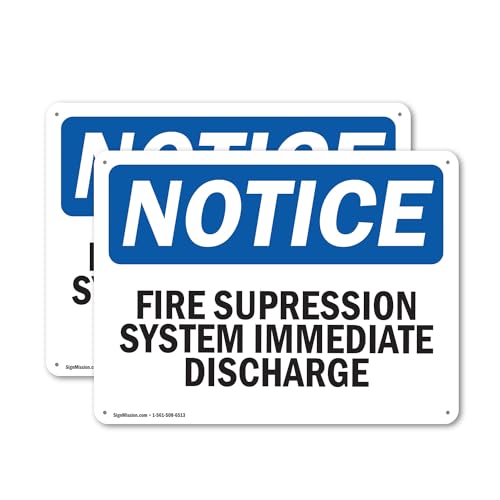
These 10×7 inch aluminum notices provide durable, weather-resistant labeling for workplaces or outdoor installations. They’re designed to be highly visible and resistant to rust, ensuring long-term readability. The signs support compliance with safety protocols and help inform staff about fire suppression procedures, emergency exits, and related safety requirements in a visible, durable format.
When selecting signage, consider placement strategy, climate exposure, and whether multiple languages or pictograms are needed for diverse workforces or visitors. Durable metal signs offer longevity in challenging environments, contributing to clearer safety communication in conjunction with self-contained suppression systems.
2Pack Fire Extinguisher For Home – 4 In 1
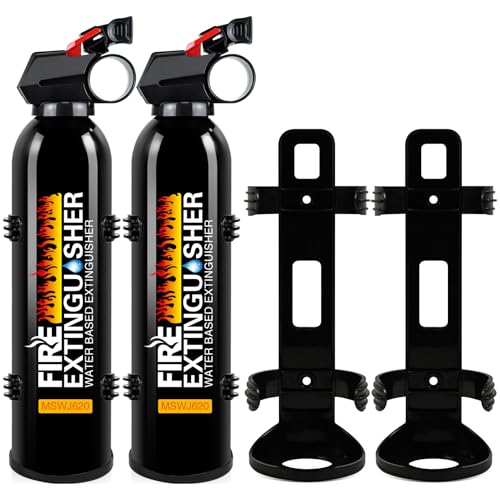
This two-pack of portable, 4-in-1 extinguishers is designed for home, vehicle, and small workspace use. Capable of tackling Class A, B, C, and K fires, the units feature a 13-foot spray range and a water-based formulation intended to minimize residue. While not a fixed self-contained suppression system, portable extinguishers complement fixed systems by providing rapid-response options in multiple locations, including kitchens, workshops, and vehicles.
Key considerations include extinguisher type suitability for potential fire classes in a given space, maintenance intervals, and the ability to mount or store the units for quick access. Proper training on use and regular inspections are essential for effective deployment.
Buying Guide: Self-Contained Fire Suppression Systems
- Risk assessment: Identify the primary fire risks in your space (kitchen grease fires, garages, attics, vehicles). Choose a system tailored to that risk profile and consider whether a heat-activated or auto-activated solution best fits the environment.
- Activation method: Auto-activated systems offer rapid response without human intervention but require reliable actuation temperatures and a clearly designated activation area. Non-toxic, dry-chemical agents reduce cleanup impact but require post-discharge planning.
- Installation and maintenance: Look for products with straightforward installation and minimal maintenance needs. Magnetic mounting or simple mounting brackets can ease retrofits in existing homes. Consider whether professional installation is advisable for certain configurations.
- Coverage area: Verify the square-footage coverage and the recommended number of nozzles or discharge points. In kitchens, focus on devices positioned to protect the flame source; in larger spaces, a system with multiple discharge points may be necessary.
- Environmental considerations: If the space is unoccupied during certain times (garages, unheated sheds), ensure the system remains effective in cold temperatures or without power. Dry-chemical agents should be chosen for user safety and cleanup ease.
- Signage and training: Complement suppression equipment with clear safety signage and occupant training on emergency procedures and the basics of how a system operates.
- Cost and lifecycle: Consider initial cost, replacement intervals for extinguishing agents, and the potential need for periodic inspections to maintain compliance with safety standards.
- Compliance and labeling: Use warning signs and labels to communicate fire safety protocols. Ensure that any system integrates with building codes and local safety requirements.
Selecting a self-contained fire suppression approach involves balancing immediate fire protection with practicality, cost, and long-term maintenance. The options above cover a spectrum from kitchen-focused, automatic solutions to broader safety signaling and portable extinguishers. When evaluating, prioritize devices with clear activation mechanisms, reliable discharge materials, and straightforward installation that fits your space and usage patterns.