Choosing a reliable second stage propane regulator is essential for stable gas pressure to appliances and generators. This guide highlights top-rated options that balance safety, compatibility, and adjustable output. Each product below is designed to work with a first stage regulator at the tank and provides 9 to 13 inches of water column (W.C.) output range for steady performance in typical residential or portable setups. Use the summary table to compare key specs at a glance.
| Product | Output (inches WC) | Inlet | Output Connection | Notes |
|---|---|---|---|---|
| Marshall 1652-CFF Second Stage | 9–13 | 11″ WC | 1/2″ x 3/4″ NPT | Backmount design |
| Marshall 1622-BCF Second Stage | 9–13 | 11″ WC | 1/2″ x 1/2″ NPT | Straight through, compact |
| Emerson-Fisher R622-DFF | 9–13 | 10 psig inlet | 3/4″ x 3/4″ NPT | Standard 10 psi reg; emergency inlet 50 psi |
| Marshall 1642-DFF Generator Regulator | 9–13 | 10″ WC | 3/4″ side outlet | Side outlet configuration |
| Emerson-Fisher R622-CFF | 9–13 | 1/2″ x 3/4″ NPT | FNPT | Compact, versatile |
The listed products cover common second stage options for propane systems, including backmount and side-outlet configurations. All assume the presence of a matching first stage regulator at the tank and an overall system designed for typical 9–13 inch water column output. The features emphasize inlet and outlet compatibility, ease of integration, and reliability for prolonged operation.
Marshall 1652-CFF Second Stage Propane LP Regulator

The Marshall 1652-CFF delivers an 11″ water column output with a 1/2″ to 3/4″ NPT configuration. It uses a backmount design and requires a 10 psi input from a first stage regulator at the tank. The adjustable output range spans 9″ to 13″ water column, enabling precise gas pressure control for compatible appliances and equipment. This model emphasizes reliability in applications where a robust, backmounted second stage is beneficial, such as stationary setups or fixed installations.
Key considerations: ensure the first stage provides the specified 10 psi input, verify the 1/2″ x 3/4″ NPT output matches your system piping, and confirm compatibility with downstream regulators or appliances. The backmount arrangement helps with stable mounting and accessibility for adjustments in field use.
Marshall 1622-BCF Second Stage Propane LP Regulator

The 1622-BCF model provides an 11″ water column output with 1/2″ x 1/2″ NPT connections in a straight-through design. It requires 10 psi input from a first stage regulator and offers adjustable output from 9″ to 13″ W.C. The straight-through configuration is useful where a direct, compact flow path is desired, simplifying routing in tighter installations. This regulator is well-suited for portable or fixed propane systems needing reliable second-stage performance.
Important setup notes: confirm inlet and outlet thread sizes match your existing piping, and ensure downstream devices accommodate the 9–13″ W.C. range. Regular inspection of seals and calibrations will support consistent operation in varying ambient conditions.
Emerson-Fisher LP-Gas Equipment R622-DFF
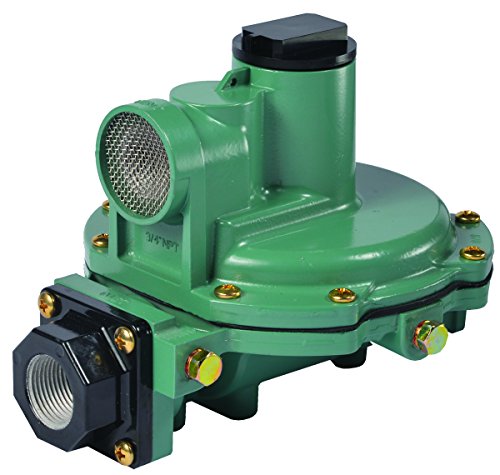
The R622-DFF 2nd Stage Regulator from Emerson-Fisher features a 3/4″ x 3/4″ NPT outlet with a 1st stage input at 10 psig. It offers a precise 9–13″ W.C. outlet range and body sizes suitable for common propane gas systems. The design accommodates standard connection styles and balances safety with adjustable pressure control for steady appliance performance. It is designed to be compatible with existing 10 psi high-pressure first stages at the tank.
Considerations include verifying compatibility with your first stage regulator and ensuring the inlet and outlet sizes align with your piping. The regulator’s emergency inlet rating provides a bounded operating envelope for safer field operation, particularly in outdoor or remote installations.
Marshall 1642-DFF Generator Regulator

The 1642-DFF is a generator-oriented second stage regulator with an 11″ water column output and a 3/4″ side outlet. It requires a 10 psi input from a first stage regulator and provides an adjustable 9–13″ W.C. output. This configuration is useful for generator setups that demand consistent gas supply under varying load conditions. The side outlet can simplify piping when space is limited or when routing around equipment is necessary.
Practical tips: ensure the side outlet routing does not create backpressure on downstream components and verify that all connections are sealed to prevent leaks. Regular testing under load will help verify regulator responsiveness during peak operation.
Emerson-Fisher LP-Gas Equipment R632A-CFF Integral 2-Stage

The R632A-CFF integrates a two-stage regulator with a 1/4″ x 3/4″ NPT output, designed for propane systems requiring robust control. It supports a high inlet rating and provides a 9–13″ W.C. outlet range. This option is suitable for compact installations where a tightly integrated regulator package is advantageous. The integral design can streamline mounting and reduce leak points in complex piping networks.
When selecting this model, check whether your system’s inlet pressure aligns with the regulator’s 10 psig maximum, and confirm that the 1/4″ x 3/4″ connection matches your downstream equipment. As with all second-stage regulators, periodic recalibration and leak checks are important for ongoing safety and performance.
Buying Guide: Key Purchase Considerations
- System compatibility: Match inlet and outlet sizes to your existing piping and first-stage regulator. A mismatch can cause leaks or instability in pressure.
- Output range alignment: Confirm the regulator’s 9–13″ W.C. range fits the fuel appliances and regulators downstream. If your devices require tighter control, choose accordingly.
- Mounting and orientation: Backmount designs offer stability, while side outlets can simplify routing in tight spaces. Ensure the chosen model fits your installation layout.
- First-stage interaction: Most second stages assume a 10 psi input from a first-stage regulator. Verify that your tank setup supplies that pressure and that all components are rated for the same operating window.
- Safety and standards: Look for regulators built to meet industry safety standards and that have proven field reliability for propane systems in both residential and outdoor environments.
- Maintenance and accessibility: Choose models with straightforward calibration access and easy seal inspections to support long-term performance.
- Environmental conditions: Outdoor use can affect regulator performance. Consider weatherproof or corrosion-resistant variants if exposure is a factor.
- Future expansion: If you anticipate upgrading other components, opt for a regulator with compatibility across a range of inlet/outlet configurations to minimize future changes.
In selecting a second stage propane regulator, prioritize matching the exact connection types, ensuring the 9–13″ W.C. range fits your appliances, and confirming the presence of a compatible first stage at the tank. The products above represent commonly used configurations that balance reliability with practical installation options for American users.