Choosing the right sand for aluminum casting affects detail, finish, and yield. This guide reviews five top sands designed for high-detail aluminum work, covering petrobond clay-based mixes and ultra-fine silica options. Each product below is suited for precise jewelry, art casting, and small aluminum components, with compatibility across precious and non-precious metals. Use the buying guide to compare texture, binders, reusability, and handling to match your project needs.
| Product | Net Weight | Mesh / Texture | Key Benefit |
|---|---|---|---|
| 10 Lb Petrobond Casting Sand Ultra-Fine | 10 lb | 190 Mesh | High detail, die-cast finish |
| 7 Lbs Premium Ultra-Fine 400 Mesh Oil-Free Casting Sand | 7 lb | 400 Mesh | Exceptional detail, oil-free handling |
| 14 lbs Premium Ultra-Fine 400 Mesh Oil-Free Casting Sand | 14 lb | 400 Mesh | Excellent surface finish and detail |
| Ultra-Fine 400 Mesh Oil-Free Casting Sand | 5 lb | 400 Mesh | Reusable and precise for jewelry casting |
| 6 lb Natural Casting Sand Ultra-Fine 400 Mesh | 6 lb | 400 Mesh | Natural composition, high detail |
10 Lb Petrobond Casting Sand Ultra-Fine

Product highlights include a 10-pound bag of Premium Ultra-Fine Petrobond clay-based foundry sand (190 mesh). It is compatible with both precious and non-precious metals, including aluminum and gold. The mix supports highly detailed castings and near-die-cast finishes, making it suitable for jewelry, antiques, statues, coins, and similar items that demand fine detail. The clay-based binder helps control flow and surface fidelity for small aluminum parts and detailed components.
7 Lbs Premium Ultra-Fine 400 Mesh Oil-Free Casting Sand
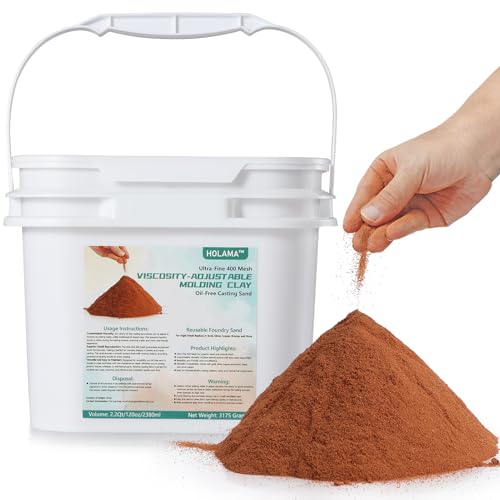
This oil-free, ultra-fine 400-mesh sand is designed for skilled artisans seeking sharp detail. Proper binder and water ratios are essential to achieve the right viscosity and minimize steam during casting. It offers versatile compatibility with gold, silver, pewter, aluminum, zinc, copper, brass, and bronze, and excels in producing highly detailed replicas and intricate jewelry pieces with smooth surface finishes.
14 lbs Premium Ultra-Fine 400 Mesh Oil-Free Casting Sand

This larger 14-pound bag provides the same oil-free 400-mesh performance with a focus on high-detail reproduction for metal jewelry and small-scale castings. It supports detailed replicas in silver, copper, bronze, and other metals, while keeping surface defects to a minimum. Suitable for experienced users who require repeatable, fine-grained results in aluminum casting projects.
Ultra-Fine 400 Mesh Oil-Free Casting Sand

This oil-free sand is designed for highly detailed jewelry casting with a 400-mesh texture. It’s reusable and emphasizes precise reproduction of fine features. The product stresses compatibility with a broad metal range, including aluminum, gold, silver, zinc, copper, brass, and bronze, making it a versatile choice for both precious and non-precious metal casting.
6 LBs Natural Casting Sand Ultra-Fine 400 Mesh

BoldWay’s natural casting sand uses a high SiO2 content with no added chemicals, delivering durable, fire-resistant molding sand suitable for various casting methods. The ultra-fine 400-mesh texture yields fine surface detail for aluminum parts and jewelry replicas. It supports multiple metals, including gold, silver, copper, zinc, brass, aluminum, and bronze, and can be air-dried after plasticization for simple sculpture uses as well.
Buying Guide
Key considerations when selecting sand for aluminum casting include texture and mesh size, binder type, oil content, reusability, metal compatibility, and handling requirements. High-detail aluminum work benefits from finer meshes (400 mesh) that capture small features but may require careful moisture and binder management to avoid defects. Clay-based petrobond mixes typically offer excellent detail and a near-die-cast finish, while oil-free silica sands emphasize repeatable surface quality and clean burn-out. Reusable options can reduce waste but may demand thorough cleaning between pours. For beginners, start with a proven oil-free 400-mesh sand with broad metal compatibility. For jewelry or intricate parts, consider ultra-fine blends in the 190–400 mesh range with careful process controls. Compare net weight, reusability, and storage conditions to fit your project scale and workspace. Also consider whether you need quick setup with minimal equipment or a more controlled workflow that demands precise binder and water ratios to avoid steam and surface defects. Finally, verify that the chosen sand supports the metals you plan to cast, particularly aluminum, to maximize yield and detail without compromising surface finish.