The right safety belt can help reduce risk during lifting, transfers, and daily mobility tasks. This guide reviews high‑quality belts and braces designed for back protection, patient transfers, and weightlifting stability. Each option balances support, comfort, fit, and durability to suit work floors, clinics, and home care settings. Read on to compare key features and pick the belt that best fits your task, body type, and activity level.
Summary Table of Chosen Products
| Product | Brand | Focus | Notable Feature |
|---|---|---|---|
| Gait Belt With 7 Handles | Vive | Transfers & safety | 7 padded handles, quick-release buckle |
| Gait Belt For Elderly & Therapy | Leetye Mei | Mobility assistance | 7 handles, ergonomic design |
| Self-Locking Weight Lifting Belt | Element 26 | High‑spec lifting | Self‑locking buckle, 4 inch width |
| Gymreapers Quick Lock Weight Belt | Gymreapers | Powerlifting & cross training | Rapid locking buckle, full belt width |
| RitFit Weight Lifting Belt | RitFit | General lifting stability | 6 inch wide, durable trim |
Vive Gait Belt (300lbs) Transfer Belt

The Vive Gait Belt is designed for patient transfers and care tasks, featuring seven padded handles that provide multiple grip angles for safer assistance. This design helps caregivers secure traction from different directions, reducing the likelihood of caregiver strain or patient falls during mobility work. The padded handles improve grip comfort, particularly during longer transfer sessions, while the belt’s adjustable fit accommodates waists up to 51 inches. A durable metal buckle locks securely, and a quick-release latch enables rapid removal when needed. This belt emphasizes practical, versatile transfer support in clinical and home settings.
Key features include: seven padded handles for multi-angle control, a sturdy metal buckle with a quick-release design, and an adjustable length that fits a wide range of body sizes. Users should ensure proper belt positioning around the pelvis and hips for optimal transfer control, especially when assisting patients with step movements or bed-to-chair transfers. Regular inspection of the buckle and strap material is advised to maintain safety performance over time.
SOLOEVER Work Back Brace With Suspenders
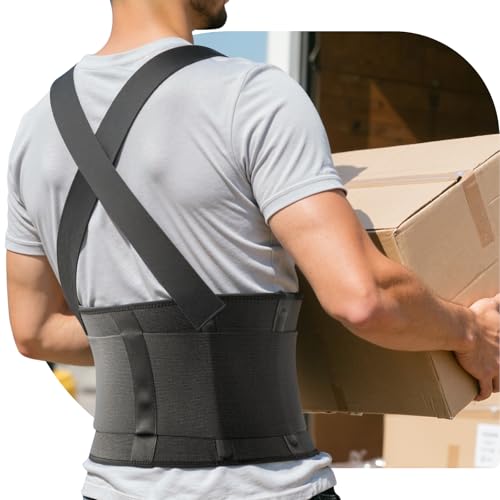
The Soloever Work Back Brace with adjustable suspenders targets lower back support for jobs involving heavy lifting and long hours on duty. It emphasizes posture correction and extended wear comfort with breathable materials designed to stay cool in demanding environments. The suspender design adds stability, helping belts remain in place during movement and reducing fatigue for those who perform repetitive lifts in construction, warehousing, or logistics tasks. This belt is suitable for both men and women seeking reliable lumbar support without compromising mobility.
Core benefits include: substantial lower back reinforcement, durable and breathable fabric for all-day wear, and suspenders that secure the brace for extended shifts. When selecting a size, verify the waist measurement and consider the required level of support for typical tasks, particularly if lifting overhead or rotating the torso is common in your workflow. Daily wear practicality is enhanced by its light, flexible construction compared with bulkier braces.
Self-Locking Weight Lifting Belt – Element 26

The Element 26 Self-Locking Weight Lifting Belt introduces a self-locking buckle designed to secure lifts with consistent intra-abdominal pressure. The belt prevents accidental opening during heavy lifts and is marketed toward serious strength training and competition. Its 4‑inch width provides a stable belt line, contributing to a uniform support profile around the core. This belt is intended for athletes performing Olympic lifts, powerlifting, and functional fitness movements, with emphasis on belt security and reliability during maximal attempts.
Important considerations include: a buckle that releases only when the release roller is pulled, reducing risk of sudden belt failure, and a contour that supports the torso evenly. The belt’s design aims to deliver predictable core engagement across lifts. If you train in events with strict competition rules, verify competition compatibility and ensure the belt meets your sport’s weightlifting standards before use.
Gymreapers Quick Locking Weight Lifting Belt

The Gymreapers Quick Locking Weight Lifting Belt focuses on rapid buckle operation for time-sensitive workouts and transitions between lifts. Its 4‑inch profile mirrors standard lifting belts intended to support core stability during squats, deadlifts, and other compound movements. The belt’s locking mechanism is designed to stay secure under heavy loads while allowing quick adjustments for dynamic training sessions. The belt’s design aligns with athletes who value efficient setup and consistent support during demanding routines.
Key considerations include: a durable buckle system that minimizes downtime, full belt width for uniform support, and guidance on sizing. Following the sizing chart helps ensure the belt sits properly along the torso to deliver optimal intra-abdominal pressure. While it supports heavy work, users should verify comfort around the hips and abdomen, particularly for longer training blocks or higher rep ranges.
RitFit Weight Lifting Belt

The RitFit Weight Lifting Belt emphasizes a broad, stable base with a six-inch width, designed to provide core support during squats, deadlifts, and other lifts. Its durable construction and reinforced trim aim to resist wear in regular training sessions. The belt works to enhance intra-abdominal pressure for improved lifting performance while maintaining user comfort through a snug but nonrestrictive fit. Athletes seeking a versatile belt for diverse lifts may find RitFit a balanced option for daily use and more intense sessions alike.
Purchase considerations include sizing accuracy, material breathability, and compatibility with your preferred lifting style. A belt with true six-inch width offers substantial support, though individuals with a shorter torso or hip flexor sensitivity may prefer a narrower alternative. Regular inspection of seams, stitching, and the buckle ensures long-term reliability during frequent training cycles.
Buying Guide: Key Purchase Considerations
- Intended use: Choose gait belts for transfers and patient handling, while lifting belts are ideal for powerlifting, Olympic lifts, or heavy-load tasks.
- Fit and size: Look for adjustable belts with clear sizing charts. A belt should sit around the midsection without restricting breathing or causing chafing.
- Buckle security: Self-locking or quick-release buckles reduce risk during lifts and transfers. Ensure the mechanism is simple to operate but secure under load.
- Padding and comfort: Padded handles on gait belts improve grip and safety during transfers. For back braces, breathable materials help all-day wearability.
- Material and durability: High-quality fabrics, reinforced stitching, and corrosion-resistant hardware extend belt life in busy environments.
- Mobility vs. support: Some designs prioritize full torso support; others emphasize flexible movement. Consider the balance that fits your routine.
- Care and maintenance: Check washing instructions and inspect for wear regularly to maintain safety performance.
- Certification and usage: For competition athletes, confirm belt approvals and sport-specific guidelines. Medical or care-use belts should comply with safety standards in clinical or home settings.
The selection above presents belts tailored for different demands—caregiving transfers, back protection for labor tasks, and weightlifting performance. Each option emphasizes secure fittings, user comfort, and durable construction to support safe, efficient movement in American work and home environments.