Choosing the right roller mill can improve mash efficiency, protect hull integrity, and speed up your brewing workflow. This guide highlights five reliable grain mills designed to crush malt and barley with adjustable gaps, sturdy bases, and optional drill compatibility. Whether you’re upgrading from a manual grinder or setting up a new homebrew station, these selections balance capacity, durability, and value for American homebrewers.
| Product | Brand | Hopper Capacity | Notable Feature |
|---|---|---|---|
| Northern Brewer Hullwrecker 2-Roller Grain Mill | Northern Brewer | Standard 5–6.5 gallon bucket base | Fully adjustable gap: 0.025” to 0.1” |
| FERRODAY 2 Roller Stainless Steel Malt Mill | Ferroday | 7.7 lb hopper | 5″ rollers; 0.025”–0.1” adjustable; drill-ready |
| Brewland Grain Mill (2 Rollers, 7.7 lb Hopper) | Brewland | 7.7 lb hopper | Two grinding modes; drill compatible |
| FERRODAY Malt Mill 2 Roller Stainless Steel | Ferroday | 7.7 lb hopper | Drill mode; 0.025”–0.1” adjustment |
| MRbrew Malt Mill Homebrew | MRbrew | Wide base for bucket mounting | 0.025”–0.1” adjustable; durable ball-bearing rollers |
Hullwrecker 2-Roller Grain Mill
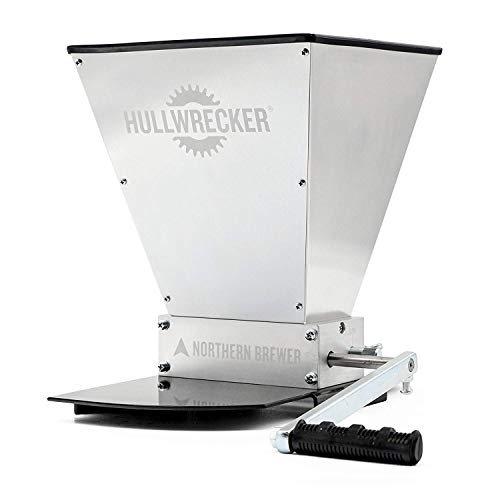
The Hullwrecker 2-Roller Grain Mill combines a robust metal base with fully adjustable rollers. The gap can be set from 0.025 inches to 0.1 inches, enabling precise control over crush size to match extract preferences. Its included metal base is designed to fit standard 5-gallon or 6.5-gallon buckets, simplifying setup and reducing the need for additional accessories. This mill emphasizes dependable performance and straightforward operation, making it a solid option for serious homebrewers seeking repeatable results.
FERRODAY 2 Roller Stainless Steel Malt Mill

This steel-bodied Malt Mill from Ferroday features 5-inch rollers with 12 TPI knurling and a large 7.7-pound hopper. The adjustable gap ranges from 0.025 to 0.1 inch, letting brewers tailor the crush while keeping hull integrity for sparging. A notable benefit is the drill-ready design; attach a low-speed drill to speed up large-batch milling and reduce manual effort during intense brew days.
Brewland 2 Roller Grain Mill
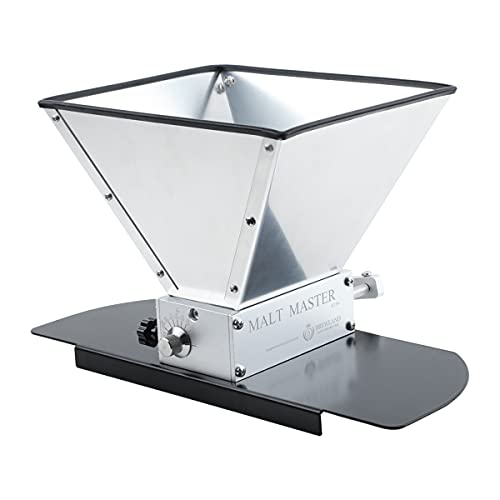
Brewland’s 2-roller model centers on a 7.7-pound hopper and dual grinding modes. It supports manual milling or motorized operation with a low-speed drill and an effective drive shaft. The gap adjustment covers fine tunings from 0.025 to 0.1 inch, delivering consistent crush and good mash efficiency. The sturdy metal base helps stabilize grinding during longer sessions and larger batches.
FERRODAY Malt Mill 2 Roller (No Base)

Ferroday’s 2-roller Malt Mill uses food-grade stainless steel for rollers and a corrosion-resistant aluminum alloy crank handle and hoppers. It features a 7.7-pound hopper and an adjustable gap between 0.025 and 0.1 inch for precise malt milling. The drill mode supports quick throughput of up to seven pounds in one minute, depending on drill power and grain type. This version emphasizes durability and ease of cleaning, with a focus on large-batch efficiency.
MRbrew Malt Mill Homebrew

MRbrew’s Malt Mill offers adjustable roller gaps from 0.025 to 0.1 inch and a durable metal base designed to fit standard buckets. It employs heavy-duty ball-bearing rollers for smooth operation, helping maintain consistent grind quality across batches. The mill is designed for long-term use, with a crank handle and compatibility with low-speed electric drills to speed up milling during high-volume brews.
Buying Guide
- Grain type and batch size: If you brew large batches or use malted barley regularly, prioritize mills with 7.7 lb hoppers and drill compatibility to maintain throughput.
- Roller gap adjustability: Look for a range around 0.025–0.1 inch to dial in crush size for optimal mash efficiency and hull protection.
- Build quality and base design: A sturdy metal base that fits common bucket sizes reduces setup time and improves stability during grinding.
- Drill compatibility: If you plan to motorize milling, ensure the mill supports safe integration with a low-speed drill and that the drive shaft is durable.
- Maintenance and cleaning: Stainless steel rollers and corrosion-resistant components simplify cleaning and extend service life.
- Ease of disassembly: Apps and online reviews often note how easy it is to disassemble for cleaning or blade adjustments; this matters for frequent brewers.
- Price-to-performance: While premium models may offer larger hoppers and faster milling, consider your typical batch size and budget to find the best value.
- Compatibility with buckets: A base designed to fit standard brewing buckets saves time on setup and reduces the risk of spills.
When selecting a roller mill, balance hopper size, adjustability, and drivetrain capability against your typical brew volume. For most homebrewers aiming for consistent mashes and efficient extraction, mills offering adjustable gaps, durable bases, and drill-ready options represent a practical combination of reliability and convenience.