Roller chain and sprockets are fundamental components across bicycles, go-karts, and industrial machinery. Choosing the right combination affects wear, efficiency, and uptime. This guide highlights five reliable options in ANSI #40 and related sizes, with detailed specs to help you compare hardness, bore options, and tooth counts. Each entry links to Amazon for quick access and purchase.
| Product | Brand | Key Features |
|---|---|---|
| PGN #40 Stainless Steel Roller Chain | PGN Bearings | Stainless steel, 10 ft length, 239 links, ANSI #40SS, single strand |
| RHKING #40 Roller Chain Sprocket B Type 1″ Bore | RHKING | 36 teeth, hardened surface, AISI 1045 steel, rust and wear resistant |
| Jeremywell #40 Roller Chain Sprocket B Type 1″ Bore 60 Tooth | Jeremywell | 1″ bore, 60 teeth, standard hub with setscrews, practical for mid-range gearing |
| RHKING #40 Roller Chain Sprocket B Type 3/4″ Bore | RHKING | 10 teeth, hardened steel, rust and wear resistant |
| Saelno #40 Roller Chain Sprocket Type B 1″ Bore 12 Tooth | Saelno | 12 teeth, ANSI #40, hardened teeth, rust-proof finish |
PGN #40 Stainless Steel Roller Chain

The PGN #40SS stainless steel roller chain is designed for durability in environments where corrosion resistance matters. This single-strand chain comes in a 10-foot length with two free connecting links, totaling 239 links. Stainless construction helps resist rust in damp or dirty settings, making it suitable for agricultural, marine, or industrial use. The chain conforms to ANSI #40SS sizing, ensuring compatibility with corresponding sprockets and guides. Its stainless build can extend service life in challenging conditions, reducing maintenance downtime over time.
RHKING #40 Roller Chain Sprocket B Type 1″ Bore

The RHKING 40 roller chain sprocket features a 1″ bore and 36 teeth, designed for durability in demanding gear setups. Made from AISI 1045 medium carbon steel and subjected to high-temperature quenching, the sprocket offers hardened teeth with a hardness range around HRC38-42, delivering wear resistance in long-running systems. A surface hardening and blackening treatment further protects against rust and corrosion, making this sprocket a solid choice for both industrial machinery and rugged off-road equipment where reliability matters.
Jeremywell #40 Roller Chain Sprocket B Type 1″ Bore 60 Tooth

Jeremywell offers a 60-tooth variant with a 1″ bore for wider gearing options. This sprocket uses a standard hub with two setscrews at 90 degrees, ensuring a secure fit on the shaft. While the listing notes no hardened teeth, the design accommodates common chain configurations and maintains compatibility with typical #40 roller chain systems. The bore and hub dimensions are intended to support consistent torque transfer in mid-range machinery and recreational builds alike.
RHKING #40 Roller Chain Sprocket B Type 3/4″ Bore

This RHKING sprocket provides a compact 3/4″ bore with 10 teeth, ideal for applications with tighter shaft spaces or smaller drive assemblies. Built from AISI 1045 steel and treated for high hardness, it offers moderate resistance to wear and rust. The 0.187″ keyway with two setscrews at 90 degrees helps maintain precise alignment under load, making it a versatile option for compact machinery or drive systems requiring robust performance in a smaller footprint.
Jeremywell #40 Roller Chain Sprocket B Type 1″ Bore Hardened 12 Tooth

Jeremywell offers a 12-tooth option with a 1″ bore, suitable as a small-pitch drive component in compact systems. The listing specifies a hardened 12-tooth design, helping resist wear in high-torque startup scenarios. The hub diameter and keyway arrangement align with standard 1″ bore sprockets, supporting straightforward compatibility with common #40 chain configurations. This option is practical for smaller driving assemblies or as a replacement part in hobby and light-industrial setups.
Jeremywell 06B Metric Standard Roller Chain 10 Feet

TheJeremywell 06B metric chain is a 10-foot length designed for metric-standard drives with a 0.375 inch pitch. It features precision heat-treated pins, side plates, and rollers to improve durability and fatigue resistance. The chain’s design aims to reduce wear and stretch in sustained operation, making it suitable for machinery that requires reliable, long-term chain performance in metric-drive configurations. One connecting link is included, helping with installation or extension projects.
Saelno #40 Roller Chain Sprocket Type B 1 Inch Bore 12 Tooth
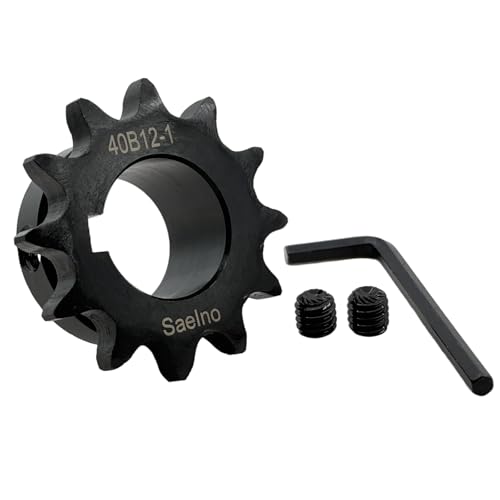
Saelno’s Type B sprocket offers a 1″ bore with 12 teeth and a hardened tooth surface. The ANSI #40 standard and 1/2 inch pitch align with many common roller chain configurations. The sprocket’s blackened surface adds rust resistance, complementing the hardened teeth for extended life in challenging environments. This option suits projects requiring a balance of compact size, modest gearing, and dependable wear characteristics.
Buying Guide
Key considerations when selecting roller chain and sprockets include compatibility, load requirements, and environmental conditions. Here are common perspectives to weigh:
- Chain and sprocket sizing: Ensure the chain pitch and sprocket teeth count match your application. ANSI standards (e.g., #40) are the most common, but verify bore size and keyway details (0.25″ keyways or 0.187″ equivalents) to fit your shaft.
- Material and treatments: Stainless steel chains resist corrosion but may carry higher cost. Hardened steel sprockets (HRC 38-42) provide wear resistance in high-load or continuous-use systems. Surface treatments (blackening) add extra rust protection.
- Bore and mounting: Bore diameter must fit the shaft, with proper set-screw alignment to prevent slippage. 1″ and 3/4″ bores are common; verify hub diameter and keyway length for secure mounting.
- Tooth count and gearing range: More teeth on a sprocket generally increase torque transmission and reduce noise at higher RPM. Balance the required speed ratio with available space on the drive system.
- Environmental considerations: Wet, dusty, or salty environments favor corrosion-resistant materials. For outdoor equipment or marine applications, stainless steel chains and rust-resistant sprockets can reduce maintenance frequency.
- Durability and maintenance: Heat-treated components improve fatigue life, but check if the design includes easy access for lubrication and inspection to minimize downtime.
- Compatibility with existing systems: If replacing parts, confirm compatibility with your current chain width, teeth style, and mounting standards to avoid costly mismatches.
In summary, select a combination that matches your bore size, tooth count, and material needs, while considering the operating environment and maintenance expectations. The five options listed provide a spectrum—from corrosion-resistant stainless chain to hardened steel sprockets—designed to help sustain performance across bicycles, go-karts, and industrial machinery.