Finding the right rock bucket for an excavator can dramatically improve site cleanup, material separation, and efficiency on construction or landscaping jobs. The following selections focus on screening and filtering capabilities, durability, and compatibility with common mini and small excavators. Each option is evaluated on material strength, hole size, and ease of installation to help you pick the best fit for soil, sand, gravel, and debris.
Summary of chosen products:
| Product | Brand | Key Benefit | Approx. Application |
|---|---|---|---|
| DANWIWEE Mini Excavator Screening Bucket | DANWIWEE | Effective filtering; manganese steel | Small digger soil sieving and backfill separation |
| DANWIWEE Mini Excavator Bucket Attachments | DANWIWEE | Flat backhoe bucket for leveling and dredging | Soft materials like sand and soil |
| MMS 19.69in/500mm Flat Tooth Backhoe Bucket | MMS | Versatile with side panel holes; durable | Material handling and land leveling |
| 600mm Mini Excavator Screening Bucket (ZBFACAI) | ZBFACAI | Efficient 25mm holes; universal fit | Rock, debris filtering and sorting |
| MMS 23.6”/600 mm Mini Excavator Screening Bucket | MMS | High-efficiency screening; rugged construction | Agriculture and construction sieve tasks |
DANWIWEE Mini Excavator Screening Bucket

The DANWIWEE screening bucket is designed for small excavators to quickly sift and separate soil from larger debris such as rocks and brush. Its manganese steel construction emphasizes wear resistance and long service life, ideal for land reclamation, soil sorting, and backfill preparation. A practical choice when backfilling soil or sand requires rapid separation from larger waste material. The 23.6-inch/600mm size fits a range of compact machines and emphasizes efficiency on tighter sites.
DANWIWEE Mini Excavator Bucket Attachments
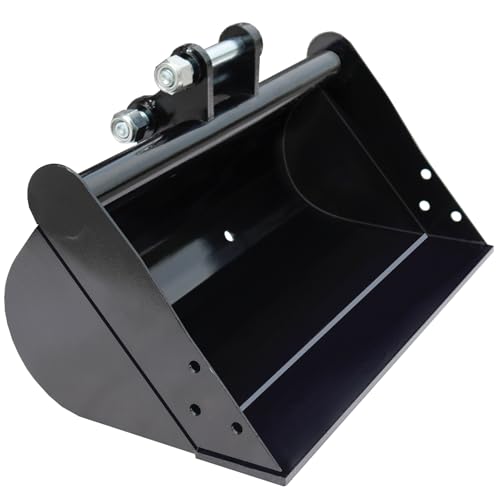
This 20-inch flat-backhoe bucket by DANWIWEE features a straight edge suitable for leveling slopes, dredging rivers and ditches, and smoothing material surfaces. Made from manganese steel, it offers wear resistance for reliable performance in soft materials like sand and soil. It is broadly compatible with many mini excavators, with specified mounting hole and wheelbase dimensions that support stable installation on smaller machines.
MMS 19.69in/500mm Flat Tooth Backhoe Bucket

The MMS 500mm flat bucket combines precise dimensions with reserve side panel installation holes to enhance versatility. It supports material handling, land leveling, and ditch dredging tasks. Built from manganese steel, the bucket delivers wear and impact resistance for harsher environments and longer service life. Verify the excavator’s compatibility with the given dimensions prior to purchase.
600mm Mini Excavator Screening Bucket (ZBFACAI)

Designed for mini excavators up to about 2 tons, this ZBFACAI screening bucket blends a 600mm footprint with 25mm holes, enabling quick separation of soil, roots, and debris while preserving fine soil. The alloy steel construction and powder-coated finish provide durability against corrosion and wear—an option well-suited for landscaping, construction, and light demolition projects. Always confirm machine fit using span, wheelbase, and pin-hole dimensions.
MMS 23.6”/600 mm Mini Excavator Screening Bucket

This MMS screening bucket offers high-efficiency performance with 25mm holes to filter rocks and debris while retaining fine soil. Constructed from manganese steel, it stands up to heavy use and harsh environments. It suits agricultural and construction settings requiring rapid material separation, such as sieving soil or processing aggregates on small excavators. Ensure compatibility with your machine’s mounting specs before ordering.
Buying Guide
Key considerations when selecting a rock bucket for an excavator:
- Machine compatibility: Check span, wheelbase, pin size, and mounting hole specifications to ensure a secure fit with your excavator’s model and tonnage.
- Material and durability: Look for manganese steel or alloy steel with gussets or reinforced frames for wear resistance and impact resilience in harsh environments.
- Hole size and screening action: Smaller holes provide finer sorting and soil retention; larger holes accelerate debris separation but risk losing finer material. Match hole diameter to your material and intended use.
- Bucket type: Screening buckets excel at sorting and separating materials, while flat-back or toothless buckets emphasize leveling, dredging, and surface smoothing. Consider your primary tasks.
- Weight and balance: Heavier buckets affect lift capacity and stability. Balance the added functionality with the excavator’s rated operating load.
- Maintenance and corrosion protection: Powder-coated finishes and gusseted designs extend life in construction, agricultural, and waste-handling settings.
- Versatility and multi-tasking: Some models offer side panel holes or adjustable features that broaden use cases beyond screening, such as material handling and ditch dredging.
- Installation ease: Look for standard attachment interfaces and clear installation guides to minimize downtime during changes or upgrades.
In practice, the best choice depends on your typical site conditions, machine size, and the balance you need between screening efficiency and robustness. For quick soil backfill with debris removal on small excavators, a screening bucket with 20–25 mm hole sizes is often a strong starting point. For leveling, dredging, or handling soft materials, a flat-back bucket with a wider jaw may be preferable. Always verify fit with the manufacturer’s specifications before purchasing.