The right release agent can save you time, protect molds, and improve surface quality when working with fiberglass, epoxy, and resin. This article highlights five top-rated options that perform well across common molding scenarios, from silicone molds to epoxy casts. Each product section provides a quick overview, how to apply, and what makes it suitable for fiberglass projects.
| Product | Brand | Type | Best For |
|---|---|---|---|
| PVA Water Based Mould Release | Uniproducts | PVA Mold Release Agent | Epoxy, resin, polyester, vinyl ester, gel coat, polyurethane foam |
| Akona Concrete Form Release | Akona | Liquid Release Agent | Concrete forms and mixed-material molds |
| PVA Partall #10 Liquid Release | FGCI | PVA Release for molds | Silicone, resin, fiberglass molds |
| Mitreapel Silicone Mold Release Spray | Mitreapel | Silicone-based spray | Silicone and rubber molds |
| Polytek Pol-Ease 2500 Release Agent | Polytek | Liquid release agent | Silicone molds and non-porous surfaces |
The following sections cover each product in detail, focusing on application methods, materials compatibility, and key benefits for fiberglass and resin casting projects.
PVA Water Based Mould Release

The PVA Water Based Mould Release from Uniproducts acts as a barrier between your mold surface and the part, helping with easy removal after curing. It is designed for a range of materials including epoxy, polyester, vinyl ester, gel coat, polyurethane foam, silicone, and more. The formulation supports versatile application methods—brush, spray, roll, or sponge—without shrinking or staining the mold or the part. This makes it a practical choice for DIY projects and small professional runs where multiple materials are used.
Akona Concrete Form Release

Akona Concrete Form Release is a versatile liquid release agent designed to prevent sticking in forms, tubes, sculpture molds, and other casting scenarios. It goes on white, making it easy to apply evenly, and is described as non-staining with no residue left behind. The product is practical when working with various forming materials, including plywood, fiberglass, aluminum, steel, and urethane, and it offers a straightforward spray or pour application without any mixing or preparation. This makes it suitable for projects where quick setup and clean removal are important.
Honey Wax Paste Mold Release

The Honey Wax Paste Mold Release from Fiberglass Supply Depot is a premium carnauba-based paste designed for ease of use and resistance to staining. The paste format makes it straightforward to apply in a consistent layer, with the added benefit of a glossy finish and reduced labor time during demolding. It’s particularly well-suited for complex molds where smooth surface release and reproducibility are important. The formula is noted for being easy to wipe off, which can further streamline post-mold finishing tasks.
PVA Partall #10 Liquid Release

PVA Partall #10 is a premium professional quality mold release suitable for silicone and resin casting molds. It offers simple application—spray, roll, sponge, or brush on—with a formulation that stays where you apply it without shrinking or staining. The release is designed to deliver a glossy, smooth mold release and helps facilitate easy removal of parts, especially when working with silicone-based molds or resins. It is a popular choice among hobbyists and professionals who need reliable performance in diverse casting environments.
Mitreapel Silicone Mold Release Spray

The Mitreapel Silicone Mold Release Spray is formulated for silicone and rubber molds, featuring a high silicone content to prevent sticking and ensure clean releases. The aerosol spray format makes it easy to cover intricate mold surfaces evenly. This release spray is especially suitable for epoxy projects where preserving the mold’s surface integrity is critical, and where molds are repeatedly used for casting different epoxy or resin formulations. Proper ventilation and spray technique help maximize its effectiveness.
Fiberglass Evercoat PVA Mold Release 8-OZ

Evercoat PVA Mold Release is a PVA-based option in an easy-to-handle 8-ounce size, marketed with notes on a newer formula and packaging dimensions. While compact, it is positioned for consistent demolding performance in fiberglass and composite projects. It’s compatible with various casting materials where a water-soluble release is advantageous, and it supports straightforward cleanup and removal of molds after curing.
Polytek Pol-Ease 2500 Release Agent
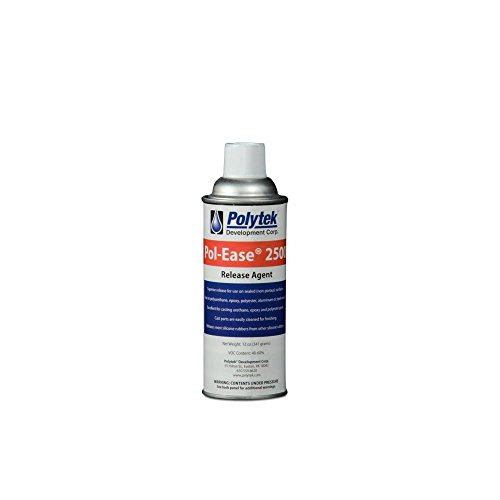
Polytek Pol-Ease 2500 is a premium release agent designed for silicone molds and non-porous casting surfaces. It can be washed off models and castings if painting is required later. Its dual-use capability—mold preparation and post-processing compatibility—makes it a versatile option for projects involving silicone rubber molds and resin or fiberglass components. The product is described as offering an effortless surface and painless release, with a focus on clean demolding for high-detail casts.
Buying Guide
- Material compatibility: Consider whether your molds are silicone, polyurethane, epoxy, or another material, and choose a release that is designed for that surface to prevent staining or residue.
- Application method: From brush-on to spray or roll-on formulations, select a product whose application method aligns with your workflow and mold complexity.
- Removal ease: Look for releases that provide easy demolding with minimal residue, especially when finishing surfaces or painting parts after demolding.
- Silicone-heavy molds: For silicone molds, silicone-based or PVA releases tend to perform best, reducing friction and preserving mold detail over multiple cycles.
- Water-solubility and cleanup: Water-soluble PVA options simplify cleanup and are convenient when post-mold painting is planned; note that some projects may require solvent-resistant releases depending on the casting material.
- Residue and staining risk: If your mold or final part is color-sensitive or requires cosmetic surfaces, choose a release with low staining risk and clear demolding behavior.
- Ventilation and safety: Sprays, especially aerosol silicone products, should be used in well-ventilated areas with proper safety gear to manage fumes and overspray.
- Shelf life and storage: Some releases have specific storage requirements; check labeling for best results during long-term storage or frequent use.
- Form factor and quantity: For small studios, a compact bottle like 8 oz can be sufficient, while larger shops may prefer quart or gallon containers for cost efficiency.
- Future-proofing: If you plan to work with multiple materials, consider a versatile release like those designed for both silicone and resin casting to minimize stock variety.