Choosing the right reinforcement mesh can dramatically improve crack control, durability, and overall performance of concrete, plaster, and stucco projects. This guide highlights five high-quality options, spanning alkali-resistant fiberglass mesh rolls, concrete fiberglass reinforcement fibers, and self-adhesive repair tapes. Each entry includes key features to help you compare suitability for basements, walls, floors, and exterior facades. Use the buying guide below to assess density, handling, and compatibility with your base coat or mortar mix.
| Product | Brand | Primary Use |
|---|---|---|
| Boen Non-Adhesive EIFS Stucco Mesh | Boen | EIFS base coat crack control |
| Fibre Glast Fiberglass Scrim Mesh | Fibre Glast | Concrete repair and roofing substrate |
| BOHUIZ Concrete Fiberglass | BOHUIZ | Concrete walls and floors reinforcement |
| UPTTHOW Fiberglass for Cement Mortar | UPTTHOW | Mortar reinforcement and crack resistance |
| ZENFUN Fiberglass for Concrete | ZENFUN | Mortar and concrete reinforcement |
Boen Non-Adhesive EIFS Stucco Mesh

Industrial-grade EIFS reinforcement with alkali-resistant fiberglass mesh helps control cracking and adds impact resistance in EIFS and exterior stucco systems. The standard 4.5 oz weight (38″ x 150′) covers about 475 sq ft gross, making it suitable for field areas where higher abuse resistance is desired. The non-adhesive mesh lies flat in cementitious or polymer-modified mortar, ensuring smooth embeds with minimal curling. Overlaps should be 2″–4″ to fully encapsulate seams, preventing telegraphing through the finished coat.
Fibre Glast Fiberglass Scrim Mesh Screening

This white fiberglass scrim mesh reinforces concrete repairs, roofing substrates, and window screens. The lightweight yet durable fabric provides reliable crack resistance for a variety of applications, including wall and roof repairs, sculptures, and joint tapes. Sold in a 1-yard roll, it is easy to cut and embed. The product carries first-quality certification, ensuring consistency across batches and reliable performance in demanding applications.
BOHUIZ Concrete Fiberglass Reinforcement

Glass fiber reinforcement designed for concrete applications, helping to increase impact and seismic resistance while reducing cracking in walls and floors. The 3/4 inch fiber length integrates easily into the mix, boosting density and impermeability for extended service life. It supports easier handling and mixing, allowing uniform distribution within the cement matrix and improved durability under load.
UPTTHOW Fiberglass For Cement Mortar
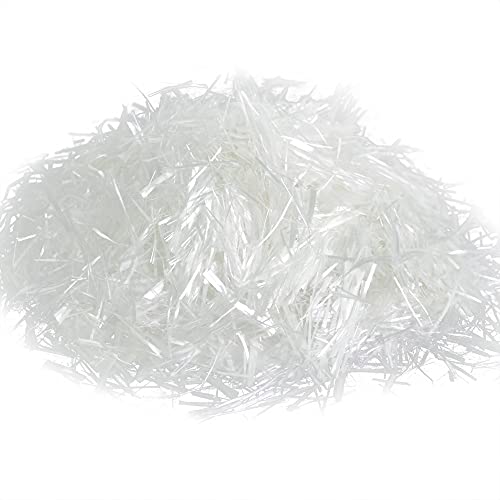
Fiberglass strands for cement mortar provide anti-cracking benefits by creating a tougher matrix. The 3/4 inch strands improve density, helping to prevent penetration and seepage while enhancing waterproofing and frost resistance. The product is designed for wet areas such as basements and outdoor walls, delivering improved impact resistance and structural integrity when mixed into the mortar.
ZENFUN Fiberglass For Concrete

ZENFUN offers 3/4 inch fiberglass chop strands designed to reinforce concrete and mortar. The fibers enhance crack resistance, high- and low-temperature stability, and impermeability, extending service life for roads, walls, and floors. The fibers are easy to mix into the cement and help form a dense network that contributes to improved structural performance under load and environmental exposure.
Buying Guide
- Material and compatibility: Fiberglass reinforcements are common for concrete and stucco; ensure the mesh type (woven scrim, chopped strands, or tape) matches your project requirements and base coat or mortar mix.
- Crack control vs. reinforcement: Meshes like EIFS fabric focus on crack control in exterior systems, while chopped strands and scrim are better for interior walls, floors, and repair patches. Consider your crack-prone areas and exposure to moisture or freeze-thaw cycles.
- Mesh density and weight: Heavier weights provide greater impact resistance and durability, but may be harder to handle. Lighter scrims are easier to embed but may offer less crack resistance in high-stress areas.
- Application method: Non-adhesive meshes require embedding in mortar or base coats, while self-adhesive tapes streamline repairs but have limited usage beyond patching cracks and holes.
- Overlap and sealing: For continuous reinforcement, ensure seams are properly overlapped and fully encapsulated to prevent telegraphing through the finish layer.
- Warranty and certification: Look for products with quality certifications and consistent batch performance to reduce variability in field applications.
- Environmental conditions: In wet or exterior environments, choose products with good impermeability and corrosion resistance to resist moisture ingress and chemical exposure.
- Cost vs. value: Compare product coverage, weight, and ease of installation to determine the overall value for your project’s size and scope.