Choosing the right ready mix sand and cement products can simplify bricklaying, masonry repairs, and paver installations. This article highlights five top options that combine cement or resin binders with sand or aggregates to create durable mortars and joints. Each product is assessed for mix type, application, and performance, helping you pick solutions for laying brick, repairing concrete, or setting pavers with confidence.
| Product | Brand | Primary Use | Key Benefit |
|---|---|---|---|
| QUIKRETE Construction Grade Mortar Mix | Quikrete | Laying brick, concrete units, and stone | Pre-mixed cement and sand for stable mortar |
| Ready-Mixed Sand & Resin Joint Mortar | HanLiELE | Paver and tile joints | Pre-mixed resin mortar for durable joints |
| Bauer Instant Polymer Cement | Bauer | Concrete crack repair and tile/concrete repairs | Ready-to-use polymer for fast repairs |
| SAKRETE Sand Mix | Quikrete | General sand-mortar applications | Value-oriented sand mix for basic projects |
| DOMINATOR Polymeric Sand with Ceramic Flex | DOMINATOR | Paver joints | Ceramic-flex technology for flexible, durable joints |
QUIKRETE Construction Grade Mortar Mix

QUIKRETE Construction Grade Mortar Mix combines masonry cement with graded sand to form a reliable mortar suitable for laying brick, concrete blocks, and stone. The mix is designed for standard masonry work and provides a workable consistency that can be troweled smoothly into joints. It is a ready-to-use option that minimizes prep time on small-to-medium masonry projects, and its formulation supports sustained bonding across typical American substrates.
Key considerations include surface prep, proper mixing ratios, and curing conditions. For best results, apply mortar over clean, dampened joints and allow adequate cure time before applying load or grout-enhancing treatments. While ideal for many masonry tasks, users should assess project size to determine if a larger bag or bulk mortar is more economical.
Ready-Mixed Sand & Resin Joint Mortar (Grey)

This ready-mixed resin joint mortar is designed for permeable joints in pavers, tiles, and natural stone. It activates in air to harden into a durable joint, resisting weed growth and withstanding high pressure washing. The resin content improves durability in outdoor environments, including areas exposed to salt, chlorine, or pool-related wear. It is suitable for narrow and wide joints, and its texture promotes uniform paving surfaces.
Considerations include ensuring proper joint dimensions and substrate drainage. Frost resistance and rainwater management are notable advantages, but installation requires clean, swept joints and adequate curing conditions to maximize longevity. This option suits projects where quick jointing and weed suppression are priorities without needing traditional cement-based grout.
Bauer Instant Polymer Cement

Bauer Instant Polymer Cement is a ready-to-use polymer-based cement designed for a broad range of repairs, including concrete crack repair and tile or brick fixes. The polymer component provides higher yield and improved adhesion compared to traditional cement blends, enabling more efficient repairs and longer-lasting bonds. It is especially useful for quick fixes where mixing fresh cement would be impractical.
Practical use emphasizes clean application, stable temperature conditions, and matching the repair area’s texture. It supports larger repairs and smaller touch-ups alike, offering a compact solution for professionals and DIY enthusiasts seeking speed without sacrificing strength.
SAKRETE Sand Mix 10 lb
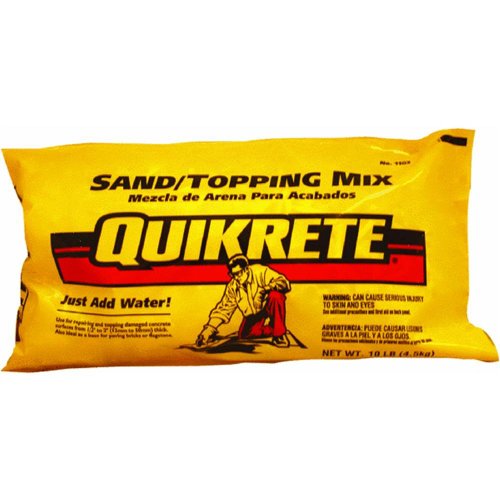
SAKRETE Sand Mix provides value for general sand-mortar applications, mixing with cement to form basic mortars or for patching work in non-structural areas. While not a specialty long-life mortar, it serves as a cost-effective option for simple repair tasks or decorative installations where traditional mortar is not required. Proper curing and surface preparation remain essential to ensure satisfactory results.
DOMINATOR Polymeric Sand with Ceramic Flex

DOMINATOR Polymeric Sand uses Ceramic Flex technology to deliver flexible, durable joints from 1/8″ to 4″ wide. The cement-free formula sweeps in easily and rinses clean, offering faster installation with reduced labor. It is designed for paver joints and is not a replacement for grout or mortar in structural settings. The product emphasizes color stability and resistance to weed growth, while remaining usable in various climates.
Buying Guide: Key Purchase Considerations For Ready Mix Sand And Cement
When selecting ready-mix sand and cement products, consider project type, expected load, and environmental exposure. The following perspectives help cover common uses and constraints:
- Project scope: For small repairs, ready-to-use polymer cements and resin mortars offer fast application. For masonry walls or structural work, traditional mortar mixes or cement-based products provide stronger bonding with proper curing.
- Joint and substrate compatibility: Polymeric sands and resin mortars are ideal for joints and decorative surfaces but should not replace structural mortar where substrate movement or heavy loads occur.
- Weather and curing: Outdoor projects require frost resistance and proper curing conditions. Some products cure with air exposure, while others require moisture retention strategies to reach full strength.
- Ease of use vs. cost: Ready-to-use polymer products save time but may come at a premium. Sand mixes and standard mortars offer cost savings for larger jobs but require mixing and more preparation.
- Durability requirements: For high-traffic areas, select products with high compressive strength, good abrasion resistance, and weed suppression properties. For pool areas, chemical resistance and water permeability may be critical.
- Safety and handling: Follow manufacturer directions for mixing ratios, ventilation, and curing. Some products generate dust or require curing aids—use gloves and eye protection as needed.
- Compatibility with existing materials: Ensure the selected mortar or joint material is compatible with bricks, stone, concrete, tiles, or pavers to avoid bonding failures or staining.
- Maintenance considerations: Some polyurethane or resin-based products resist staining and weeds longer, reducing maintenance, while traditional cement-based mixes may need periodic resealing or re-jointing.
In evaluating these five options, match the product characteristics to your project’s needs—such as decorative paving versus structural masonry—and consider climate, substrate, and long-term maintenance. This approach helps ensure durable results and minimizes the risk of joint cracking, weed growth, or bond failure over time.