Choosing the right ramp for container loading improves safety, speeds up operations, and protects equipment. This guide reviews five well-regarded options designed to bridge the gap between trucks, docks, and containers. Each product emphasizes strength, compatibility with forklifts or pallet jacks, and durability in demanding loading environments. Use the buying guide to compare capacities, dimensions, materials, and key safety features before making a purchase.
| Product | Capacity | Material | |
|---|---|---|---|
| DMC-FPPS 68″ x 86″ | 16,000 lbs | 10-gauge steel (diamond plate) | 68″ x 86″ x ~6.5″ |
| HD Ramps 48″ x 36″ | 8,000 lbs per axle | Aluminum | 48″ x 36″ |
| Mytee 68″ x 86″ HD | 14,000 lbs | Steel (heavy-duty) | 68″ x 86″ |
| DMC-FPPS 49″ x 86″ | 16,000 lbs | 10-gauge steel (diamond plate) | 49″ x 86″ x ~5.9″ |
| Eagle 36″ x 35″ | Variable (portable) | Polyethylene | 36″ x 35″ |
DMC-FPPS 68″ x 86″ Heavy Duty Shipping Container Ramp

The DMC-FPPS ramp is built from diamond-plate steel to withstand heavy industrial loads. With a substantial 16,000-pound capacity and a height differential around 6.5 inches, it aims to provide a smooth transition from truck bed to dock. The large 68 by 86-inch platform helps distribute weight evenly, reducing slip risk and wear on dock edges. It’s configured for forklift compatibility and intended for use in demanding container loading environments where reliability matters most.
Key features include a rugged 10-gauge steel construction and a broad surface area that supports palletized loads and bulk goods. The ramp’s diamond plate finish improves traction in varied weather, while the height differential is engineered to minimize steep angles that can stress forklifts or pallet jacks. For facilities with frequent container traffic, this model prioritizes long-term durability over portable convenience.
HD Ramps 48″ x 36″ Shipping Container Ramp

This ramp is designed for containers with lip heights ranging from 4.5 to 8 inches, making it versatile for various container dock setups. It offers an 8,000-pound per-axle capacity, which suits pallet jacks and other portable handling equipment used in loading operations. The aluminum construction delivers a lighter profile than steel, aiding maneuverability across busy loading zones. A patent-pending tri-tract design provides stiffness, while the grit-coated surface enhances grip in wet or slick conditions. The knife-edge foot promotes a smoother entry from dock to ramp, reducing abrupt transitions that can shock machinery.
MAXXHAUL 50962 Heavy Duty Curb Ramp

The MAXXHAUL curb ramp focuses on portability and simplicity for temporary loading needs. It is a heavy-duty poly ramp that supports up to 1,000 pounds, making it suitable for furniture dollies, hand trucks, or small carts used in container environments where quick access is needed. Its plastic composition reduces weight, facilitating transport between loading zones. The design emphasizes a non-cracking, non-warping surface with improved durability for short-term, repeat-use scenarios, providing a cost-effective option where full industrial ramps are not required.
DMC-FPPS 16,000Lbs Container Ramp
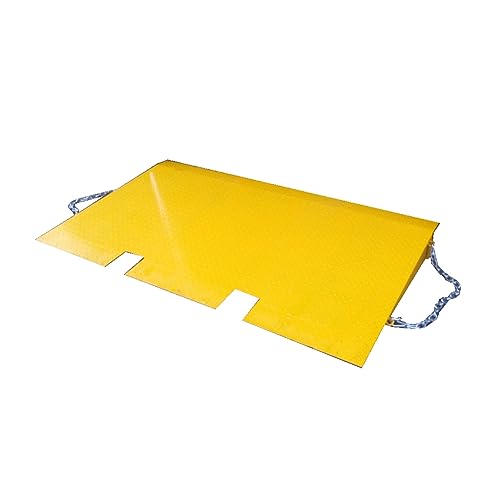
Designed for heavy-duty container transitions, this 49 by 86-inch ramp shares a similar heavy-gauge, diamond-plate steel construction with the 68 by 86 model. It provides a 16,000-pound capacity, which is suitable for forklifts and pallet loads with a slightly narrower footprint. The ramp’s height differential is around 5.9 inches, balancing load angle with machine stability. It’s optimized for bridging truck and dock surfaces, especially in busy shipping yards where consistent performance matters.
Eagle 1795CR Polyethylene Shipping Container Ramp

The Eagle ramp offers portability with a polyethylene build, intended for light-to-moderate loads and ground-level entry applications. Its 36 by 35 inch footprint makes it a practical choice for smaller containers or quick-access scenarios where a permanent ramp is not feasible. The ramp emphasizes a balance between weight, ease of storage, and basic loading tasks, and it includes hooks or rails designed to assist positioning and stability in improvised dock setups.
Buying Guide
- Capacity and load type: Match ramp capacity to the heaviest expected load, including forklifts, pallet jacks, and container contents. Consider per-axle limits for wheel-based equipment and overall ramps rated for continuous use in a dock environment.
- Material and durability: Steel ramps with diamond plate offer maximum strength and longevity in industrial settings, whereas aluminum is lighter and easier to maneuver but may have lower maximums. Polyethylene ramps excel in portable, light-to-moderate applications.
- Dimensions and angle: Larger surface areas reduce tipping risk and distribute weight more evenly. Height differential should balance a manageable approach angle with machine stability. Ensure compatibility with container lip heights and dock configurations.
- Surface traction: Textured, grit-coated surfaces provide superior grip in rain or snow, while smooth surfaces may be adequate for dry conditions but risk slippage when damp.
- Portability vs. permanence: Choose heavy-duty, forklift-compatible ramps for permanent dock installations, or lighter, portable ramps for temporary setups, field operations, or multi-site use.
- Safety features: Look for secure anti-slip surfaces, proper edge profiles to prevent roll-off, and compatibility with safety chains or attachments if relevant to the model.
- Maintenance: Steel ramps require rust prevention and periodic inspection for wear; aluminum and polyethylene ramps demand minimal maintenance but should be checked for cracks or deformation after heavy use.
- Accessibility and storage: Consider how often ramps are moved, stored, or deployed. Foldable or modular designs can reduce space requirements and improve efficiency in busy facilities.
- Compliance and compatibility: Verify that the ramp design adheres to local safety standards and aligns with your forklift or pallet jack models, dock height, and container sizes used in your operation.
- Cost of ownership: While steel ramps may carry a higher upfront cost, they often deliver longer service life in demanding environments. Balance upfront price against expected lifespan and maintenance needs.