Choosing the right pycnometer is essential for precise specific gravity measurements in laboratories, coating labs, and education settings. This article highlights five reliable options, summarizes their capacities, and provides guidance on selecting the best cup for your needs. Each option is designed to help determine density by comparing mass and volume for liquids with known densities, such as water.
| Product | Brand | Capacity |
|---|---|---|
| EISCO Pycnometer, Calibrated, 10mL | EISCO | 10 mL |
| 37ml Specific Gravity Cup | Generic | 37 mL |
| High Precision Stainless Steel Specific Gravity Cup | TOSYUWIR | 100 mL |
| YUCHENGTECH 100mL Specific Gravity Cup | YUCHENGTECH | 100 mL |
| Kimble Serialized Specific Gravity Pycnometer Bottles | Kimble | 10 mL |
EISCO Pycnometer, Calibrated, 10mL

EISCO’s 10 mL pycnometer is designed for precise density measurements during density experiments. The bottle has a flat bottom and a perforated stopper, crafted from borosilicate 3.3 glass for chemical compatibility. It is calibrated at 20°C, allowing users to determine specific gravity by weighing purified water contained within the bottle to establish a reference density. This compact option is ideal for small-volume testing and educational demonstrations where controlled volume and temperature are important.
Key features include a 10 mL capacity and calibration at standard laboratory conditions. The combination of a flat bottom and perforated stopper helps minimize air entrapment and facilitate the exchange of any test liquid during measurement.
37ml Specific Gravity Cup, Stainless Steel

This stainless steel gravity cup features a cylindrical body designed for easy filling and cleaning, with a tight cover that includes an exhaust vent hole for releasing excess liquid. The 37 mL capacity makes it suitable for mid-range density measurements and coatings testing where larger sample volumes are beneficial. It emphasizes cleanliness and repeatable results, provided that the cup is kept dry and properly cleaned before use.
Considerations include material compatibility with tested liquids, ease of cleaning, and ensuring the cup is free of moisture before measurement to minimize measurement error.
High Precision Stainless Steel 100 mL Specific Gravity Cup

This 100 mL specific gravity cup by TOSYUWIR enables rapid density determination for coatings, pastes, and similar liquids. The larger capacity allows for testing of higher volume samples while maintaining accuracy in density or weight-per-gallon calculations at standard conditions. Its design emphasizes precision in weight-to-volume measurements, essential for reliable specific gravity data in industrial and research contexts.
Considerations include ensuring the test liquid’s temperature matches the reference conditions and verifying that the cup remains clean and free of contaminants that could skew results.
YUCHENGTECH 100mL Specific Gravity Cup

The YUCHENGTECH 100 mL gravity cup emphasizes accurate measurement with a tight lid that minimizes overflows and bubbles during testing. It features a stainless steel construction (304 grade) for corrosion resistance and good inner/outer finish. The cylindrical design with a large opening facilitates easy filling and thorough cleaning, contributing to repeatable density measurements and reduced variability across trials.
Key considerations include ensuring a proper seal to prevent moisture ingress and confirming that the venting mechanism functions correctly to avoid trapped air that could skew volumes.
Kimble Serialized Specific Gravity Cup with Thermometers
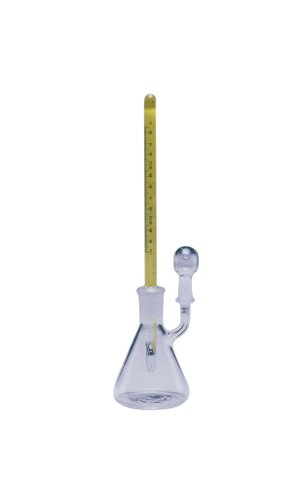
Kimble’s serialized 10 mL specific gravity pycnometer bottles incorporate non-mercury red spirit-filled thermometers for temperature monitoring during measurements. Serialization aids traceability and quality control in laboratory workflows that require documented calibration histories. The compact 10 mL format supports precise measurements in small-volume testing and is suitable for educational demonstrations where temperature effects on density are demonstrated.
Considerations include thermometer accuracy, calibration traceability, and ensuring proper sealing to prevent moisture absorption or evaporation between weighings.
Hemobllo Weighing Bottle Pycnometer
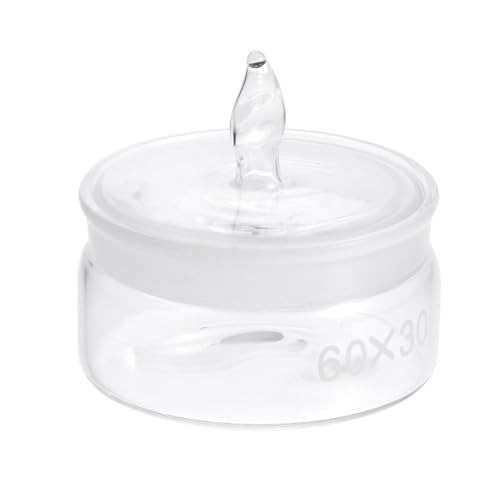
The Hemobllo weighing bottle pycnometer is designed for precise weighing of solids or samples and can be used for dry samples as well. Its flat design assists storage, and the included ground glass stopper helps protect samples from moisture. This makes it a practical option for moisture determination and other precise mass measurements where controlling environmental moisture exposure is important.
Key considerations include stopper integrity, moisture control, and ensuring compatibility with dry or moisture-sensitive samples to maintain measurement accuracy.
Buying Guide: Key Factors To Consider
- Capacity and suitability: Choose cups that fit your typical sample volume and target density range. Smaller cups are often more precise for low-volume liquids, while larger cups are convenient for high-volume testing.
- Material and chemical compatibility: Borosilicate glass and stainless steel are common. Consider compatibility with the test liquids to prevent corrosion, reaction, or leaching that could affect measurements.
- Calibration and temperature control: Look for cups calibrated at a known temperature (often 20°C). Temperature affects density readings, so temperature monitoring or control is important.
- Sealing and venting: A tight lid with an appropriate vent helps prevent air bubbles and overflows while allowing controlled release of excess liquid during filling.
- Durability and cleaning: Reusable cups should be easy to clean and resistant to scratching to avoid harboring residues that could alter measurements.
- Traceability and documentation: Serialized or labeled components improve quality control in regulated environments and allow easier record keeping for experiments.
- Ease of use: Consider cups with practical features such as flat bottoms for stability and clear markings or volume indicators for quick measurements.
Comparison Considerations
- Volume range vs. precision: Higher-capacity cups are convenient for coarse measurements, but small-volume cups can offer higher precision if you manage measurement errors carefully.
- Liquid type: If testing viscous or particulate-containing liquids, ensure the cup design minimizes trapping and allows complete filling.
- Temperature monitoring: If your experiments rely on precise density data, cups with built-in thermometers or accurate external temperature measurement are valuable.
- Cost vs. benefit: Benchmark cups against your lab’s accuracy requirements and budget to choose the best balance of reliability and price.