Selecting the right press plates is essential for achieving precise, safe, and repeatable results with hydraulic and arbor presses. The following five products are among the most relevant options for 20-ton to 32-ton presses, offering durable AR400F or iron construction, multiple notch configurations, and H-frame designs that promote even pressure distribution. This guide compares material, thickness, notch design, and compatibility to help you choose the best plate for your workshop needs.
| Product | Material | Thickness | Notches / H-Frame |
|---|---|---|---|
| Felievy Arbor Press Plate (1″ x 7″ x 7″) | Iron | 1 inch | 4 Notches, H-Frame |
| AUGREX AR400F Arbor Plate (1″ x 5″ x 5″) | AR400F Steel | 1 inch | 4 Notches, H-Frame |
| JEGS Replacement Press Plates 81518 | Metal (unspecified) | 1/2 inch | Corner hole present |
| Felievy Arbor Press Plate (1″ x 5″ x 5″) | Iron | 1 inch | 4 Notches, H-Frame |
| OneChoi Arbor Press Plate (1″ x 7″ x 7″) | AR400F | 1 inch | 4 Notches, H-Frame |
Note: The table provides a quick snapshot of material, thickness, and notch configuration. Always verify exact specifications and compatibility with your specific hydraulic or arbor press model before purchase.
Felievy Arbor Press Plate, 1″ x 7″ x 7″ (Pair)

The Felievy 1″ thick press plates are designed for high-strength applications, offering a robust iron construction with corrosion resistance features. The four-slot H-frame enhances precision by providing even distribution of force across the face, helping to minimize deflection and wear on both the plate and the workpiece. These plates are described as compatible with presses weighing up to 20 tons and 32 tons, making them versatile for mid-range hydraulic and arbor press setups. The 1-inch thickness supports heavy-duty pressing while maintaining a manageable weight for manual handling.
Features emphasize durability and reliability under heavy use, including a coating process that aims to extend life in shop environments. The H-frame design with four notches is intended to promote alignment and repeatability, reducing setup time and improving overall machining consistency. For shops replacing fragile cast arbor plates, these plates offer a practical, durable alternative.
AUGREX 1 Pair Arbor Press Plate, 20Ton AR400F

AUGREX offers AR400F steel plates built for heavy-duty work, with corrosion and heat resistance suitable for demanding environments. The high yield strength (listed around 140,000 psi) positions these plates above many competitors in terms of load-bearing capacity and durability, especially under repetitive high-pressure cycles. The CNC-cut 4-slot H-frame design ensures uniform pressure across the contact surface, aiding in consistent results and reducing the risk of warping or localized wear. This is a strong choice for workshops that routinely press harder materials or longer runs.
Manufactured to a tight tolerance, these plates emphasize smooth finishes similar to a controlled sandblasting process—an important detail for reducing marking and improving alignment between the plate and workpiece. The AR400F composition helps resist wear from abrasive tasks, while the four-notch configuration supports precise seating and alignment in the press setup.
JEGS 81518-4 Replacement Press Plates

JEGS provides a replacement plate option for a 6-ton hydraulic shop press, with dimensions that align to a precise footprint and a corner hole arrangement for mounting or alignment. The plate thickness is noted as 1/2 inch, which can influence the load-bearing characteristics and distribution of force across the contact surface. While lighter than AR400F or thicker iron options, these plates can fit certain tool configurations where a lower-profile plate is needed, or where the press design requires a thinner interface.
Consideration should be given to compatibility with existing equipment and the type of work being performed, as a thinner plate may not provide the same resilience under repeated high-stress cycles. The single corner hole is a simple alignment feature that can simplify setup when matching to specific press geometries.
OneChoi Arbor Press Plate, 1″ x 7″ x 7″

OneChoi presents an AR400F-based plate with a yield strength exceeding 140,000 psi, designed for press applications up to 30 tons. The 1-inch thickness and four-notch H-frame layout support even pressure distribution and stable workholding during pressing operations. The plate’s finish is described as smooth, achieved via a double-action sanding process that helps reduce surface imperfections and promote consistent contact with the workpiece.
As a paired option for 20-ton and 32-ton presses, this plate balances robustness with manageable weight. The AR400F material choice makes it well-suited for repeated high-stress compressive work, especially in metalworking, automotive, or fabrication environments where plate durability matters over long service life.
CDJFDM 2 Pack Arbor Press Plate, 1″ x 7″ x 7″
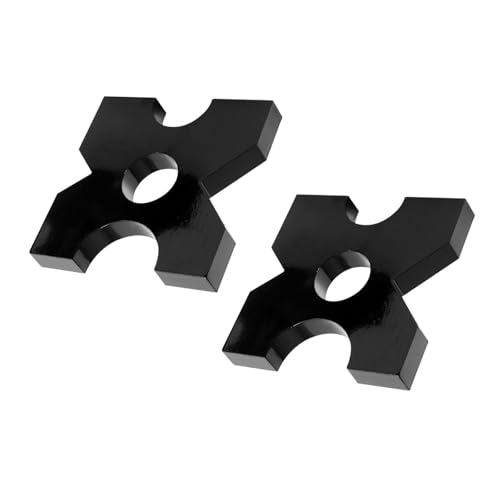
CDJFDM offers a 2-pack of 1″ thick press plates with 7″ x 7″ dimensions and a 4-notched H-frame design. Built from premium iron, these plates emphasize robust construction and long service life, suitable for 20-ton to 32-ton press work. The finish and uniformity of the surface aim to provide consistent seating and help prevent misalignment during pressing tasks. The pair format makes it a practical option for backup or dual-setup configurations.
Manufacturing quality and surface finish are highlighted to ensure reliable performance in shop settings. For users upgrading from lower-grade cast plates, these CDJFDM plates present a reliable alternative with emphasis on durability and compatibility with standard 4-notch H-frame presses.
Buying Guide: How to Choose the Right Press Plate
Material and thickness: AR400F steel or high-quality iron provide different advantages. AR400F offers superior hardness and wear resistance, making it ideal for frequent, high-stress pressing. Iron plates with a thickness of 1 inch deliver substantial strength and can be a cost-effective choice for less demanding workloads. Consider the maximum tonnage your press handles and the expected duty cycle when selecting thickness and material.
H-frame and notch configuration: Four-notched H-frame designs help distribute force evenly and improve alignment between the plate and workpiece. Ensure the notch size and spacing align with your tooling and fixture requirements. A corner hole or simple mounting features may be necessary for compatibility with existing press fixtures.
Finish and surface quality: A smooth surface finish reduces marking on parts and helps with precise seating. Look for plates described as having wind- or sandblasted-like finishes, or CNC-cut edges that minimize burrs. A well-finished surface contributes to repeatable results and longer plate life by reducing stress concentrations.
Compatibility and footprint: Verify that the plate dimensions (1″ thick, 5″ or 7″ widths/lengths) match your press bed and any existing adapters. Some plates are sold in pairs, which can be beneficial for backup or multi-workpiece setups. Some models are explicitly rated for 20-ton or 32-ton presses; ensure the rating aligns with your equipment and application.
Maintenance and longevity: Consider corrosion resistance and coatings that extend life in workshop environments. AR400F plates typically offer strong wear resistance, while iron plates with protective coatings help resist rust in damp or humid spaces. Routine inspection for surface wear, cracks, or deformation is advised for safety and performance.
Cost vs value: While AR400F and premium iron plates may carry higher upfront costs, their durability and longer service life can lower total cost of ownership over time. For occasional, light-duty tasks, thinner or non-AR plates may suffice, but for high-volume or heavy-use shops, investing in robust plates pays off through consistent results and reduced downtime.