Discover reliable plastic vacuum forming machines ideal for dental applications and lab work. This guide reviews five top options, highlighting heating performance, vacuum strength, material compatibility, and ease of use. Each listing includes a quick snapshot of what to expect, so you can compare features at a glance and choose a model that fits your workflow and space.
| Product | Brand | Key Feature |
|---|---|---|
| Gekufa Dental Vacuum Forming Machine | Gekufa | All-dental thermoplastic compatibility, built-in vacuum pump |
| Plastvac P7 110V | JMU | Two plasticizing processes, 1400W motor |
| NORJIN Vacuum Forming Machine | NORJIN | High-quality build, stable heat and suction |
| JT-018 Laboratory Vacuum Forming | LOYALHEARTDY | Precision suction, compact design |
| Global-Dental JT-18 | Global-Dental | Symmetrical heating, versatile applications |
Gekufa Dental Vacuum Forming Machine Review
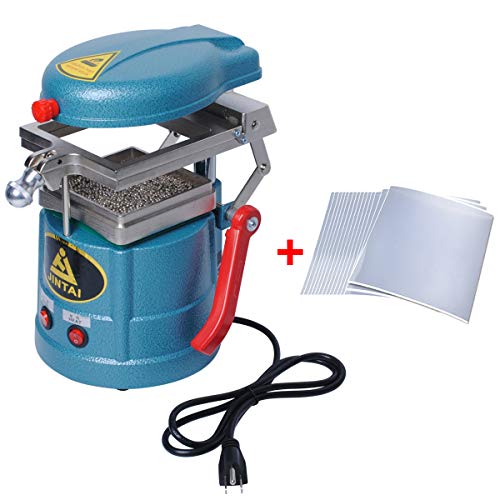
The Gekufa model is designed to support dental thermoforming tasks with a 110V system and a built-in vacuum pump, eliminating the need for external compressors. It supports a wide range of dental thermoplastics and is well-suited for making night guards, custom trays, base plates, and splints. Its solid steel body provides durability, while the symmetrical heating element aims to deliver uniform heat distribution for consistent forming results. The machine emphasizes low noise operation for clinical environments.
Plastvac P7 110V Vacuum Forming Machine

The Plastvac P7 is a Brazilian-made unit noted for ease of use and dual plasticizing processes—Conventional and Rotary. It features a powerful 1400W motor that automatically generates vacuum during forming, enabling rapid production. Its design supports efficient workflow, including quick sheet delivery to the patient. The unit’s simple setup makes it suitable for clinics seeking a straightforward, reliable vacuum former with robust output.
NORJIN Vacuum Forming Machine Overview

NORJIN emphasizes high-quality construction with an aluminum body and protective finish to resist corrosion and wear. The included vacuum suction provides rapid cooling and helps achieve a precise fit with molded thermoplastics. Its symmetrical heating system ensures even heat distribution, contributing to consistent and reliable molding results across multiple sessions. The design focuses on durability and steady performance in clinical settings.
JT-018 Laboratory Vacuum Forming Machine
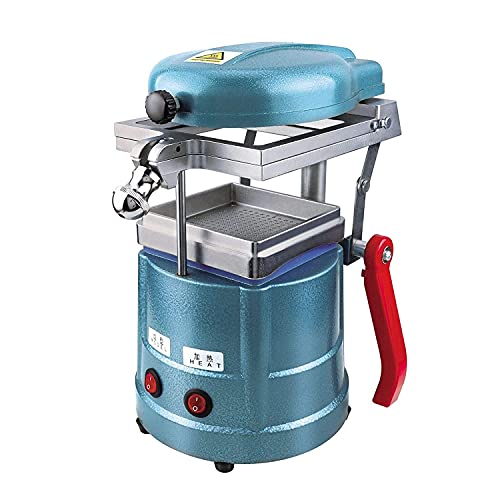
The JT-018 model offers a compact, space-efficient design with a 600W heating element and 110V operation. It features a direct downward suction design for improved precision and reliable molding outcomes. The form factor supports typical lab-scale projects while maintaining a practical footprint for small clinics or workshop environments. The unit’s stated dimensions and weight suggest easy placement on standard workbenches.
Global-Dental JT-18 Vacuum Molding Machine

The Global-Dental JT-18 line highlights a symmetrical heating system and a rust-resistant, adaptable body that supports a variety of materials. This model is positioned for a broad clinical use range, including mold creation, copings, trays, and other thermoforming tasks. Its emphasis on uniform heat distribution aims to improve the consistency of results across different thermoplastics and patient cases.
Buying Guide: Key Considerations For Choosing A Vacuum Forming Machine
- Vacuum strength and suction consistency: Strong downward suction helps with tight fits and precise outer contours, especially for dental appliances.
- Heating system design: Symmetrical or evenly distributed heating reduces hot spots and ensures uniform material forming across the sheet.
- Material compatibility: Check which thermoplastics the unit supports (e.g., acrylics, PETG, EVA, polycarbonate) and whether it handles common dental sheets like night guards and trays.
- Power and footprint: Consider voltage compatibility (110V is common in the US) and the machine’s footprint for your available workspace.
- Build quality and durability: Aluminum bodies, powder coatings, and rust-resistant finishes improve longevity in busy labs.
- Noise and maintenance: Lower noise levels are preferable in clinical settings; easy access to the heating elements and vacuum pump simplifies upkeep.
- Installation and operation: Look for units with straightforward setup, minimal required accessories, and intuitive controls to reduce training time.
- Warranty and service: A solid warranty and vendor support can be crucial for any lab equipment subject to heavy use.
- Cost of ownership: Evaluate energy use, replacement parts, and expected sheet throughput to estimate long-term value.
In selecting a vacuum forming machine, compare how each model aligns with your routine tasks, space constraints, and material needs. For dental-focused setups, prioritize models with integrated suction, reliable heat distribution, and compatibility with standard dental thermoform sheets. For small labs or educational environments, compact form factors and straightforward operation may be more beneficial. The five options reviewed here provide a spectrum of capabilities, enabling you to balance performance, durability, and budget considerations.