The following selection highlights top-rated labeling machines designed for plastic bottle labeling. Each option focuses on speed, accuracy, and ease of use to help streamline production lines, reduce labeling errors, and minimize waste. Read through concise product insights and compare what matters most for your packaging setup.
| Product | Brand | Key Feature | Diameter Range |
|---|---|---|---|
| VEVOR Manual Round Labeling Machine (15-20 pcs/min) | VEVOR | Fast labeling with press bar for bubble-free results | 0.78″–4.72″ |
| Sumeve Manual Bottle Labeling Machine (White) | Sumeve | Extended length, durable all-metal body with pressing bar | 0.6″–4″ |
| TozMvi Semi-Automatic Plane Labeling Machine | TozMvi | 1-touch control, automatic label detection | 20–80 mm diameter |
| VEVOR Semi-Automatic Round Labeling Machine (20-50 pcs/min) | VEVOR | Sensor-driven, durable aluminum body | 0.78″–4.72″ |
| LALABU Semi-Automatic Round Bottle Labeling Machine | LALABU | High efficiency with 120W motor | 0.6″–4.7″ |
VEVOR Manual Round Labeling Machine

The VEVOR Manual Round Labeling Machine targets small to mid-scale operations requiring fast, repeated label application on round plastic bottles. It supports bottles from 0.78 to 4.72 inches in diameter and works with both transparent and cardboard label rolls up to 5.12 inches wide. The unit emphasizes speed—advertised at 15–20 bottles per minute—while incorporating a round bottle press bar and a rubber roller to reduce air bubbles and ensure smooth adhesion. Its simple operation minimizes human error and can cut labeling time significantly, translating into increased throughput and lower per-bottle labor costs. Durable construction aids long-term use in production settings.
Designed to handle a range of label sizes (10–130 mm wide; 10–300 mm long), this model is well-suited for cosmetic, beverage, or other light industrial labeling tasks where round bottles are common. If your workflow includes transparent or semi-transparent labels, this device accommodates those formats with reliable placement. While it offers manual operation, the device is engineered to reduce effort per cycle, making it a practical option for businesses seeking a budget-friendly upgrade to manual labeling processes.
Sumeve Manual Bottle Labeling Machine (White)

The Sumeve manual model is designed for versatility with round bottles including glass, metal canisters, and certain plastics. It supports bottles ranging from 0.6 to 4 inches in diameter and requires label rolls with a minimum inner diameter of 0.78 inches. This unit emphasizes extended compatibility with various label widths (1–5.1 inches) and lengths (1–10 inches), aided by an extended body design and an added pressing bar to improve label conformity. Its all-metal construction enhances durability in workshop environments, and the manual operation keeps costs predictable for small-batch production or craft operations.
Users should note it is not intended for oddly shaped or particularly light containers once filled. The Sumeve is appropriate for standard round packaging and is especially compatible with mid-range label sizes, offering a balance of cost and reliability. The device can be a practical upgrade for small manufacturers seeking more consistent label placement without investing in fully automated equipment.
TozMvi Semi-Automatic Plane Labeling Machine

The TozMvi electric labeler is built for higher throughput with 1-touch control and automatic label detection, reducing manual handling. It targets round bottles with diameters from 20–80 mm and heights from 55–140 mm, accommodating labels up to 110 mm in height and up to 80 mm in width. The 36W motor provides steady performance, and the device supports label rolls with outer diameters up to 150 mm and inner cores of 75 mm. An optical sensor detects label visibility and stops the process upon completion, helping minimize errors and waste. This model suits smaller to medium-sized facilities needing consistent placement with minimal operator effort.
Consider the setup requirements: power availability, space for the machine, and compatible label stock (width and height). It’s particularly useful for electronics, cosmetics, or hobbyist manufacturers where semi-automatic operation yields a solid blend of speed and control. The optical sensing and compact footprint make it a practical upgrade from purely manual systems without committing to full automation.
VEVOR Semi-Automatic Round Labeling Machine

This VEVOR model emphasizes durability and efficiency for various round bottles, suitable for medicine, condiments, beverages, and cosmetics. It uses a sensor-assisted approach to ensure precise label placement and reduce misalignment. The aluminum alloy body provides corrosion and wear resistance, contributing to longevity in demanding environments. The device is designed to label bottles in the 0.78–4.72 inch diameter range and can handle a broad selection of label formats. The combination of a robust frame, sensor-assisted alignment, and an adequate motor delivers reliable performance for moderate production lines.
Important considerations include the note that it is not intended for transparent labels, which may influence material selection and final appearance. This model serves well for manufacturers seeking a semi-automatic solution with higher throughput than basic manual tools while maintaining lower operating costs than full automation. It pairs well with standard label stocks and common bottle sizes found in household, personal care, and food segments.
LALABU Semi-Automatic Round Bottle Labeling Machine

The LALABU labeling machine offers high efficiency for round bottles with a motorized drive (120W) that can reach speeds up to 15–50 pieces per minute. It supports bottle diameters from 0.6 to 4.7 inches and accommodates a broad range of label sizes (0.8×0.8 inches to 11.8×5.9 inches). The device features a semi-automatic workflow with an optical fiber sensor for precise label placement, delivering a fast, labor-saving, and accurate result. It’s designed to reduce bubbles and creases, supporting a cleaner, more competitive product presentation in markets like cosmetics, beverages, and personal care.
Users should verify compatibility with specific labels and bottle shapes, as well as power requirements to ensure consistent performance in their facility. The all-metal construction offers durability in busy production environments, making this a solid option for teams upgrading from basic manual tools to a more efficient semi-automatic solution.
ZONEPACK Upgraded Manual Labeling Machine

The ZONEPACK upgraded manual labeling solution emphasizes an improved pressing bar and load-bearing features to minimize label damage during transport and wrapping. It supports bottle diameters from 15 to 120 mm and bottle heights up to 150 mm. Label lengths range from 10 to 300 mm, with widths from 10 to 110 mm. The desktop, compact design offers a space-saving footprint, with a power-free, manual operation that reduces energy consumption while maintaining strong labeling results. Its focus on wrinkle-free and bubble-free labeling makes it suitable for small to medium packaging lines in cosmetic, beverage, or chemical sectors.
Potential buyers should assess whether the range fits their typical bottle shapes and label stock. The manual design provides control and simplicity, but operators should be comfortable with hand-operated processes. This model is a practical fit for shops seeking reliable, low-maintenance labeling without the overhead of automation.
None/Brand MT-30 Manual Labeling Machine
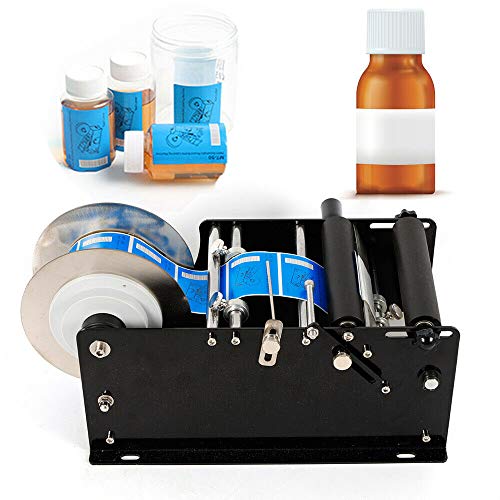
The MT-30 manual labeling machine combines accuracy with compact design for round bottles in the 0.79–4.72 inch diameter range. It features a high-precision sensor system and a labeling speed of 10–30 pieces per minute, depending on bottle shape and label size. The unit supports label rolls with inner diameters of at least 75 mm and outer roll diameters up to 250 mm. It accommodates label widths from 0.3 to 4.3 inches and label lengths from 0.3 to 11 inches, making it adaptable to a variety of standard label formats. An adjustable holder and clear setup steps aid efficient operation and repeatable results.
As with many manual systems, performance depends on operator consistency. This MT-30 offers a practical option for small manufacturers seeking reliable labeling accuracy without automated mechanisms, ideal for test runs, samples, or limited production existing alongside other manual devices.
Buying Guide
Key considerations when selecting a plastic bottle labeling machine include bottle shape, diameter, and height, as well as label width, length, and material. For round bottles, ensure the device supports your target diameter range and can accommodate your label stock (transparent, opaque, or specialty materials) without compromising adhesion.
- Throughput vs. labor: Manual and semi-automatic options vary in speed. Choose based on current demand and available staffing.
- Label accuracy: Look for features like optical or fiber optic sensors, and pressing bars that reduce air bubbles and wrinkles.
- Durability: Aluminum or rust-resistant bodies improve longevity in busy environments.
- Footprint and power: Consider space constraints and if the model requires electrical power or is purely manual.
- Compatibility: Verify bottle diameters, label widths/heights, and inner/outer label roll specifications.
For operations evaluating automation, compare semi-automatic options with manual controls to determine whether the incremental throughput justifies the investment. Also assess after-sales support, replacement parts availability, and the ease of obtaining compatible labels from suppliers. The right choice balances speed, accuracy, cost, and long-term reliability for your specific plastic bottle labeling needs.