Choosing the right paint booth air filters helps protect workers, maintain exhaust system efficiency, and ensure regulatory compliance in finishing operations. This article surveys five of the most relevant filters on the market, highlighting design features, installation fit, and performance benefits. Use the quick reference table below to compare essentials at a glance.
| Product | Brand | Type | Approx. Fit | Key Benefit |
|---|---|---|---|---|
| Sankair Paint Booth Exhaust Fiberglass Filter Pad | Sankair | Fiberglass filter pad | 20″ x 20″ | |
| Master Elite Premium Paint Spray Booth Exhaust Filter Roll | Master Airbrush | Fiberglass filter roll | 20.5″ x 100′ | |
| LAUCO Paint Spray Booth Exhaust Filter Pad | LAUCO | Fiberglass filter pad | 20″ x 20″ x 2″ | |
| PRISTAIR Spray Booth Capture Filter | PRISTAIR | Fiberglass exhaust filter pad | 20″ x 20″ | |
| HolyMaji Paint Spray Booth Exhaust Filter Pad | HolyMaji | Two-layer fiberglass pad | 16″ x 7-1/4″ |
Note: All five options are designed for standard spray booth exhaust systems and aim to balance filtration efficiency with installation practicality in typical American workshop environments.
Sankair Paint Booth Exhaust Filter Pad

The Sankair filter pad uses lightweight fiberglass media to capture paint particles from spray booth exhaust systems. The design features a green face indicating air direction and a white side for paint capture, helping installers align the pad correctly every time. This configuration supports regulatory compliance by maintaining efficient filtration that reduces particle release in exhaust streams. The pad is described as meeting or exceeding applicable environmental standards for spray booth exhaust filtration, which is essential for maintaining workplace safety and environmental responsibility in finishing operations.
Key considerations include compatibility with common spray booth housings and ease of replacement. The 20″ x 20″ format matches many crossdraft and downdraft booths, while the fiberglass media balances cost with performance. For facilities prioritizing straightforward installation and predictable, compliant filtration, Sankair provides a reliable option with clear directional cues for correct seating.
Master Elite Premium Paint Spray Booth Exhaust Filter Roll

The Master Elite filter roll provides a long, continuous solution for exhaust filtration in automotive and industrial spray booths. Sized at 20.5″ x 100′, the 18-gram heavy-duty fiberglass media is designed to trap overspray and paint particles efficiently while fitting into many crossdraft and downdraft systems. The roll format minimizes frequent changes, which can be advantageous for shops with high throughput or limited downtime. Users should ensure the roll width integrates with their booth’s filtration housing and consider cut-to-length installation for precise coverage.
Advantages include extended service life and strong filtration capacity, making it suitable for facilities needing robust filtration and lower maintenance intervals. The primary considerations are compatibility with existing filters and hardware, as well as the handling requirements for fiberglass products during replacement and disposal per local regulations.
LAUCO Paint Spray Booth Exhaust Filter Pad

LAUCO’s 20″ x 20″ x 2″ filter pad uses heavy-duty 18-gram fiberglass media to deliver strong overspray capture. The dense material helps prevent paint particulates from accumulating on exhaust fans and ducts, potentially reducing maintenance costs and downtime. A notable feature is the pad’s compatibility with standard spray booths and its design to fit into typical filter frames without tape or collapses, aided by an internal support structure. The product emphasizes durability and long-term use, which is beneficial for busy workshops seeking reliable filtration with predictable performance over time.
Potential considerations include the need for gloves and protective handling due to fiberglass materials, and ensuring the pad thickness aligns with housing depth. The pad’s 20″ x 20″ format suits many common booths, and the 2″ depth provides a substantial filtration bed for continued capture of paint particles.
PRISTAIR Spray Booth Capture Filter
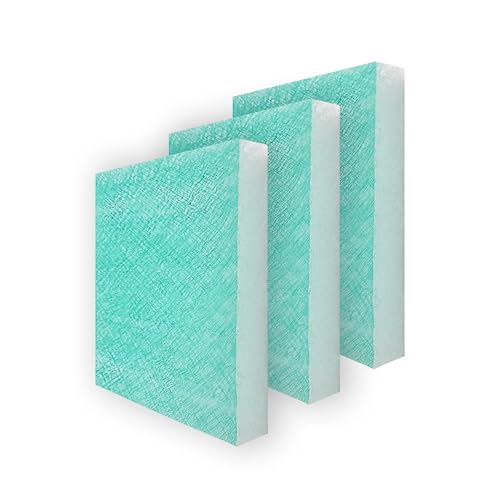
PRISTAIR’s 20″ x 20″ capture filter uses 15g fiberglass media to trap a high percentage of paint particles in exhaust streams. The product emphasizes a color-coded green front side for intake and white capture side for exhaust, making installation quick and less error-prone. With a 15g specification, the filter balances trapping efficiency and material load to optimize service life and maintain airflow in many workshop environments. It is positioned as a sturdy option for maintaining cleanliness and protecting downstream equipment and filters.
Considerations include ensuring the 20″ x 20″ footprint matches the booth housing and evaluating the filter’s capacity against expected spray volumes. The tack and density of the fiberglass media can influence both filtration performance and the need for periodic inspection to prevent bypass or media sag over time.
HolyMaji 10 Pieces Paint Spray Booth Exhaust Filter Pad
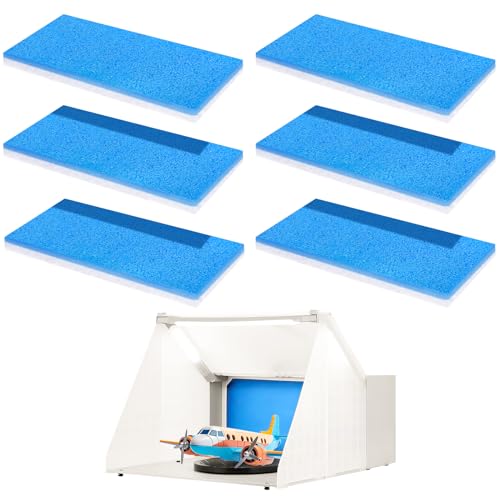
HolyMaji offers a set of 10 two-layer high-density fiberglass booth filters, designed for compatibility with Master, Paasche, Vevor, and Vivohome systems. Each filter measures 16″ x 7-1/4″ and thickness around 7/8″, allowing for flexible cutting and shaping to match various booth configurations. The two-layer design enhances particle capture while maintaining manageable airflow. This option is often considered cost-effective for shops needing multiple spares or those with varied booth sizes across operations.
Key considerations include how easily the pads can be cut to fit unusual housings and the handling requirements for fiberglass materials. The two-layer approach can offer enhanced capture at modest airflow restrictions, but regular inspection is still recommended to ensure consistent filtration performance and to avoid bypass caused by wear or deformation.
Buying Guide: Key Purchase Considerations For Paint Booth Air Filters
Filtration performance, fit, and durability are the core pillars when selecting paint booth air filters. The following considerations help buyers choose the right option for their shop:
- Filtration efficiency and particle size capture: Look for media specifications that indicate how well the filter traps paint overspray and fine particles. Heavier 18-gram fiberglass media generally provides higher capture than lighter options, but check for compatibility with your booth’s airflow and housing.
- Footprint and compatibility: Confirm the filter’s dimensions, thickness, and mounting method align with your spray booth’s filter frames. A common 20″ x 20″ format fits many booths, but some systems require 16″ widths or specific depths.
- Durability and maintenance: Evaluate whether the filter is single-use or reusable, the expected service life, and handling requirements. Heavy-duty pads reduce replacement frequency but may require more effort to cut or fit into nonstandard housings.
- Direction cues and installation ease: Features like color-coded sides (green intake, white capture) simplify installation and reduce the risk of bypass due to misalignment.
- Regulatory and environmental considerations: Filters should meet or exceed environmental standards appropriate for spray booth exhaust, helping facilities stay compliant with local air quality regulations.
- Cost and lifecycle: Consider the total cost of ownership, balancing initial price with replacement frequency, maintenance downtime, and disposal costs for fiberglass media.
- Safety and handling: Fiberglass media can irritate skin and lungs; wear gloves and adhere to safety guidelines during handling and disposal.
- Compatibility with existing equipment: Ensure the chosen filter is compatible with current fans, ducting, and downstream filtration systems to maintain airflow and protection of equipment.
In practice, facilities should evaluate a mix of pad and roll formats to cover both routine changes and longer-term replacements. For shops with high-throughput finishing lines, a higher-density media with longer service life can reduce downtime, while smaller or versatile operations may benefit from cut-to-fit pads that adapt to nonstandard housings.