Selecting the right oxygen gauge regulator is essential for safe and efficient cutting with a torch. This guide reviews five top regulators designed for CGA-540 oxygen tanks (and related CGA configurations) and explains how to choose based on inlet/outlet ranges, durability, and compatibility with common welding torches. Each product below includes a direct link to its Amazon listing, a quick image reference, and key features to help you compare at a glance.
| Product | Regulator Type | Inlet/Outlet | Valve Type | Special Notes |
|---|---|---|---|---|
| RX WELD CGA540 & CGA510 PC-Handle | Oxygen & Acetylene Regulator | O2 0-4000 PSI / 0-200 PSI; Acetylene 0-400 PSI / 0-30 PSI | Two Dials | PC handle for comfortable operation |
| RX WELD CGA540 & CGA200 PC-Handle | Oxygen & Acetylene Regulator | O2 0-4000 PSI / 0-100 PSI; Acetylene 0-400 PSI / 0-30 PSI | Two Dials | Versatile for CGA-200 acetylene tanks |
| KLLsmDesign Heavy Duty Oxygen Regulator | Oxygen Regulator | 0-4000 PSI / 0-200 PSI | Two Dials | Thick brass construction; large gauges |
| RX WELD CGA540 & CGA510 T-Handle | Oxygen & Acetylene Regulator | O2 0-4000 PSI / 0-200 PSI; Acetylene 0-400 PSI / 0-30 PSI | Two Dials | T-handle design for easy grip |
| JZWELD Oxygen Acetylene Regulators CGA540 & CGA510 | Oxygen & Acetylene Regulator | O2 0-4000 PSI / 0-200 PSI; Acetylene 0-400 PSI / 0-30 PSI | Dual Dials | Fits CGA-540 and CGA-510 setups |
RX WELD CGA540 & CGA510 PC-Handle

The RX WELD regulator set combines oxygen CGA-540 and acetylene CGA-510 connections with dual dials to independently control gas delivery. The oxygen side provides 0-4000 PSI inlet and 0-200 PSI output, while the acetylene side delivers 0-400 PSI inlet and 0-30 PSI output. This configuration supports V-style welding torches and cutting operations, with a twin-welding-hose outlet compatible with standard 9/16″-18 fittings. Built for reliable performance, it offers straightforward adjustments and solid brass construction to resist corrosion in typical shop environments.
RX WELD CGA540 & CGA200 PC-Handle

This RX WELD model pairs CGA-540 oxygen regulators with CGA-200 acetylene regulators, both featuring dual dials for precise pressure management. Oxygen delivers 0-4000 PSI inlet and 0-100 PSI outlet, while acetylene delivers 0-400 PSI inlet and 0-30 PSI outlet. The twin hose connection uses standard 9/16″-18 fittings, making it compatible with common welding hoses. The PC-style handle facilitates extended sessions without fatigue. It is ideal for V-style torches and cutting kits that require dependable oxygen control.
KLLsmDesign Heavy Duty Oxygen Regulator

The KLLsmDesign regulator is built for heavy-duty use with a thick brass body and two large gauge dials. It supports an inlet range of 0-4000 PSI and an outlet range up to 200 PSI for oxygen. Designed to fit CGA-540 connections, it provides reliable, steady pressure suitable for cutting operations. Its robust construction aims to withstand frequent handling and accidental taps common in busy shop environments.
RX WELD CGA540 & CGA510 T-Handle

This T-handle variant from RX WELD emphasizes ergonomic operation with a T-shaped adjustment grip. It maintains the CGA-540 oxygen and CGA-510 acetylene configuration, delivering oxygen at 0-4000 PSI inlet and 0-200 PSI outlet, and acetylene at 0-400 PSI inlet and 0-30 PSI outlet. The dual-dial design ensures independent control of each gas, making it a solid choice for precise torch cutting setups that demand repeatable performance in variable work conditions.
RX WELD CGA540 Oxygen Regulator (T-Handle) with Gauges

This RX WELD model focuses on the CGA-540 oxygen regulator with a 0-4000 PSI inlet and 0-100 PSI output range, complemented by a dedicated acetylene regulator. The gauges provide quick visual confirmation of current pressures, while the 9/16″-18 outlet thread ensures compatibility with a broad line of welding hoses. It emphasizes stability and reliable pressure delivery for consistent cutting performance.
JZWELD CGA540 & CGA510 Regulators
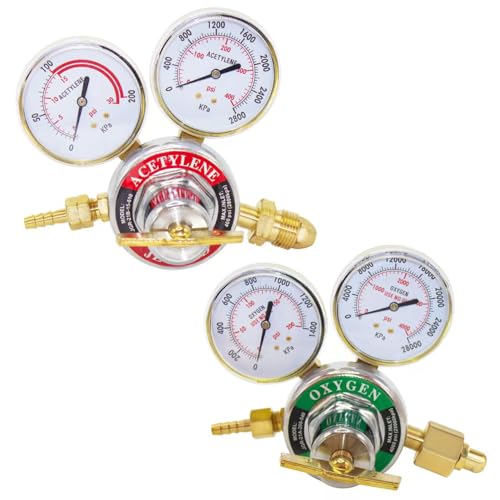
The JZWELD set offers dual regulators with CGA-540 oxygen and CGA-510 acetylene connections, designed for welding gas cutting torches. Each regulator provides robust dual-dial control, with oxygen delivering 0-4000 PSI inlet and 0-200 PSI outlet, and acetylene delivering 0-400 PSI inlet and 0-30 PSI outlet. Its compatibility with common Victor/Harris-style cutting kits makes it a versatile option for home shops and professional settings alike.
Buying Guide: Key Purchase Considerations
- Gas compatibility: Ensure the regulator supports CGA-540 for oxygen and the appropriate CGA for your acetylene tanks (commonly CGA-510 or CGA-200). Confirm chin-off connections and hose fittings (9/16″-18 threads) match your equipment.
- Pressure ranges: For cutting torches, an oxygen inlet of up to 4000 PSI and outlet up to 200 PSI is typical. Acetylene outlets around 30 PSI are common. Verify both sides meet your torch’s requirements.
- Regulator design: Dual-dial models let you monitor and adjust oxygen and acetylene independently. T-handle designs can improve grip and adjustment comfort during long sessions.
- Construction and durability: Brass bodies are standard and corrosion-resistant. Heavy-duty variants with larger gauges can offer quicker, clearer readings in busy shop environments.
- Assembly and fit: Check that the regulator set is compatible with your torch’s collar and hose connectors. Consider sets including both PC and T-handle options for ergonomic preferences.
- Safety and calibration: Choose regulators with stable pressure delivery and clear, easy-to-read gauges. Regular calibration and leak-check practices are recommended for safe operation.
- Warranty and support: Longer warranties can provide peace of mind for critical shop tools. Look for reputable brands with responsive customer support.
In selecting a best-fit oxygen gauge regulator for cutting torches, prioritize compatibility with your CGA valve configuration, the required pressure ranges, and the design that best suits your workflow. All highlighted options are designed to support reliable, safe cutting and welding tasks in typical American workshop environments.