Selecting the right concrete mold release can dramatically improve surface quality, simplify demolding, and reduce cleanup. The following five products are well-suited for a range of molds, including wooden, plastic, metal, and architectural forms. Each option prioritizes clean release, minimal residue, and compatibility with common concrete casting workflows.
| Product | Brand | Size | Key Benefit |
|---|---|---|---|
| Akona Concrete Form Release (1 Gallon) | Akona | 1 Gallon | Versatile and easy-to-use with clean release |
| Akona Concrete Form Release (28 Ounce) | Akona | 28 Ounce | White release that aids accurate application |
| Formcoat WB250 Concrete Form Release Agent | DCP | 1 Gallon | Solvent-free, non-staining, low residue |
| Q-Cote Paraffin-based Concrete Form Release (128 oz) | Quality Chemical | 128 oz | Slip-resistant surface with textured finishes |
| Silicone Mold Release Spray (16.9 fl oz) | ag adhesive guru | 16.9 oz | High silicone content for silicone and rubber molds |
Introduction to product selections: The Akona releases are favored for everyday precast, tubes, and sculpture molds, offering straightforward spray-and-go usage. Formcoat WB250 emphasizes low odor and solvent-free performance for professional settings. Q-Cote options highlight paraffin-based lubrication with texture possibilities, suitable for stamped designs. The Silicone Mold Release Spray from Adhesive Guru is a versatile option for epoxy, silicone, and rubber molds where high-reliability release is essential.
Akona Concrete Form Release – 1 Gallon

Brand: Akona
Features: Versatile releases for plywood, fiberglass, aluminum, steel, urethane, and other forming materials. No mixing or preparation required—spray or pour and go. White application ensures visibility, and the release leaves no residue behind for cleaner demolding.
Use case considerations: Suitable for a wide range of forms and geometries. Ideal for both DIY projects and light commercial production. The white spray helps ensure even coverage on complex shapes, reducing the risk of missed spots that can mar finishes.
Akona Concrete Form Release – 28 Ounce

Brand: Akona
Features: Compact, easy-to-store form release with the same versatile performance claims as the larger bottle. Spray or pour application with a white-release visual cue to ensure complete coverage and a clean demold.
Use case considerations: Great as a secondary bottle for smaller projects or job sites with limited storage. Maintains consistent release performance across multiple mold types without sacrificing ease of use.
Formcoat WB250 Concrete Form Release Agent
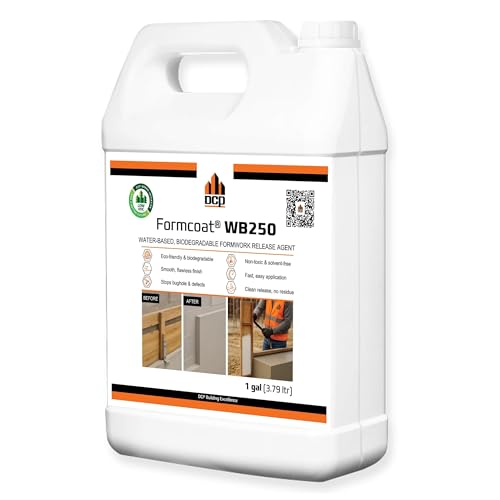
Brand: DCP
Features: Professional-grade release for wooden, plastic, and metal molds. It provides smooth, stain-free surfaces with no residue, reducing cleanup time. Safe for use in various environments as it is free from solvents and waxes, and VOC-compliant in the U.S. and Canada.
Use case considerations: A strong option for precast plants and architectural projects where surface quality and maintenance time are critical. Suitable for high-volume production with consistent outcomes and reduced post-casting cleanup.
Q-Cote Paraffin-Based Concrete Form Release (128 oz)

Brand: Quality Chemical
Features: Creates a slip-resistant surface to ease mold removal and enhance texture outcomes. Easy to apply with a brush, roller, or sprayer. Paraffin-based formulation assists in producing distinctive textures that are hard to achieve with other releases.
Use case considerations: Well-suited for stepping stones, garden markers, and stamped textures where surface texture is a key design element. The paraffin base aligns with traditional concrete forming workflows and can be applied without complex prep.
Q-Cote Paraffin-Based Concrete Form Release (128 oz) Pack of 2

Brand: Quality Chemical
Features: Dual-pack option for larger projects, maintaining slip resistance and texture-friendly release. Easy to apply over large forms with uniform coverage using standard tools, enabling scalable production and consistent finish quality.
Use case considerations: Ideal for repeat casting schedules or larger site projects where multiple batches are produced in succession. Helps maintain consistent outcomes across extended production runs.
Silicone Mold Release Spray – 16.9 Ounce

Brand: ag adhesive guru
Features: High silicone content yields reliable release for epoxy resin, silicone molds, and rubber molds. Easy-to-apply formula designed to prevent sticking and preserve mold integrity, with broad mold compatibility.
Use case considerations: Particularly useful for detailed epoxy or resin casting, or when working with silicone and rubber molds where a strong, non-stick barrier is essential to preserve mold surfaces and edge fidelity.
Buying Guide: Key Considerations For Concrete Mold Release
Choosing the right release agent depends on mold material, project scale, and desired finish. Consider these factors to optimize results and workflow efficiency.
- Mold compatibility: Ensure the release works with your mold substrate (wood, metal, plastic, silicone) to prevent staining or residue.
- Residue and cleanup: Prioritize low-residue formulas when surface quality and demold speed matter. Solvent-free options reduce cleanup time and odor.
- Texture and finish: For stamped or textured concrete, select paraffin-based releases that enhance texture or provide a cleaner surface.
- VOC and safety: In commercial settings, VOC-compliance and non-flammability improve safety and regulatory compliance.
- Application method: Sprays are quick for large runs; pours/brushing work well for small or irregular molds. Some products require no mixing or preparation.
- Volume and reuse: For ongoing projects, consider larger bottles or multipacks to reduce downtime and replacement frequency.
- Odor and environment: Solvent-free products reduce odor and are often better suited for indoor use or enclosed spaces.
- Texture enhancement: Paraffin-based and silicone releases can affect finish texture; plan accordance with desired aesthetics and form complexity.
Practical workflow tips: Apply evenly, covering all mold surfaces, and allow any necessary drying time per product guidance. Test a small area before full-scale production to confirm release quality and surface outcome. For complex forms, a combination approach (e.g., base silicone release with a paraffin-based topcoat on texture-rich areas) can balance ease of demolding with texture fidelity.