Fiberglass projects demand reliable mold release agents to prevent sticking, reduce finish work, and protect delicate surfaces. This guide highlights five leading products that perform well with fiberglass resins and composites, offering bold performance across a range of application methods—from waxes and paste releases to water-based films and spray-on options. Each option balances ease of use with strong release properties, helping you streamline production and achieve repeatable results.
| Product | Brand | Notable Feature |
|---|---|---|
| PARTALL Paste #2 Mold Release Wax | Fiberglass Supply Depot | Economical edge wax; good for rough wood molds |
| PVA Water Based Mould Release | Uniproducts | Forming barrier with versatile brush/apply methods |
| Ease Release 200 Mold Release | Mann Release Technologies | Excellent release across resins and silicones |
| Silicone Mold Release Spray | MRealeazy | High silicone content; great for silicone and rubber molds |
| PVA PARTALL #10 Liquid Easy Casting Mold Release | FGCI | Professional grade; easy application; residue-free |
PARTALL Paste #2 Mold Release Wax

PARTALL Paste #2 Wax is a versatile, general-purpose mold release crafted from hydrocarbon and microcrystalline waxes. While primarily used in thermoset molding resins, it serves well as an economical edge wax on larger molds and can seal rough wood molds or plugs used for casting composites, cements, and grouts. The green wax is recognized for ease of use and broad compatibility, making it a staple for fiberglass applications that require a simple, reliable release layer at ambient cure conditions.
PVA Water Based Mould Release

This Polyvinyl Alcohol (PVA) release forms a protective barrier between parts and mold surfaces, enabling easy removal of fiberglass parts. It’s designed for brush, spray, roll, or sponge applications and is formulated to minimize shrinking or staining. Suitable for epoxy, resin, polyester, vinyl ester, gel coat, polyurethane foam, and silicone projects, this film-forming agent helps deliver clean part surfaces with reduced post-processing.
Ease Release 200 Mold Release
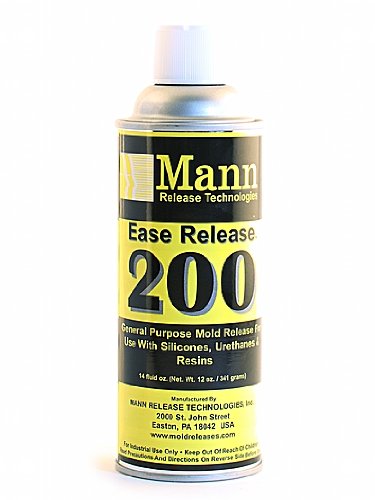
Ease Release 200 is an aerosol mold release designed to work across multiple families of resins, including polyurethane elastomers, epoxy resins, polyester resins, RTV silicones, and more. Its clear formula is easy to spray and shows strong compatibility with urethane, silicone, and metal molds. The result is a reliable, consistent release that reduces sticking and surface blemishes on fiberglass parts, while facilitating cleaner molds for repeated use.
Mitreapel Silicone Mold Release Spray

Mitreapel’s silicone-based mold release is formulated for use with silicone and rubber molds, delivering a high-silicone content that minimizes sticking in epoxy applications. The spray form is convenient for quick, even coverage and helps preserve mold surface integrity, enabling precise releases in complex fiberglass molds. The formula’s emphasis on silicone compatibility helps reduce residue in flexible molds and supports long mold lifespans.
PVA PARTALL #10 Liquid Easy Casting Mold Release

PVA PARTALL #10 is a professional-grade liquid mold release designed for easy casting of silicone and resin molds. It sprays, rolls, sponges, or brushes on with minimal shrinking or staining. The release is designed to leave a smooth, glossy surface on the mold and is solvent-resistant for durability during multiple pours. This option is well-suited for fiberglass projects that require a reliable, low-residue release in professional settings.
Buying Guide
- Release mechanism: Choose between wax/paste (surface barrier and edge protection) and film-forming releases (PVA or silicone-based) for different fiberglass molds and resins.
- Mold material compatibility: Verify compatibility with fiberglass resins, epoxies, polyesters, and silicone molds to prevent staining or residue.
- Application method: Consider ease of application—spray, brush, roller, or sponge—based on mold geometry and production tempo.
- Ease of cleanup: Some products wipe off easily, while others form durable films that may require water or solvent for residue removal.
- Residue and finish: For high-gloss or ultra-smooth surfaces, select releases that minimize surface blemishes and post-mold cleanup.
- Environmental and safety considerations: Review VOC content, odor, and handling guidelines, especially for large-volume fiberglass work.
- Cost-per-use: Balance upfront price with expected mold lifespan and release frequency to optimize overall cost efficiency.
- Long-term mold maintenance: Some releases leave films that extend mold life; others are preferable for quick turnaround and frequent mold reuse.
- Storage and shelf life: Some releases are sensitive to temperature or humidity; proper storage improves performance and shelf life.
- Versatility: If you work with multiple mold types, a flexible option (PVA or silicone-based) can reduce the need for several products.
Choosing the right mold release for fiberglass depends on resin type, mold material, and your workflow. The selections above provide options across wax, PVA films, and silicone-based sprays to match different project demands—from simple, repeatable releases to high-precision, low-residue finishes. Always perform a small test release on a sample mold to confirm compatibility before committing to larger production runs.