Choosing the right mini prism for a total station can dramatically affect measurement accuracy and ease of use. This guide highlights five highly relevant options, covering different offsets, ranges, and build qualities to suit professional surveying tasks. Each product includes essential specs and practical notes to help you compare at a glance.
| Product | Brand | Prism Constant | Offset | Key Benefit |
|---|---|---|---|---|
| Mini Prism With 4 Poles Tools for Instuements | Mountlaser | 17.5 mm | 4 poles, 0–1.2 m extension | Versatile with adjustable jaw options |
| Mountlaser Mini Prism with 4 Poles | Mountlaser | 0 mm | 4 poles, 1.2 m max | Zero offset for precise baseline work |
| XGeology Mini Prism Reflector Peanut | XGeology | 0 or -30 mm options | 0/±30 mm | Copper-coated prism, solid for long distances |
| GEOLENI 90 Degree Prism L Bar | GEOLENI | Not stated | 90° L-bar | Angle-ready setup for complex layouts |
| Highly Accurate Mini Prism Set | DMITER | 17.5 mm | 1.2 m extension | Precision with Swiss-style construction |
Below are five product highlights tailored to total station use. Each entry provides a concise snapshot of features to assist quick comparisons on the job site.
Mountlaser Mini Prism With 4 Poles
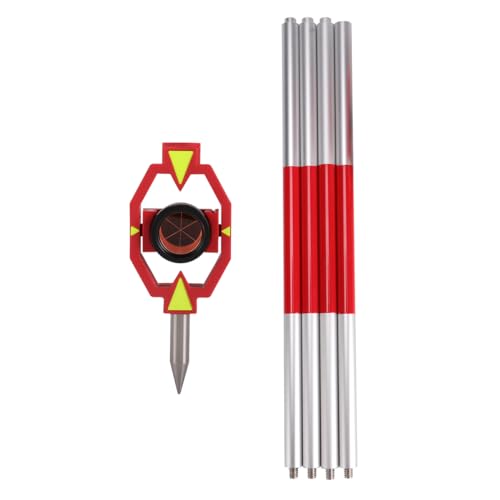
Brand: Mountlaser. This mini prism features a 25.4 mm prism diameter coated with copper for durability and accuracy. It includes four screw-on aluminum poles extending to 1.2 m and an adjustable three-jaw option sold separately. Prism constant is 17.5 mm. The four-pole design stabilizes measurements over rough terrain, making it suitable for varied surveying tasks.
Mountlaser Mini Prism With 4 Poles, 0 mm Offset

Brand: Mountlaser. This variant provides a zero offset (0 mm) for cases where precise alignment to the instrument is critical. It includes four extendable poles up to 1.2 m and copper-coated prism material for consistent reflections. The three-jaw option is available separately, offering additional mounting flexibility for uneven setups.
XGeology Mini Prism Reflector Peanut
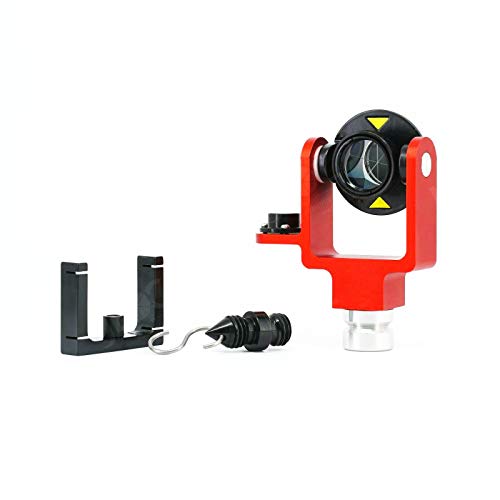
Brand: XGeology. This mini prism system offers 25 mm copper-coated prism elements and a flexible offset option of 0 or -30 mm. The robust construction supports reliable distance measurements even in challenging environments. It is suitable for use with a variety of total stations and includes a steel/plastic body for durability.
GEOLENI 90 Degree Prism L Bar

Brand: GEOLENI. This 90-degree L-bar mini prism is copper-coated for durability and includes an aluminum holder. It offers angle-accurate measurements with an angular precision described as 3-4 arc seconds, and hydration-friendly construction with a waterproof slot for wet conditions. Typical measurable range extends well beyond 600 m under favorable weather, potentially surpassing 1100 m in optimal conditions.
GEOLENI 90 Degree Prism L Bar Copper-Coated Mini Prism

Brand: GEOLENI. This model emphasizes high-precision angle measurements with a 3-4 arc second accuracy and a waterproof design. The copper-coated prism and aluminum housing contribute to durability and long-term reliability in diverse field conditions. It pairs with a stable support system for demanding total station tasks.
Highly Accurate Mini Prism Set

Brand: DMITER. This set delivers a high-precision mini prism with a 25.4 mm copper-coated prism and a 1/4″-20 thread for broad compatibility. The 300 mm × 4-section pole can extend to 1.2 m, enabling access to hard-to-reach points. The Swiss-style construction emphasizes robust build quality and dependable performance in professional surveying tasks.
Buying Guide
Key purchase considerations help ensure you pick a mini prism that aligns with your total station, site conditions, and project requirements.
- Prism constant and offset: A fixed prism constant (for example, 17.5 mm or 0 mm) affects horizontal distance calculations. Consider whether your workflow benefits from a standard offset or a zero-offset setup.
- Distance and range: Many prisms claim distances of 600–1100 m in good weather. Confirm typical operating conditions for your worksite and choose a model with a comfortable safety margin.
- Pole length and stability: Poles extending up to 1.2 m improve reach, but ensure stability under wind or vibration. Four-pole designs typically offer better stability on uneven ground.
- Material and coating: Copper-coated prisms deliver reliable reflections and long-term durability in field conditions. Check for corrosion resistance and weatherproof features.
- Angle accuracy: For 3–4 arc second accuracy, expect precise angular measurements, particularly valuable for long-range surveys and alignment tasks.
- Mounting system: Look for adjustable jaws or quick-release mechanisms. Compatibility with existing instrument threads (e.g., 1/4″-20) ensures broad instrument compatibility.
- Maintenance and accessories: Consider whether the set includes essential accessories (hooks, adapters, bags) and whether additional components are sold separately when needed.
When evaluating these options, consider the trade-offs between offset flexibility, measurement range, and mechanical stability. For complex sites with varied elevations, a zero-offset unit with a longer, more rigid telescoping pole can reduce parallax errors. For rugged outdoor environments, a copper-coated prism with waterproofing and robust mounting is advantageous. Finally, access to a compatible adapter ecosystem is critical for long-term instrument compatibility.