Choosing the right bucket attachment can boost productivity for small excavator projects. This guide highlights five reliable options designed for loading sand, soil, trenching, and surface leveling. Each product is summarized below with its key strengths to help you compare at a glance.
| Product | Size / Type | Material | Typical Use |
|---|---|---|---|
| DANWIWEE 20″ No Teeth | 20 inch | Manganese Steel | Leveling, soft material loading |
| MMS 500mm Flat Bucket | 500mm | Manganese Steel | Leveling slopes, ditch dredging |
| DANWIWEE 31.5″ Flat Bucket | 31.5 inch | Manganese Steel | Small-site digging, sand and soil |
| Yeipower 200mm Backhoe Bucket | 200mm | Manganese Steel | Pipeline trenching, material handling |
| 600mm Mud Bucket | 600mm | Manganese Steel | Trench backfilling, soft materials |
The products below are five of the most relevant mini excavator bucket attachments for common small-equipment tasks, focusing on durability, compatibility, and versatility. Each section provides a concise overview, key specs, and typical applications.
DANWIWEE 20-Inch No Teeth Bucket
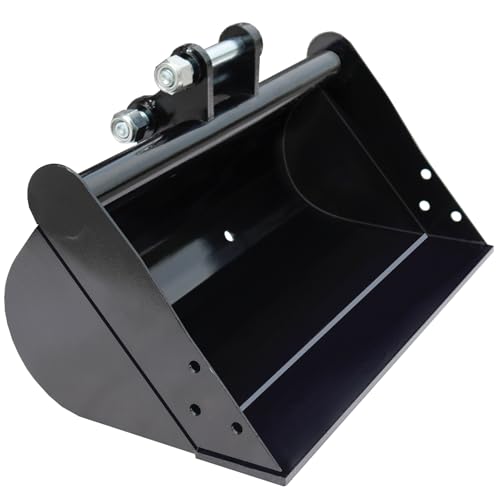
The DANWIWEE 20-inch bucket features a straight edge designed for smooth surface finishing and material leveling. It is well-suited for loading soft materials such as sand and soil, and is compatible with most mini excavators thanks to its standard 25 mm hole diameter and 88 mm wheelbase. Constructed from manganese steel, this attachment emphasizes durability and weather resistance, supporting reliable performance in light to moderate digging and clean-up tasks.
MMS 500mm Flat Tooth Backhoe Bucket

The MMS 500mm flat bucket offers precise dimensions with a 90 mm pin center and 25 mm hole, ensuring a fit for many 0.8-1.8 ton mini excavators. Its flat edge and optional side panel holes increase versatility for material handling, land leveling, and ditch dredging. Made from manganese steel, this attachment provides wear and impact resistance for harsher environments and extended service life.
DANWIWEE 31.5-Inch Flat Bucket

This 31.5-inch flat bucket from DANWIWEE emphasizes high efficiency for small projects. Its toothless design provides a smooth edge ideal for handling sand, soil, and other soft materials, supporting precise grading and site clean-up. The bucket is constructed from robust manganese steel with a waterproof coating to withstand outdoor use and frequent handling tasks on gardens, farms, and landscaping sites.
Yeipower 200mm Backhoe Bucket

The Yeipower 200mm bucket is designed for compact excavators up to 2 tons, offering a compact footprint with a 90 mm offset and 25 mm mounting holes. It supports efficient digging, trenching, and material handling in tight spaces or on lightweight construction sites. The manganese steel build emphasizes durability and wear resistance for repeated use in challenging soils and debris.
600mm Mud Bucket Grading Attachment

The 600mm mud bucket is designed for mini excavators from 1 to 1.8 tons with a 25 mm hole and 90 mm wheelbase. Its no-teeth (plain) design makes it suitable for leveling slopes and dredging rivers or ditches, as well as loading softer materials such as sand and soil. Built from high manganese steel with a waterproof coating, this bucket emphasizes durability under repeated use in wet or muddy conditions.
Buying Guide: Key Purchase Considerations
- Machine compatibility: Verify pin centers, hole diameter, and wheelbase to ensure a proper fit with your specific mini excavator model and tonnage.
- Material and build: Manganese steel offers wear resistance and durability for tough jobs; consider coatings for corrosion protection in wet environments.
- Edge design: Teeth vs. toothless (flat) edges affect digging efficiency and surface finish. Toothless buckets are ideal for leveling and delicate material handling, while toothed options improve penetration in harder soils.
- Bucket width and capacity: Match the width to your working area and workload. Wider buckets move more material per pass but require more machine power and stability.
- Intended applications: Choose attachments tailored to common tasks—dredging, trenching, site cleaning, slope leveling, or material handling—to optimize performance and reduce cycle times.
- Mounting and installation: Check mounting hardware compatibility and the ease of swapping attachments to minimize downtime on job sites.
- Durability vs. budget: Balance initial cost with expected lifespan given soil composition, moisture, and frequency of use.
- Warranty and support: Look for vendor warranties and available replacement parts to protect long-term investment.
- Storage and transport: Consider how the bucket size affects storage space and transport logistics when not in use.