Choosing a forklift loading ramp involves balancing weight capacity, dimensions, surface traction, and durability to ensure safe, efficient transitions between a truck, a dock, and a warehouse floor. The following picks highlight top options designed for container and dock applications, with capacities ranging from 8,000 to 16,000 pounds and construction from steel or durable aluminum. Use this guide to compare how each ramp handles lip height, long-term wear, and forklift compatibility in real-world loading scenarios.
| Product | Capacity | Dimensions | Material | Notes |
|---|---|---|---|---|
| DMC-FPPS 68″ x 86″ | 16,000 lbs | 68 x 86 inches | 6.5″ height differential, 10-gauge steel | Diamond plate surface; forklift compatible |
| HD Ramps 48″ x 36″ | 8,000 lbs per axle | 48 x 36 inches | Aluminum with grit-coat | 4.5–8″ lip range; weather grip |
| Mytee Products 68″ x 86″ | 14,000 lbs | 68 x 86 inches | Steel | Heavy-duty ramp with chain & eye hook |
| Discount Ramps 60″ x 60″ | 13,000 lbs total | 60 x 60 inches | Diamond plate steel | Integrated curb warnings; stabilizers |
| DMC-FPPS 49″ x 86″ | 16,000 lbs | 49 x 86 inches | 5.9″ height differential, 10-gauge steel | Diamond plate; forks compatible |
DMC-FPPS 68″ x 86″ Heavy Duty Ramp

The DMC-FPPS 68″ x 86″ ramp is engineered to bridge the transition from truck to dock with a substantial 16,000-pound capacity. The ramp uses a 10-gauge steel construction and a diamond plate surface to reduce slippage in various weather conditions. Its height differential is designed to align with standard container and dock elevations, enhancing stability when guiding pallets and heavy containers. This model suits warehouse facilities that require a durable, forklift-compatible solution with a long service life.
HD Ramps 48″ x 36″ Shipping Ramp

This 48″ by 36″ ramp is built for container loading with a lip range from 4.5″ to 8″ and a solid capacity of 8,000 pounds per axle. Its grit-coated aluminum surface provides traction across weather conditions, while the patent-pending extruded truss design lends additional strength without excessive weight. A knife-edge transition helps forklifts glide onto and off the ramp with reduced snag risk, making it a practical choice for frequent dock-to-container traffic.
Mytee Products 68″ x 86″ HD Steel Ramp

The Mytee Products ramp offers a robust 14,000-pound capacity and steel construction designed for repeated forklift use. It emphasizes safety with reinforced hardware and a chain and eye hook with safety latch, enabling secure positioning and fast, safe setup when moving between a container and dock. This ramp is suitable for mid-to-large warehouses requiring dependable heavy-duty performance and straightforward handling during fleet operations.
Discount Ramps 60″ x 60″ Loading Dock Board

This 60″ by 60″ dock board features a diamond plate surface for enhanced traction and a 13,000-pound capacity. The design includes visible yellow curbs and two underside stabilizer braces to improve alignment and stability during loading. Its balanced width and solid steel construction make it a versatile option for both forklift and pallet jacks, supporting safer dock-to-truck transitions in busy facilities.
DMC-FPPS 16,000 Lbs Container Ramp
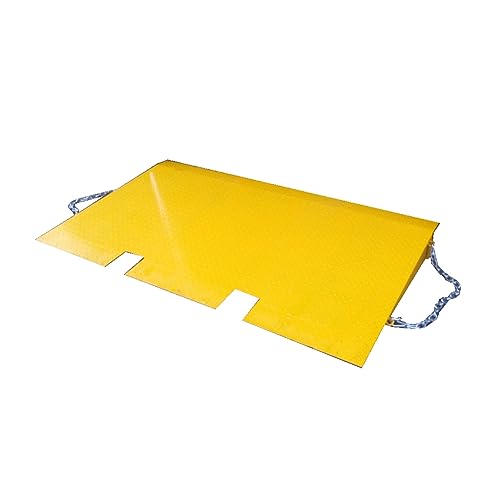
The DMC-FPPS 49″ x 86″ ramp offers another high-capacity option at 16,000 pounds, incorporating a 5.9″ height differential and 10-gauge steel. The shorter width is paired with a long dock-to-truck bridge, making it well-suited for tighter loading bays or applications where space is at a premium. The diamond plate surface ensures reliable grip under wet or oily conditions, supporting safe forklift operation across various container sizes and dock heights.
Buying Guide
Key purchase considerations help ensure you pick a ramp that fits your forklift fleet and loading dock profile:
- Capacity and weight distribution: Match ramp rating to your heaviest loads and per-axle requirements. For forklift fleets carrying pallets or containers, verify both total and per-axle capacities to avoid overloading.
- Dimensions and height differential: Align ramp length, width, and height difference with dock and container lip heights. Longer ramps reduce incline but require more space; shorter ramps fit tighter loading bays.
- Surface and traction: Diamond plate steel, grit-coated aluminum, or anti-slip textures improve grip in rain or oil spills. Consider rubberized edges or curb features to guide wheels safely onto the ramp.
- Durability and materials: Steel ramps excel in durability and long service life; aluminum ramps offer lighter weight for portable use. Assess environmental exposure and maintenance expectations.
- Support features: Safety latches, chains, stabilizers, and installation hardware add stability and ease of use. Check whether ramps include or require mounting accessories for permanent locations.
- Portability versus permanence: If ramps move between locations, favor lighter, modular designs with secure latching or chain systems. If fixed, prioritize reinforced frames and stabilizers for consistent operation.
- Compatibility with equipment: Ensure wheelbase and tire types (pallet jacks, 4-wheel forklifts, 3-wheel forklifts) are supported by the ramp’s capacity and surface.
- Compliance and safety: Look for manufacturer guidance on load sequencing, approach angles, and safe ramp usage. Adhere to local workplace safety standards in training materials and signage.
In industrial settings, selecting ramps with higher capacities and robust traction surfaces can reduce loading time and minimize operator risk. For frequent container transitions, prioritize ramps with proven durability, secure mounting options, and clear markings that guide forklift operators. While lighter ramps can be easier to move, they may require more careful load management to prevent misalignment or slippage. Balancing these factors against budget and space constraints yields a ramp solution that supports efficient, safe dock operations over the long term.