Choosing a live roller conveyor system can streamline sorting, feeding, and outfeed tasks in warehouses, workshops, and DIY projects. This guide presents five reliable options that emphasize durability, ease of use, and adaptability for light to medium-duty applications. Explore compact 12- to 18-inch widths, longer 5-foot setups, and versatile stand options to match different workflows. The overview below highlights key specs and practical uses to help you compare at a glance.
| Product | Width | Length | Roller Diameter | Key Use |
|---|---|---|---|---|
| Ultimation Light-Duty Gravity Conveyor (12″ Wide) | 12″ | 3′ | 1.5″ | Small parts transport; DIY feeding table |
| Ultimation Light-Duty Gravity Conveyor (18″ Wide) | 18″ | 3′ | 1.5″ | Inventory transport; assembly lines |
| Ultimation Roller Table Set (18″ Wide, 5′) | 18″ | 5′ | 1.9″ | Saw outfeed; material handling stations |
| Ultimation Light-Duty Gravity Conveyor (18″ Wide, 5′) | 18″ | 5′ | 1.5″ | Medium-duty runs; long-distance transfers |
| Ultimation Conveyor Replacement Rollers (1.9″ Dia, 5-Pack) | — | — | 1.9″ | Parts upgrade and maintenance |
Light-Duty Conveyor 12″ Wide, 3′ Long – Ultimation

The 12-inch wide gravity conveyor from Ultimation emphasizes compact, versatile transport for small parts and DIY setups. The 3-foot length balances reach with stability for table-style workflows. Rollers are 1.5 inches in diameter and galvanized steel, supporting substantial loads when fully supported. The frame uses powder-coated steel for durability, with a 6-inch roller center to promote smooth movement. This model is well-suited for inventory sorting, workshop feeding tables, and light assembly lines where space is at a premium.
Light-Duty Gravity Conveyor 18″ Wide, 3′ Long – Ultimation
This 18-inch variant expands the working width to handle broader items or higher throughput in distribution or assembly zones. Like the 12″ version, it uses 1.5″ galvanized steel rollers with a 6″ center spacing and a powder-coated 12 gauge steel frame. The 3-foot length supports moderate distances, while the larger footprint increases stability for heavier loads and wider items, improving line flow in shops and light industrial spaces.
Roller Table Set, 18″ Wide x 5′ Long – Outfeed Support
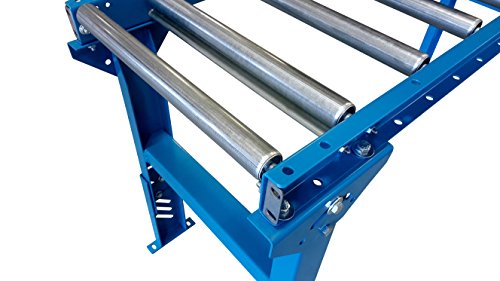
This five-foot-long gravity conveyor roller table combines a longer run with adjustable support legs for flexible positioning. The 1.9-inch rollers operate on 6-inch centers, delivering steadier material flow for saw outfeeds, woodworking setups, or general unload stations. The sturdy 16-gauge powder-coated frame withstands regular use, and adjustable height helps align the roller table with other tools or stations in the workflow.
Light-Duty Gravity Conveyor 18″ Wide, 5′ Long
This version extends to 5 feet with 18-inch width and 1.5-inch rollers, designed for longer transfers in warehouses or factories. A 4.5-inch roller center reduces intermediate snag points and fosters consistent product movement. The 12-gauge powder-coated steel frame ensures durability, making it suitable for continuous runs in assembly lines, sorting stations, and DIY workshop layouts where longer conveyance is advantageous.
Conveyor Replacement Rollers, 1.9″ Dia (5-Pack)

This five-pack of 1.9-inch diameter galvanized rollers is ideal for upgrading or maintaining existing live roller systems. The rollers use a 21-inch length between frames and feature a robust 267-pound capacity per roller with spring-retained end fittings for reliable operation. When paired with compatible frames, these rollers support smoother, higher-capacity material handling in woodworking shops, trailers, and light industrial setups.
Bora Adjustable Conveyor Roller Stand PM-2700
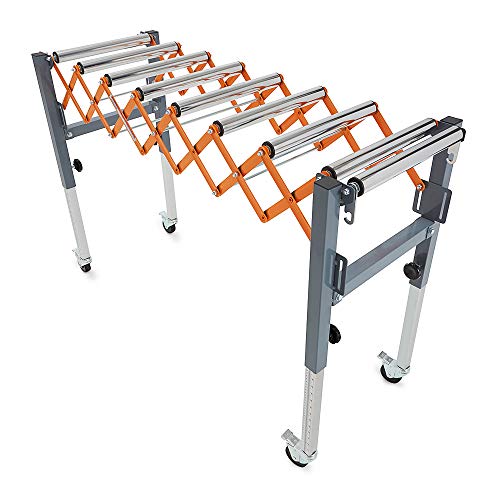
The Bora PM-2700 is a portable, expandable roller stand designed for in-feed and out-feed support. It expands from 14-3/4 inches to 50 inches and features height adjustment from 23 to 36 inches. With locking swivel castor wheels and a 300-pound weight capacity, this stand provides mobility and flexibility to position a gravity conveyor precisely where material flow is needed, making it a practical companion to fixed conveyor sections in workshops and mobile setups.
Buying Guide: Live Roller Conveyor System Considerations
Key factors influence selecting a live roller conveyor system. First, determine load requirements: heavier items call for wider rollers and stronger frames, typically with 1.9-inch rollers and 12 or 16-gauge steel. Second, consider space: 12- to 18-inch widths suit compact areas, while 5-foot lengths reduce the need for frequent transitions along lines. Third, roller centers affect item stability and speed; tighter centers (4.5″ to 6″) provide smoother movement for smaller parts. Fourth, adjustability and compatibility: stands and adjustable heights improve alignment with other equipment, such as saw stands or workstations. Fifth, durability: powder-coated frames resist corrosion in industrial environments, and galvanized rollers extend life in humid or dusty settings. Finally, upgrade options and maintenance—replacement rollers are available to extend the life of a system without replacing entire conveyors.
Buying Guide: Key Purchase Considerations
- Application fit: Match width and length to your workflow, considering item size, weight, and transfer distance.
- Roller type and diameter: 1.5″ to 1.9″ diameters handle different loads; galvanized steel offers corrosion resistance and durability.
- Center-to-center spacing: Smaller centers provide finer control for small parts; larger centers allow quicker movement for larger items.
- Frame material and finish: Powder-coated frames balance durability and maintenance needs; stainless or galvanized options exist for wet or dusty environments.
- Modularity and expansion: Look for compatible accessories, including adjustable stands, outfeed supports, and replacement rollers, to scale with changing needs.
- Mobility vs. fixed installation: Portable stands and expandable frames support flexible layouts; fixed systems offer uptime and consistent alignment.
- Installation and maintenance: Assess ease of assembly, availability of spare parts, and service life of bearings and axles.
- Cost of ownership: Consider initial cost, replacement parts, and potential downtime savings from improved material handling.
In evaluating live roller conveyors, prioritize models with proven load ratings, compatible accessories, and scalable configurations. The selections above emphasize versatility in small to mid-sized spaces, with options suitable for DIY projects, woodworking shops, light manufacturing, and distribution tasks. Use the comparison table and product sections to identify configurations that align with your throughput goals and space constraints, then choose a system that can grow with your operation.