For makers and small businesses exploring leather engraving and cutting, a laser cutting machine can unlock precise, durable results. This guide highlights five top options that balance power, precision, and usability for leather work, from beginner-friendly models to pro-grade setups. Each entry includes core specs, performance notes, and practical use cases to help you compare capabilities and choose the right machine for your leather projects.
Chosen products overview
| Product | Brand | Power | Working Area | Key Strength |
|---|---|---|---|---|
| Carverall K15 Pro | Carverall | 5W | 200x300mm | High precision for detailed leather work |
| Creality Falcon 5W | CREALITY FALCON | 5W | 400x415mm | Large area, fast throughput |
| Longer RAY5 Upgraded 20W | Longer | 20W | 400x400mm (typical) | High power, versatile materials |
| Creality Falcon2 40W | Creality | 40W | Unknown (large) | Heavy-duty, color engraving |
| VEVOR Leather Cutting Machine | VEVOR | Manual/Die-cutter | 1.5 tons capacity ( embossing plate) | Rigid build for embossing and stable cuts |
Carverall K15 Pro 5W Laser Engraver
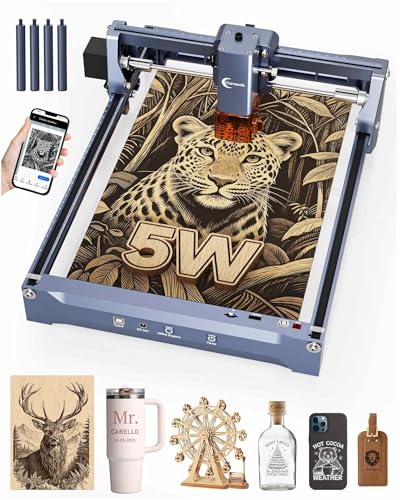
The Carverall K15 Pro offers a true 5W laser with 0.01 mm precision and a 200×300 mm work area, making it suitable for leather engraving and light cutting. Its near-A4 footprint fits compact studios while delivering professional detail for decorative leatherwork, small accessories, and personalized gifts. The device emphasizes portability and beginner-friendly setup, with a focus on reliable results across leather, wood, coated metals, and acrylic. The combined precision and speed enable crisp lettering, intricate patterns, and high-quality tonal shading on leather surfaces.
Key capabilities include a 0.01 mm positioning accuracy and a high-speed engraving tempo, helping users complete detailed projects efficiently. The 2-in-1 engraving and cutting functionality supports both etched designs and shallow cuts in leather, enabling patterning, scoring, or debossing techniques. The package emphasizes ease of use, with minimal assembly and a straightforward workflow, which appeals to hobbyists and small shops testing leather design ideas before scaling up.
Practical notes: ensure appropriate ventilation and laser safety practices when working with leather finishes, as some coatings may emit fumes during engraving or cutting. The Carverall K15 Pro integrates with standard PC workflows and common laser software, streamlining the transition from concept to finished leather piece.
Creality Falcon 5W Laser Engraver
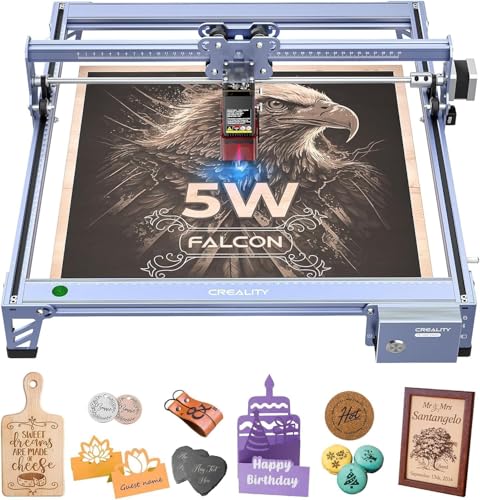
The Creality Falcon 5W stands out with a large working area (about 400×415 mm) and a precision engine designed to render fine details on leather, wood, acrylic, and glass. With a 32-bit control system and a high engraving speed, it can tackle more ambitious leather projects—think personalized wallets, belts, and embossed panels—without sacrificing accuracy. The 0.06×0.06 mm compression spot helps maintain clean edges and sharp engraving even on textured hides.
Performance notes highlight its balance of power and efficiency: fast linear speeds up to 10,000 mm/min and a robust modular build that can be upgraded with extras like rotary rollers for cylindrical items and risers for taller pieces. The Falcon 5W is well-suited for serious hobbyists and small studios seeking a versatile, scalable solution for leather engraving and light cutting tasks.
Software compatibility is a practical consideration; ensure your preferred workflow (LightBurn, LaserGRBL) aligns with the Falcon’s interface for a smooth design-to-production flow. Safety features and proper ventilation remain essential for leather projects, especially when working with finishes or coatings.
Longer RAY5 Upgraded 20W Laser Engraver

The Longer RAY5 Upgraded 20W model is designed for demanding leather projects and multi-material engraving. A 20W laser provides substantial cutting and contouring capability for leather, wood, acrylic, and metal-coated surfaces. Its 4.0-inch color touch screen simplifies operation, while 0.08×0.1 mm laser points and a 0.01 mm engraving precision enable detailed, professional results. The device supports multiple connection modes (USB, TF card, WiFi, and app) and is compatible with common design software like LaserGRBL and LightBurn, enabling flexible workflows.
Air assist and robust airflow management help improve cut quality and reduce burn marks on leather. The built-in high-precision rails and a solid chassis contribute to repeatable results and smoother edge finishes. This machine is particularly well-suited for users who need higher throughput, deeper cuts, or more repeatable production of personalized leather pieces, such as custom tags, patches, and engraved leather accessories.
Operational considerations include ensuring adequate ventilation for leather processing and choosing the correct lens and focus for leather thickness. The 20W power can cut through thicker leather, but users should verify material density and coating to avoid scorching. This model blends strong performance with flexible connectivity for a modern design studio.
VEVOR Leather Cutting Machine

VEVOR’s leather cutting setup emphasizes die-cut style embossing and high stability. With a heavy-duty frame and a 1.5-ton load capacity, it’s engineered to handle embossed leather applications and repetitive dies reliably. The line features a dual guide shaft design and a manganese steel base plate, contributing to reduced wobble and enhanced accuracy for embossing and cutting tasks. This makes it a practical option for more traditional leather production workflows that require robust, repeatable results in a workshop environment.
From a usability perspective, the machine is built for long sessions and demanding jobs, with emphasis on durability and consistent performance. It’s particularly suitable for operators who already have leather embossing and cutting workflows and want a die-cut solution that withstands heavy use. Consider this option if your leather projects include thick hides, multiple passes, or high-volume production runs where reliability is essential.
Buying Guide: Key Considerations For Leather Laser Cutting Machines
Choosing the right leather laser cutter involves balancing power, precision, and workflow compatibility. Consider the following perspectives to ensure a fit with your projects and budget:
- Power and material compatibility: Leather projects range from delicate engravings to deeper cuts. Higher wattage (5W, 20W, etc.) enables deeper cuts and braver passes, but lower wattage can deliver excellent engraving with less risk of scorching on thin hides. Match power to leather thickness, coatings, and desired cut depth.
- Working area vs. footprint: Larger beds enable bigger pieces but require more space. For small leather goods, a compact 200×300 mm area may suffice; for belts or larger panels, a 400×400 mm or larger bed is more efficient.
- Precision and repeatability: Fine engravings demand stable motion systems and repeatable positioning (0.01 mm accuracy or better). Look for machines with high-quality rails, sturdy frames, and reliable cooling when operating at high speeds.
- Software and workflow: Ensure compatibility with common engraving software (LightBurn, LaserGRBL) and easy import of your designs. Consider whether the machine supports USB, WiFi, app-based control, or cloud workflows to fit your studio setup.
- Ease of use and setup: Beginner-friendly units with minimal assembly and clear safety guidelines help reduce learning curves. Look for preassembled options or quick-start guides that expedite onboarding.
- Material safety and ventilation: Leather and coatings can release fumes during laser processing. Adequate ventilation and proper filtration help maintain air quality and equipment longevity.
- Durability and maintenance: A robust frame, quality components, and accessible replacement parts reduce downtime during production. Consider machines with dependable service and a track record of reliability.
- Safety features: Emergency stop, protective housings, and eye protection are essential for responsible operation, especially in shared studios or classrooms.
- Cost and scalability: Start with a model aligned to your current needs, but evaluate future growth. A modular or upgrade-friendly platform can extend the machine’s useful life as your leather projects evolve.
In summary, the best leather laser cutting machine for you depends on your project scale, material range, and desired finish. The five options highlighted here offer a spectrum of power levels, bed sizes, and software compatibility to support various leather applications—from precise debossed designs to larger, embeddable engravings. Always verify material compatibility, safety requirements, and software support before purchase to ensure a smooth production workflow.