Metal engraving with laser technology has evolved into a practical option for hobbyists, small businesses, and professionals. The following selections highlight high-precision units capable of engraving or cutting on metal and other materials. Each model offers distinct strengths, from power and speed to safety features and ease of use. Whether you’re detailing jewelry, household hardware, or custom signage, this guide helps you compare top-performing laser engravers for metal applications.
| Product | Brand | Laser Power | Working Area | Main Strength |
|---|---|---|---|---|
| ACMER S1 (6000mW) | ACMER | 6.0 W | 130×130 mm | Ultra-fine accuracy and broad material support |
| CREALITY FALCON 10 W | CREALITY FALCON | 10 W | Noted in listing | High speed, rotary compatibility |
| LONGER RAY5 (2500mW) | Longer | 2.5 W | 130×130 mm | Photorealistic engraving with ease of use |
| Creality Falcon 5W | CREALITY FALCON | 5 W | 400×415 mm | Large working area and efficient engraving |
| Creality Falcon2 (40 W) | Creality | 40 W | Noted in listing | High power for metal and glass work |
Note: The included products reflect options capable of metal work and versatile material handling. Safety and compatibility vary by model, so review the manufacturer’s guidelines before operation.
ACMER S1 Laser Engraver — 6000mW Power

The ACMER S1 with 6000mW diode laser delivers high-precision engraving and cutting. It features a 0.04 mm laser spot size, 455±5 nm wavelength, and a 130×130 mm working area. With a maximum speed up to 10,000 mm/min and 0.01 mm repeatable positioning accuracy, it is capable of detailed work on wood, acrylic, metal, glass, and more. The unit is designed for quick setup, arriving largely preassembled for beginner-friendly operation. This makes it suitable for both hobbyists and small businesses pursuing precise, repeatable results.
Key features include 2-in-1 engraving and cutting versatility, enabling projects across multiple materials, and straightforward use for users upgrading from entry-level machines. When choosing for metal applications, ensure compatibility with your metal type and thickness, and consider additional cooling or enclosure as needed for continuous metal work.
Ideal applications: custom metal tags, engraved hardware, decorative metal pieces, and precision-cut substrates where fine detail is essential.
ACMER S1 Laser Engraver — 3500mW Alternative

The 3500mW variant maintains the 130×130 mm working area and 2 mm focal length, offering reliable precision with a slightly lower power output. It still provides the same wavelength (455±5 nm) and fast engraving capabilities, making it suitable for detailed engravings on wood, acrylic, and metal-backed materials. The machine emphasizes a beginner-friendly experience with quick assembly and intuitive operation, which helps reduce the learning curve for metal engraving tasks that require careful control and repeatability.
Consider this option if you want a balance between power, cost, and precision. For metal-focused jobs, confirm material thickness limits and whether additional cooling or enclosures are needed to maintain performance during longer engraving sessions.
CREALITY FALCON 10w Laser Engraver

The Falcon 10 W model emphasizes higher output power and broad material compatibility, including metals and ceramics, with a focus on productive throughput. It supports a 3-in-1 approach through a rotary kit for cylindrical objects and various shapes, enabling practical metal engraving on items like tubes and tumblers. The device lists safety features, such as an anti-UV filter and an emergency stop, to promote safer operation in a workshop setting. Assembly is relatively quick, typically 10-20 minutes, allowing operators to begin projects faster.
Use cases include signage, metal tags, and intricate surface designs on metal or coated substrates. When engraving metal, consider ventilation and enclosure for fumes, as appropriate for your workspace and material type.
LONGER RAY5 Laser Engraver — 2500mW

The Longer Ray5 offers a 2500mW laser with a 0.04×0.04 mm spot size, delivering high-detail engravings at speeds up to 12,000 mm/min. It provides a 5.1″ x 5.5″ working area and supports common software like LightBurn and LaserGRBL, along with Wi-Fi connectivity for flexible operation. The device is designed to be beginner-friendly with one-piece delivery, protective eye safety gear, and a magnetic laser cover. While power is lower than heavy-duty metal-focused units, it remains capable of precise engravings on metal and other materials with careful control.
Ideal for hobbyists and small studios focusing on detailed artwork, signage, and small-scale metal embellishments. For thicker metal or higher-throughput tasks, consider a higher-power model or dedicated metal-cutting capabilities.
Creality Falcon 5W — Large Engraving Area
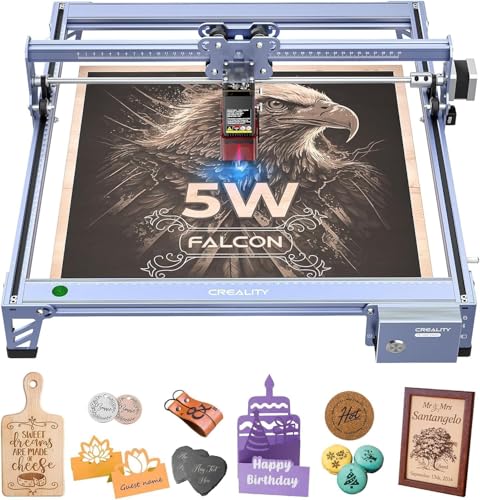
The Falcon 5W model focuses on a larger working area (400×415 mm) and enhanced engraving capabilities. It implements a 0.06×0.06 mm spot size, enabling sharp details with strong performance. The machine is designed for higher-volume tasks, with features like a 32-bit chip to improve throughput and precision. Optional rotary attachments expand capabilities for cylindrical items, offering versatility in metal engraving projects. The enclosed design helps with safety and keeps fumes contained during longer sessions.
Best suited for larger projects, including signs, custom hardware, and decorative metal pieces. For users engraving metal, verify material compatibility and the availability of accessories like rotary rollers to maximize depth and shape options.
Creality Falcon2 40W — High-Power Metal Engraving

The Falcon2 40W unit delivers substantial laser power to tackle metal engraving and cutting tasks, claiming capabilities like 25,000 mm/min cutting speed and an integrated air assist for improved cutting quality. With 40W of laser power and a robust construction, it can work with metals and other tough materials, including glass and certain ceramics, depending on coatings and thickness. It’s designed for more demanding workflows and higher-throughput projects, making it a strong option for metal-focused production or sign-making environments.
When considering metal work, examine the machine’s cooling requirements, safety features, and the availability of compatible accessories (air assist, exhaust, and enclosure). Power and reliability are critical for consistent results on metal substrates.
Buying Guide: Key Considerations When Choosing a Metal-Focused Laser Engraver
- Laser power and material compatibility: Higher wattage generally enables deeper cuts and faster engraving on metal. Assess whether you need cutting versus engraving, and confirm which metals and coatings are supported by each model.
- Engraving area and object size: Larger working areas expand the range of projects you can tackle in a single pass. Consider future needs for signage, panels, or cylindrical objects with rotating attachments.
- Precision and repeatability: Look for tight focal accuracy and stable positioning. A 0.01 mm repeatability and a small spot size help produce crisp logos and intricate designs on metal.
- Safety features: Enclosed housings, emergency stops, UV filters for eye protection, and air assist improve safety and cut quality. Ensure proper ventilation and protective measures in your workspace.
- Software compatibility: Compatibility with popular software like LightBurn, LaserGRBL, or vendor-provided interfaces helps streamline workflows and reduces setup time.
- Ease of use and setup: Beginner-friendly units with preassembly or straightforward assembly save time. Consider whether you’ll need assistance or training to maximize productivity.
- Cooling and maintenance: Metal engraving can generate heat; evaluate cooling options, maintenance frequency, and accessibility of replacement parts.
- Accessory ecosystem: Rotary attachments, air assist kits, and enclosure options expand capabilities for cylindrical objects and safe, precise metal engraving.
- Cost of ownership: Compare not only the upfront price but also consumables, warranty, and potential upgrades or replacement parts over time.
- Safety training and compliance: Follow manufacturer guidelines and local regulations for laser safety, eye protection, and workspace ventilation to ensure compliant operation.
In sum, choosing the best laser engraver for metal involves balancing power, area, and precision with safety, software support, and future project plans. The models listed here illustrate a spectrum from compact, beginner-friendly options to high-power machines suitable for metal-focused production streams. When evaluating, map your typical project types, material thicknesses, and required throughput to identify the best fit for your workflow.