Choosing the right laser marking machine for plastic work requires evaluating power, material compatibility, and safety features. The following selections highlight versatile options that handle plastics efficiently while offering solid performance for small business and hobby projects. Each model supports a range of plastics—from acrylic and PETG to more challenging composites—along with reliable software compatibility and safety features essential for home studios or small shops.
| Brand | Model | Material Compatibility | Laser Type | Power |
|---|---|---|---|---|
| xTool | F1 2-in-1 | Wood, Acrylic, Metal, Plastic | IR 2W + 10W Diode | 2000mW / 10000mW |
| MR. CARVE | S4-20W | Metals, Plastics | Fiber Laser | 20,000 mW |
| ACMER | S1 | Wood, Leather, Plastic | Class 4 Diode | 2,500–6,000 mW |
| Woxcker | L2 MAX | Wood, Leather, Plastic, Glass | Diode/Enclosed | 5,500 mW |
| Monport | 50W Fiber | All Metals, Plastics | Fiber | 50,000 mW |
The selections below focus on plastic-friendly capabilities, safety features, and practical workspace considerations for American buyers. Each product section links to the official Amazon listing, includes an image, and references the features provided by the manufacturer.
MR. CARVE S4-20W Fiber Laser Marking Machine
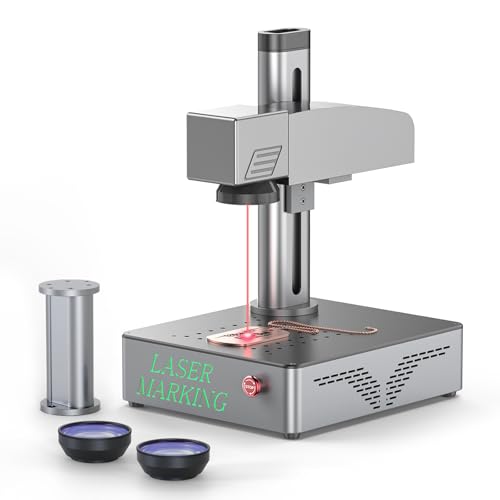
The MR. CARVE S4-20W is a high-powered fiber laser marking machine designed for metals and plastics. It ships with a 20W fiber laser and 1064 nm wavelength, enabling precise marking and deep engraving on various plastics and metals. The system operates with Lightburn compatibility, ensuring intuitive setup and straightforward workflow for users already familiar with common LASER software ecosystems. It emphasizes stable operation and reliable outputs, supported by a digital galvanometer laser configuration. The machine targets efficiency in industrial-style marking and supports common file formats such as PLT, BMP, DXF, and PNG. It is positioned for users who require robust performance in a compact footprint.
Key features referenced: 20W fiber laser, compatibility with Lightburn, versatile file support, solid reliability for plastics and metals, and a compact design suitable for small studios or shops.
ACMER S1 Laser Engraver For Beginners

The ACMER S1 is a compact laser engraver aimed at beginners and hobbyists working with wood, leather, plastic, and lightweight materials. It offers adjustable laser outputs at 2,500 mW, 3,500 mW, and 6,000 mW with a 5.1 x 5.1 inch engraving area, enabling detailed 1:1 photo-realistic engravings on a variety of plastics such as acrylic and PETG. The unit emphasizes portability and ease of use, making it suitable for home workshops. It supports popular software like LightBurn and LaserGRBL, which helps users ramp up quickly and produce consistent results across projects.
Considerations: suitability for smaller plastic projects, ease of setup, and software compatibility. The device’s lighter power range is ideal for beginners focusing on decorative engravings and labeling on plastic components.
Woxcker L2 MAX 5.5W Enclosed Laser Engraver

The Woxcker L2 MAX is a compact, enclosed laser engraver designed for wood, leather, plastic, and other light materials. It provides an emphasis on safety through a fully enclosed working area with an internal fan and protective safeguards. The 5.5W output offers a balance between affordability and capability for plastic engraving tasks such as label creation on acrylic parts or decorative markings on plastic components. The device is positioned for home users who value a safer, contained workspace, along with a quick setup and straightforward operation, including rapid engraving speeds across small items like coasters or tags.
Monport 50W Fiber Laser Engraver

The Monport 50W Fiber Laser Engraver marks a wide range of materials, including various plastics. It features a 50W 1064nm fiber laser, a red dot pointer for focusing accuracy, and a relatively compact footprint suitable for bench use. The system’s increased wattage supports deeper engraving on plastics and faster processing of marking tasks. It emphasizes longevity with a stated lifespan up to 100,000 hours and is designed for users seeking precise, repeatable results in a small to mid-sized workshop. The setup is LightBurn-compatible, often favored by users who require reliable software interoperability for project workflows involving plastic parts and components.
GWEIKE G2 Pro 30W Fiber Laser Engraver

The GWEIKE G2 Pro 30W fiber laser marks at high speed (up to 15,000 mm/s) with 0.001 mm accuracy, supporting deep engraving and detailed marking on a range of metals and plastics. This model emphasizes 3D embossing and deep engraving, with a compact, portable design and a detachable structure that enhances flexibility. It is suitable for users who require precise plastic markings with high-definition finishes and the potential for 3D textures on selected plastics and coated surfaces.
GWEIKE G2 Max 50W Fiber Laser Engraver

The GWEIKE G2 Max 50W is a larger, more powerful option with a 150 x 150 mm working area and 0.001 mm marking accuracy. It supports HD 8K engraving resolution and robust deep engraving for metal and plastics. The machine incorporates a larger bed and an electric lift focus, enabling easier focus adjustment and greater efficiency for plastic marking across longer production runs or larger parts. It’s designed for users needing higher throughput and more versatile marking capabilities in a compact but capable system.
Buying Guide: Key Purchase Considerations And Comparisons
- Material compatibility: For plastics, confirm compatibility with acrylic, PETG, polycarbonate, ABS, and other common plastics. Some machines excel at plastics but struggle with certain opaque or colored plastics; others handle a wide range of materials including some composites.
- Power and laser type: Diode and fiber lasers serve different use cases. Fiber lasers offer deeper, more durable marks on certain plastics and metals but may be heavier and pricier. Diode lasers are typically safer for beginner use and can be sufficient for fine marking on plastics.
- Engraving area and speed: Larger working areas enable bigger parts or multiple items. Higher engraving speeds improve throughput but may require more powerful cooling and stable mounting.
- Safety and enclosure: Enclosures reduce fumes, dust, and eye exposure. For plastic engraving, enclosed units with proper filtration and air assist help maintain quality and safety.
- Software compatibility: Check compatibility with LightBurn or LaserGRBL if you prefer widely used software. Ensure it supports your file formats and offers features such as vector engraving, raster engraving, and nesting for efficiency.
- Focus and alignment features: An easy-to-adjust focus mechanism, autofocus options, and a red dot or crosshair pointer improve accuracy, especially for small plastic items and intricate engravings.
- Maintenance and safety certifications: Look for built-in safety features (emergency stop, flame sensors, lid interlocks) and documented maintenance guidance to ensure long-term reliability.
- Portability and workspace: If you operate in a shop, craft fair, or studio, consider weight, enclosure, and whether a portable or benchtop unit suits your workflow.
- Upgrade potential: Some models offer expansion options (rotary axes, additional lenses, or air assist accessories) to broaden plastic marking capabilities and project scope.
In practice, the best choice depends on your plastic marking needs: whether you prioritize compact form factor for hobby use, require higher throughput for small business labeling, or need deep engraving capabilities for specialty plastics. Cross-reference power, enclosure quality, software support, and safety features to balance performance with budget. For occasional or decorative plastic engraving, mid-range diode-based machines may suffice. For more demanding tasks, a fiber-based system with adequate bed size and robust software integration is preferable.