Exploring laser cutting and engraving machines can open vast creative and business possibilities. This guide highlights five standout models that balance precision, versatility, and value for hobbyists, educators, and small businesses in the United States. Each entry presents key specs, typical applications, and what to consider when choosing a system for materials like wood, acrylic, leather, and more. This overview helps buyers compare capabilities and fit with project scope, workspace, and workflow preferences.
| Product | Brand | Laser Power | Working Area |
|---|---|---|---|
| ACMER S1 Laser Engraver 6000mW | ACMER | 6000 mW | 130×130 mm |
| ACMER S1 Laser Engraver (Alternative 6000mW) | ACMER | 6000 mW | 130×130 mm |
| ACMER S1 Laser Engraver 3500mW | ACMER | 3500 mW | 130×130 mm |
| CREALITY FALCON 10w | CREALITY FALCON | 10,000 mW | Not specified (working area varies by kit) |
| Woxcker L2 MAX 5.5W | Woxcker | 5500 mW | 300×300 mm |
ACMER S1 Laser Engraver 6000mW
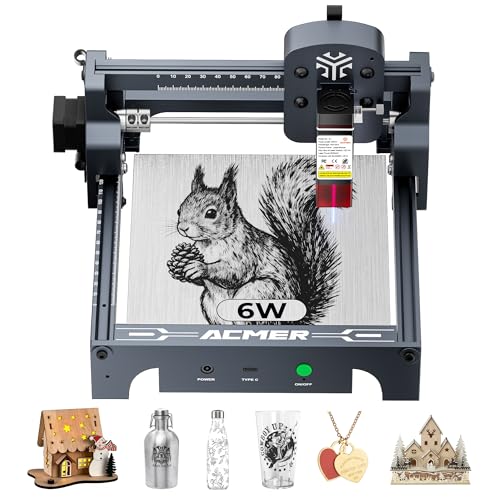
The ACMER S1 6000mW laser engraver combines compact desktop design with a high-powered diode laser to deliver detailed engraving and precise cuts. It supports AcmerTool software, which is free and ready to use, and also accommodates other popular engraving programs. With a 455±5 nm wavelength, the device emphasizes precision, making it suitable for intricate patterns, text, and small-scale projects on wood, acrylic, and some metals. A focal length of 2 mm and a reported speed of up to 10,000 mm/min highlight its capability for rapid prototyping and classroom STEM activities. The 130×130 mm working area suits small items such as jewelry, markers, and plaques.
Key considerations include software compatibility, safety protocols for home use, and the need for ventilation during operation. While the S1 offers a high-precision footprint, users should plan for steady power and a stable workspace to maximize engraving fidelity. For education or DIY crafts, this model presents a balanced option between capability and cost, with a focus on simplicity and reliability.
ACMER S1 Laser Engraver 6000mW (Higher Accuracy)

This variant of the ACMER S1 emphasizes precision improvements through a 6000 mW diode laser and 0.01 mm repeatable positioning accuracy. It employs a 455±5 nm wavelength with a 2 mm focal length and maintains a 130×130 mm work area. The device is designed for detailed engraving and cutting across materials such as wood, acrylic, and certain films, plastics, and thin metals. The dual-use capability (engraving and cutting) makes it adaptable for small-batch production, signage, and creative applications. The package includes free AcmerTool software and is compatible with other popular programs, enabling flexible workflows for students and professionals alike.
Considerations for this model include the balance between speed and accuracy, as well as the learning curve associated with mastering laser distances and material settings. Its compact footprint is advantageous for crowded studios or classrooms, while its power level supports a wide range of craft and education projects with a focus on accuracy and repeatability.
ACMER S1 Laser Engraver 3500mW

The 3500mW ACMER S1 model offers a more accessible entry point into laser engraving with strong precision, including 0.01 mm repeatable positioning accuracy and a 2 mm focal length. Its 130×130 mm working area remains suitable for small items while providing enough room for personalized gifts, signage, and prototyping. The machine includes AcmerTool software and supports other popular engraving platforms, making it compatible with a variety of project workflows. The dual-function design supports engraving on wood, bamboo, leather, plastic, and more, enabling a broad spectrum of applications for hobbyists and small businesses.
Users should assess whether the 3.5 W laser meets their material needs, particularly for cutting thicker materials or denser substrates. For those focusing on detailed ornamentation, names, or logos on small items, this model delivers reliable performance with an approachable price point and a straightforward setup process.
CREALITY FALCON 10w Laser Engraver

The CREALITY FALCON 10w represents a high-power option with a strong emphasis on productivity and safety. It features a 10,000 mW output, enabling faster engraving and cutting on larger materials. The kit includes safety features such as an anti-UV eye protection filter and an emergency stop, plus a 4-in-1 rotary roller for cylindrical objects, which expands project capabilities to items like tumblers and cylindrical glassware. A smart positioning camera helps align designs precisely, reducing setup time and enabling more complex layouts. This model is well-suited for hobbyists expanding to small businesses that require faster throughput and expanded material flexibility.
Potential trade-offs include greater footprint, higher initial investment, and the need for adequate ventilation and safety handling given the elevated power. For users targeting larger projects or higher-volume runs, this Falcon model is a strong candidate that blends speed, versatility, and automation.
Woxcker L2 MAX 5.5W Enclosed Engraver

The Woxcker L2 MAX offers a fully enclosed design for enhanced safety, including a flame sensor, an emergency stop, and a lid safety interlock. Its 5.5W laser delivers a balance of power and safety with a claimed engraving speed up to 20,000 mm/min. The enclosure helps contain fumes and limits accidental exposure, which is particularly important in shared spaces. The machine targets a 300×300 mm bed size, enabling larger pieces while maintaining a compact footprint. This model is suitable for classrooms, hobbyists, and small shops that prioritize safety and steady throughput in a contained workspace.
Important considerations include the quality of the enclosure, the effectiveness of the safety features, and the noise level during operation. While the L2 MAX emphasizes safety, users should verify material compatibility and cooling requirements to sustain performance over extended projects.
Buying Guide
Choosing a laser cutting and engraving machine involves balancing power, precision, size, and the types of materials you plan to work with. Consider the following factors:
- Power and materials: Higher wattage enables cutting thicker materials but may increase cost and require stronger ventilation. If mostly engraving on wood, plastic, and thin metals, mid-range power models often suffice.
- Working area: Small benches favor compact 130×130 mm systems; larger projects benefit from bigger beds or upgrade kits. Evaluate current and anticipated project sizes.
- Software ecosystem: Free or bundled software influences initial setup and workflow. Ensure compatibility with your preferred design programs and whether online updates are available.
- Safety features: Enclosures, laser interlocks, flame sensors, and emergency stops protect users, especially in classrooms or shared spaces. Verify compliance with local safety guidelines.
- Maintenance and support: Look for reputable brands with accessible customer support, replacement parts, and clear warranty terms. Community forums can help with troubleshooting.
- Speed versus precision: Faster engraving accelerates production, but a machine with high repeatable accuracy is essential for consistent results in branding and signage.
- Upgrade paths: Some models offer additional accessories such as rotary rollers or raisers. Consider future needs like cylindrical objects or larger materials.
For education and small businesses, a model with a strong safety profile, easy software integration, and dependable customer support often delivers the best long-term value. When comparing options, map your project types, material mix, and required throughput to select a machine that scales with your ambitions.