Finding the right large-capacity ice machine can streamline service in bars, cafes, hotels, and restaurants. This guide compares five prominent models, highlighting daily production, storage capacity, and key features to help you choose the best fit for high-demand environments. All selections are ETL listed or certified for commercial use and offer practical controls and self-cleaning or scheduling options for heavy-use settings.
| Product | Brand | Daily Output | Storage Capacity |
|---|---|---|---|
| Mojgar ETL Listed 700LBS/24H | Mojgar | 700 lbs/24H | 560 lbs |
| Lioncho 680LBS/24H | Lioncho | 680 lbs/24H | 560 lbs |
| FreezLabs 570Lbs/24H | FreezLabs | 570 lbs/24H | 400 lbs |
| Icyglee 500LBS/24H | Icyglee | 500 lbs/24H | 250 lbs |
| EUHOMY 100LBS/24H | EUHOMY | 100 lbs/24H | 33 lbs |
Note: All products listed are designed for commercial environments and include features such as self-cleaning cycles, programmable timing, and robust stainless-steel components to withstand continuous operation.
Mojgar ETL Listed 700LBS/24H Ice Machine

The Mojgar 700LBS/24H model emphasizes high-capacity performance with a 560-pound storage bin. Powered by a highly efficient copper compressor, it delivers ice in cycles as short as 5-15 minutes, supporting busy service periods. A 0.01μm filter helps ensure clean ice, while self-cleaning functionality reduces maintenance time. The unit combines durable 304 stainless steel construction with an insulated bin designed to minimize melt during shifts or power interruptions. With a timed ice-making function and a robust storage design, this model is positioned for restaurants, bars, and cafes needing a steady ice supply during peak hours.
Lioncho 680LBS/24H Commercial Ice Machine

The Lioncho unit clocks in at 680 pounds of ice per day with an expansive 560-pound storage bin. It features a top-tier titanium compressor and an advanced refrigeration cycle to optimize ice production, with 12 adjustable ice thickness settings for varied applications. An intelligent LCD control panel supports 24-hour scheduling, auto-cleaning, and full disclosure of ice-making status. The large storage capacity paired with an efficient cooling system makes this model suitable for fast-paced venues like large cafés, bars, and hotels where ice demand fluctuates throughout the day.
FreezLabs 570Lbs/24H Commercial Ice Machine

FreezLabs offers a 570 pounds-per-day output with a 400-pound storage bin. It emphasizes energy efficiency through a copper compressor and optimized insulation to keep ice solid for longer (7-9 hours). The unit supports automatic or manual operation with programmable start times and an auto-clean cycle. ETL certification underscores its suitability for commercial use where consistent ice delivery is critical, such as busy bars and cafes, or mid-size eateries that require reliable, continuous ice production.
Icyglee 500LBS/24H Commercial Ice Machine
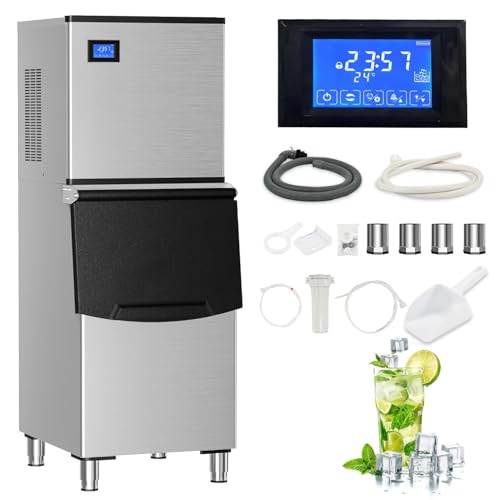
The Icyglee model produces up to 500 pounds of ice per day with a 250-pound storage bin. It features an easy-to-use LCD panel with a 1-24 hour reservation option, water shortage alerts, and an auto-cleaning function. The stainless-steel construction and energy-efficient COPPER- compressor help maintain reliability during long shifts. The adjustable ice-size settings allow operators to tailor ice shapes to beverage service or culinary uses, while its robust design makes it a solid fit for mid-sized commercial settings like cafes and quick-service chains.
EUHOMY 100LBS/24H Under Counter Ice Maker

The EUHOMY 100LBS/24H model is designed for under-counter or freestanding use with a compact footprint and a 33-pound storage capacity. It emphasizes practical features such as automatic overflow prevention and a smart LCD control panel for easy operation, including ice-size adjustment and a self-clean function. This model is well-suited for venues that need a reliable, space-saving ice maker without sacrificing essential commercial capabilities, such as small bars, compact kitchens, hotels with limited prep space, or event catering setups.
Buying Guide: Key Purchase Considerations
When choosing a large commercial ice machine, consider capacity, ice type, and footprint to match your operation’s needs. Here are essential factors and how they influence decision-making.
- Daily production and storage: High-volume venues require machines that sustain peak demand. Prefer units with higher daily output and larger storage bins to reduce refill frequency and service interruptions.
- Ice type and size: Some machines offer clear ice, full-cube options, or adjustable thickness. Align ice type with beverage programs, kitchen prep, and customer expectations.
- Space and installation: Under-counter models save space but may limit output. Freestanding units maximize production but require floor space and adequate ventilation.
- Energy efficiency and insulation: Copper compressors and advanced insulation help maintain ice quality while reducing running costs. Look for models promising 7–12 hours of ice retention without melt.
- Maintenance features: Self-cleaning cycles and programmable timers improve hygiene and reduce labor. ETL or other commercial certifications indicate recognized safety and performance standards.
- Durability and materials: Large-volume units should use high-grade stainless steel and corrosion-resistant components to withstand constant use.
- Service and support: Consider manufacturers with accessible parts, warranty options, and local service networks to minimize downtime.
Operational perspectives vary by venue. High-volume restaurants may prioritize the Mojgar or Lioncho models for their aggressive production and generous storage, while cafes or catering services might favor compact, efficient options like the EUHOMY 100LBS model. Reliability, ease of cleaning, and energy efficiency should be weighed against initial cost and space constraints to determine long-term value.