Finding a reliable labeling solution for small-batch bottles involves balancing precision, speed, and adaptability. This guide reviews five top choices that handle round bottles with various diameters, offering options for home use, small businesses, and light production. Each product section provides key features, supported bottle sizes, and practical considerations to help you compare at a glance.
| Product | Brand | Key Benefit | Best For |
|---|---|---|---|
| VEVOR Semi-Automatic Round Labeling Machine | VEVOR | Smart sensor and durable aluminum build | Small batches, diverse bottle types |
| Sumeve Manual Bottle Labeling Machine (White) | Sumeve | Extended label sizes, metal body | Versatile round bottles |
| TOPOWN Precise Label Applicator | TOPOWN | Adjustable platform for different cans/bottles | Small businesses needing neat labels |
| Primera AP380 Label Applicator | Primera | High throughput up to 1500 containers/hour | Cylindrical containers, efficient labeling |
| SUPVAN T50M Pro Bluetooth Label Maker | SUPVAN | Versatile app, fonts, and icons | Home to small-office labeling |
VEVOR Semi-Automatic Round Labeling Machine

VEVOR’s labeling system targets round bottles across industries, from medicine to beverages. It accommodates diameters 0.78 to 4.72 inches and processes 20–50 pieces per minute. The device features a smart fiber optic sensor for precise label detection and positioning, promoting consistent results. Its aluminum alloy body is rust-, wear-, and corrosion-resistant, designed for long-term use. Note: It is not suitable for transparent labels, which can influence material selection in your workflow.
Sumeve Manual Bottle Labeling Machine (White)

Sumeve’s White model provides versatile use with round bottles, including glass, cans, and plastic. It supports bottle diameters from 0.6 to 4 inches and requires label rolls with an inner diameter of at least 0.78 inches. A longer platform opening expands available label sizes, and a pressing bar helps the label conform to curved surfaces. The sturdy metal body ensures durability for ongoing labeling tasks.
TOPOWN Precise Label Applicator
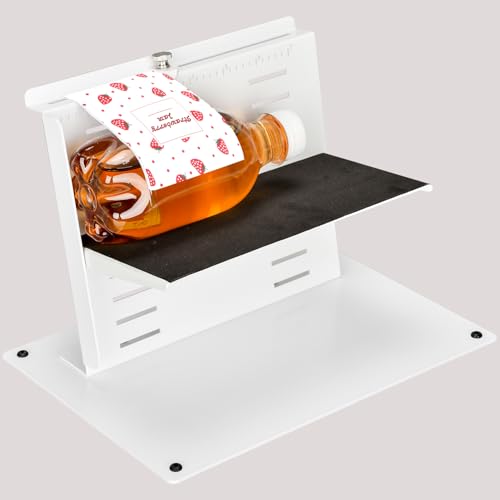
TOPOWN presents a compact labeling tool with a built-in scale, ideal for small manufacturers needing precise label placement. The adjustable platform supports different can and bottle specifications, enabling neat, straight labels. Non-slip rubber feet stabilize the workstation on smooth surfaces, reducing misalignment during operation. It emphasizes ease of use and quick adaptation to new product lines.
Primera AP380 Label Applicator
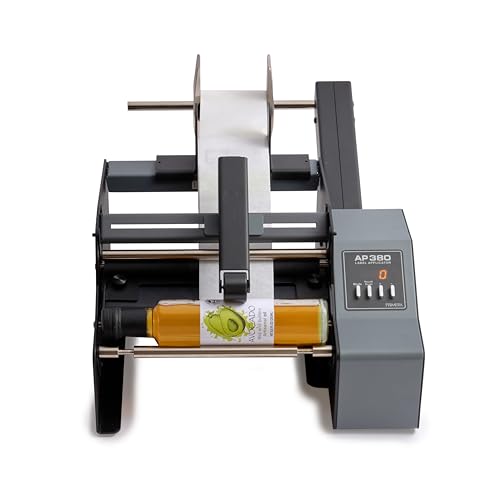
Primera’s AP380 excels with cylindrical containers, offering quick setup and easy operation. It can accurately apply one or two labels per container and handles up to 1500 containers per hour, making it a robust option for higher-volume small-batch labeling. The device focuses on reproducible label placement, reducing crooked or misaligned results, which is essential for brand consistency.
SUPVAN T50M Pro Bluetooth Label Maker (Tape)

SUPVAN’s T50M Pro Bluetooth label maker targets home and small business needs, printing 3/4″ to 2″ wide labels. It integrates a versatile app with 40 fonts, 650+ icons, and 50 frames, enabling custom, high-quality labels without ink. The device supports customization for product info, barcodes, QR codes, and branding, making it suitable for labeling bottles and containers in organized setups.
SUPVAN T50M Pro Bluetooth Label Maker (Tape) – Black

This variation of SUPVAN’s T50M Pro focuses on the same capabilities with a black finish. It shares the app-based editing features for creating professional-looking labels, suitable for home and small office organization. It supports a broad range of label sizes and offers the same emphasis on visual clarity and customization, making it a flexible option for bottle labeling tasks.
Buying Guide: Key Considerations For Choosing A Small-Bottle Labeling Machine
- Bottle diameter range: Confirm your typical bottle sizes fall within the device’s supported range, especially for small-round bottles under 1 inch up to several inches.
- Label material compatibility: Some models exclude transparent labels or require specific label types. Check material compatibility to avoid waste.
- Label alignment accuracy: Look for sensors (like fiber optic) or alignment guides that improve placement consistency, particularly for curved surfaces.
- Throughput vs. manual effort: Semi-automatic machines suit frequent use with steady output, while manual devices are more economical for very low volume.
- Build quality and durability: Aluminum or metal-bodied units tend to offer longer lifespans in busy environments; consider wear resistance and ease of cleaning.
- Adjustability and versatility: Platforms that accommodate different bottle heights, diameters, and label sizes reduce the need for multiple machines.
- Setup and operation: Quick setup, straightforward controls, and clear labeling guides minimize downtime when switching products.
- Portability and workspace: If space is limited, prioritize compact designs with stable bases and simple transport options.
- Maintenance and support: Availability of spare parts, service options, and warranty terms influence long-term reliability.
- Software and apps (for label makers): If choosing a Bluetooth or app-based model, ensure the app offers essential fonts, frames, icons, and image handling that match your branding needs.