The right labeler can streamline packing lines, boost product presentation, and cut labor time for round bottles. This guide highlights five reliable options that cover a range of budgets and applications—from small home projects to small businesses needing consistent, accurate labeling. Each product section includes a concise overview, key features, and practical considerations to help you compare capabilities at a glance.
Summary of chosen products
| Product | Brand | Best For | Key Features |
|---|---|---|---|
| VEVOR Semi-Automatic Round Labeling Machine | VEVOR | Medium-volume round bottles, diverse industries | Smart sensor, durable aluminum body, 20–50 pcs/min |
| Primera AP380 Label Applicator | Primera | High-speed batch labeling up to 1500 containers/hour | Semi-automatic, quick setup, accurate single/double label application |
| Sumeve Manual Bottle Labeling Machine | Sumeve | Versatile, budget-friendly for various round bottles | Extended label range, pressing bar, sturdy metal build |
| YOU LIAN Automatic Round Bottle Labeling Machine | YOU LIAN | Non-paper label scenarios, robust construction | Automatic integration, ready-to-install accessories |
| mouhtfao Bottle Labeler Machine | mouhtfao | Efficient semi-automatic labeling, stainless steel | 20–40 labels/min, time-delay controller, durable |
VEVOR Semi-Automatic Round Labeling Machine

This labeler handles a wide range of round bottles, including medicine, condiment, beverage, and wine containers. It’s particularly suitable for food, beverage, cosmetics, and related industries where round shapes are common. A smart fiber optic sensor ensures precise label detection and placement, reducing misalignment. The aluminum alloy body is rust and wear resistant, designed for long-term performance. It is not recommended for transparent labels, so check label material compatibility before purchase.
Key considerations for this model include its speed range (20–50 labels per minute) and robust construction. Operators benefit from a straightforward setup and consistent results, though users must account for label type and bottle diameters within the 0.78–4.72 inch range. For facilities prioritizing durability and reliable placement, this option offers a balanced mix of speed, accuracy, and build quality.
Primera AP380 Label Applicator
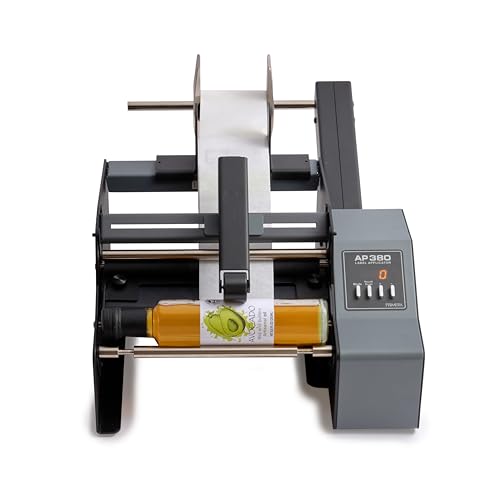
The Primera AP380 is designed for semi-automatic labeling on cylindrical containers and is known for quick setup and ease of operation. It can accurately apply one or two labels and handles up to about 1500 containers per hour, making it well-suited for small to midsize production runs. Its setup favors users who need reliable repeat labeling with minimal downtime, and it supports straightforward adjustments when container sizes change.
Consider this model if you require a higher throughput than entry-level units without stepping into full automatic labeling lines. It’s especially attractive for small manufacturers or packaging rooms that frequently switch between product SKUs. Be mindful of the footprint and power needs in your facility to ensure a smooth integration with existing lines.
Sumeve Manual Bottle Labeling Machine

The Sumeve device delivers versatile performance for all-round bottles, including glass, cans, and plastic. It’s not suited for oddly shaped or highly complex geometries, but it covers a broad diameter range (roughly 0.6 to 4 inches) and supports label widths of 1 to 5.1 inches. The extended length allows more label size options, and the metal construction adds durability. A pressing bar helps ensure the label conforms to the bottle surface, improving adhesion in varied light conditions and bottle contours.
For users prioritizing flexibility and value, this unit offers a compelling mix of size compatibility and robust build. It’s particularly effective for standard round bottles in medium-volume workflows. When planning, confirm inner label roll diameter compatibility and ensure the product shapes align with the device’s labeling approach.
YOU LIAN Automatic Round Bottle Labeling Machine

This model focuses on automatic labeling integration for round bottles, particularly suitable for setups where non-paper labels are used. It ships with the machine as a complete system, reducing installation steps. The nylon and plastic components indicate lightweight construction, but the emphasis is on straightforward automation and reliable label application. Given its non-paper label suitability, this unit is ideal for applications where durable or synthetic labels are the norm.
Pros include ease of installation and a compact footprint, which aids in tight packaging lines. Potential limitations might include compatibility with certain label materials or bottle contours, so verify label type compatibility and serviceability before committing to automation, especially if you expect rapid product changes or high-volume cycles.
mouhtfao Bottle Labeler Machine

The mouhtfao unit emphasizes stainless steel construction, promising durability and a longer service life. With 20–40 labels per minute, it offers solid efficiency for mid-range labeling tasks. A time-delay controller allows scheduling label printing, which can improve synchronization with other processes. A high-quality conveyor roller supports smooth operation, contributing to stable performance in busy lines.
Key advantages are its sturdy build, stable traction, and adjustable timing controls. It’s a practical option for bottling lines that require dependable metal hardware with predictable throughput. As with similar devices, verify compatibility with your bottle sizes and label shapes to maximize accuracy and minimize waste during operation.
TOPOWN Precise Label Applicator
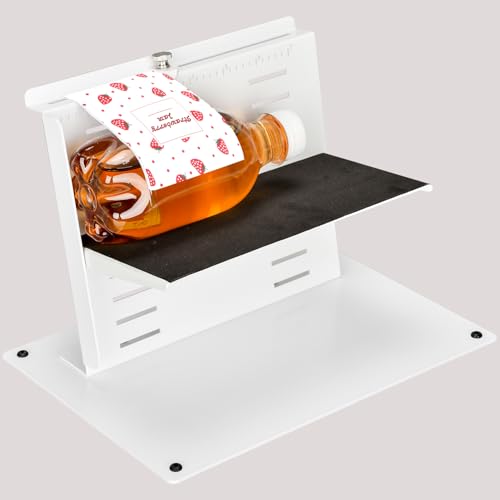
The TOPOWN tool provides a compact, manual labeling solution with a scale, designed for small businesses or makers who label products themselves. It helps place cans and bottles neatly, reducing crooked labels and improving presentation. The platform’s quick-adjust capability supports various can/bottle specifications, while non-slip rubber feet prevent movement on smooth work surfaces. This option suits production lines that require occasional labeling rather than continuous high-speed operation.
Consider this model when you need a low-cost, precise labeling method for a limited range of products. It pairs well with craft operations or test runs before committing to heavier equipment. For larger volumes, a more automated system may be more efficient, but the TOPOWN unit offers a practical entry point for meticulous label placement.
Buying Guide: Key Purchase Considerations
When choosing a bottle labeler, consider the following factors to align with your process and product needs:
- Bottle geometry and label type: Confirm that the machine handles round bottles and compatible label materials (paper, synthetic, or transparent). Some models are not suitable for transparent labels or non-round shapes.
- Throughput requirements: Determine your daily or hourly labeling needs. Semi-automatic units suit moderate runs, while automated options fit high-volume lines. Always account for changeovers between SKUs.
- Label placement accuracy: Look for sensors (such as fiber optic systems) and adjustment features that ensure consistent alignment, especially with curved surfaces or uneven bottle bottoms.
- Durability and maintenance: Aluminum or stainless steel bodies offer longevity in industrial settings. Check for wear-resistant components, ease of cleaning, and availability of replacement parts.
- Setup and versatility: Quick setup and adjustable platform or conveyors reduce downtime. Consider devices that accommodate a broad range of bottle diameters and label sizes.
- Power and space requirements: Ensure the device fits your production line’s space and electrical capacity. Some units require dedicated outlets or air lines for pneumatic components.
- Cost of ownership: Include initial purchase price, replacement labels, and potential maintenance. Cheaper units may incur higher labor costs or frequent adjustments.
In practice, facilities balancing reliability with cost often choose semi-automatic machines for mid-volume runs, paired with a plan for scaling to automatic labeling if demand rises. For brands prioritizing presentation, focus on label adhesion and alignment, as misapplied labels can impact perceived product quality. Finally, validate warranty terms and supplier support to minimize downtime in busy packaging environments.