Metal buildings often require efficient insulation to control temperature, reduce energy costs, and protect against condensation. The following selected products are designed to enhance insulation for metal buildings, including roll-up door insulations, vapor barriers, and radiant barriers. This guide highlights practical options from BlueTex, Tandefio, and SmartSHIELD to help you choose the right solutions for your space.
| Product | Brand | Approx Coverage | Notes |
|---|---|---|---|
| BlueTex Roll Up Garage Door Insulation Kit | BlueTex Insulation | Up to 150 sq ft | Designed for roll-up doors; radiant barrier for cooling interior. |
| BlueTex 2mm PRO Metal Building Insulation | BlueTex Insulation | 700 sq ft | 2mm EPE foam with aluminum foil; high radiant heat reflection. |
| Tandefio Roll up Garage Door Insulation Kit | Tandefio | 40 in x 78.7 ft roll | Complete kit for roll-up doors; strong adhesion system. |
| BlueTex Insulation Vapor Barrier 6mm | BlueTex Insulation | 300 sq ft per roll | Vapor barrier with reflective foil for condensation control. |
| SmartSHIELD -5mm Reflective Insulation | INSULATION MARKETPLACE | Varies by roll length | R15 equivalent; multi-layer radiant, vapor, and sound barrier. |
These products address common metal-building insulation needs: reducing radiant heat transfer, blocking condensation, and sealing gaps around doors and roof lines. Each item below provides a concise overview of benefits, installation considerations, and what type of metal-building scenario it best supports.
BlueTex Roll Up Garage Door Insulation Kit

The kit is purpose-built for commercial-style roll-up garage doors, functioning as a radiant barrier to cool the interior of metal buildings. Installation is designed to be straightforward, including double-sided tape, seam tape, optional hardware, and a utility knife. A key feature is aluminum foil surface that reflects up to 97% of radiant heat when installed with adequate airspace, delivering an effective “instant shade” effect at the door surface. Ideal for spaces like warehouses or shop bays with large metal doors, this option supports year-round comfort and can help reduce cooling loads when doors are frequently open or exposed to sun.
Considerations include door dimensions (up to 12′ x 12′ panels) and compatibility with existing door hardware. The kit’s foil-backed insulation creates a durable barrier that resists heat gain, contributing to more stable interior temperatures. For best performance, ensure proper air gap and clean door surfaces before applying tape. This solution pairs well with other reflective insulations for a layered approach to metal-building cooling and energy efficiency.
BlueTex 2mm PRO Metal Building Insulation
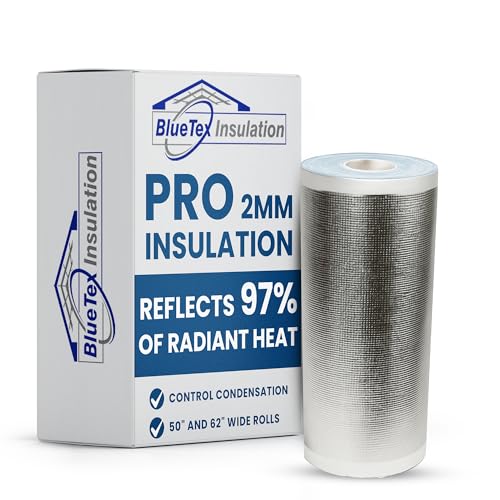
This 2mm EPE foam insulation features a single-sided pure aluminum foil layer, designed to reflect about 97% of radiant heat when installed with a proper air gap. The product also acts as a vapor barrier, helping manage condensation on metal-building interiors. Its wide 50-inch roll size (about 700 sq ft) makes it efficient for framing patterns at 4-foot intervals, while the 2-inch overlap between sheets simplifies installation and ensures full coverage across large panels. A strong option for hot climates or steel structures needing an economical radiant barrier and moisture control combined in one layer.
When planning installation, consider the required air gap and whether you’ll pair this with a separate vapor barrier seam tape. The roll’s width and coverage are well-suited for red-iron purlins and typical metal framing, helping reduce radiant heat transfer to indoor spaces and potentially lowering HVAC loads over time.
Tandefio Roll Up Garage Door Insulation Kit

This complete installation kit is tailored for roll-up doors, with a white reflective foam plus aluminum foil surface to act as a radiant barrier. It includes long double-sided tape, seam tape, screws, washers, and a utility knife, enabling a straightforward fit for 10′ x 10′ or larger doors. Its purpose is to cool the space behind the door during summer while retaining warmth in winter, supporting more stable building temperatures. The kit’s length (about 164 feet of tape and 131 feet of seam tape) helps ensure durable adhesion across extensive door surfaces, reducing the likelihood of peeling over time.
Installation considerations include door width compatibility and the need to trim or customize for nonstandard door heights. This option provides a practical, all-in-one solution for improving energy performance around roll-up doors in metal buildings, especially in hot climates or warehouse environments where door cycles are frequent.
BlueTex Insulation Vapor Barrier 6mm

BlueTex’s 6mm vapor barrier combines high-density XPE foam with a reflective aluminum foil to manage radiant heat while controlling condensation. The product is offered in rolls with 50″ and 62″ widths and provides substantial coverage—300 sq ft per roll—making it suitable for larger metal-building projects. Users can pair this vapor barrier with BlueTex’s seam tape for enhanced sealing and improved condensation resistance. The foam’s density supports durability and resistance to moisture, while the foil layer contributes to radiant heat reflection, supporting energy efficiency in hot climates or metal structures with significant sun exposure.
Practical considerations include roll width selection based on wall or roof panel layouts and ensuring a clean, dry surface prior to installation. This product is well-suited for new constructions or retrofit projects where moisture control and radiant heat reduction are priorities for interior comfort and long-term building longevity.
SmartSHIELD -5mm Reflective Insulation

SmartSHIELD combines insulation, radiant barrier, vapor barrier, and sound barrier in a single product, offering an all-in-one solution with a claimed 95% radiant energy reflection and an R-value up to 15.67 with one layer. The white, no-paint finish provides a clean aesthetic and eliminates the need for additional surface treatments. This option is suitable for metal buildings where a compact, all-encompassing insulation layer is preferred, potentially reducing the need for separate vapor and radiant barriers.
Practical considerations include evaluating the thickness and overall footprint of the material relative to roof and wall assemblies. While the product is designed to deliver multiple protective functions in one, installers should verify compatibility with existing sealing tapes and check for any layering requirements when integrating with other insulation products in thermal performance optimization.
Buying Guide: Key Purchase Considerations
- Radiant heat management: Choose reflective foils or radiant barriers to minimize heat gains in sun-exposed metal buildings, especially for hot climates or spaces with frequent door cycling.
- Condensation control: Vapor barriers help prevent moisture buildup on interior surfaces, which is critical to prevent corrosion and mold growth in metal structures.
- Door-specific insulation needs: For roll-up doors, purpose-built insulation kits provide easier installation and better adhesion versus generic boards.
- Coverage and fit: Review roll widths, lengths, and recommended framing spacing to ensure full coverage with minimal seams; overlapping edges can improve performance.
- Durability and weatherproofing: Look for products with UV resistance, moisture tolerance, and compatibility with existing roofing and siding materials.
- Ease of installation: Consider whether the kit includes tapes, seam materials, and tools, which can simplify DIY projects and reduce installation time.
- Maintenance and cleaning: Materials that resist moisture and are easy to clean help maintain long-term performance in industrial settings.
- Cost vs. performance: Weigh installation complexity and expected energy savings against upfront costs; layered approaches (radiant plus vapor barriers) can yield better results in some cases.
- System integration: For best results, match insulation products (radiant, vapor, and sound barriers) to the existing building envelope and HVAC design.
- Safety and compliance: Ensure products meet local building codes and fire-safety guidelines relevant to your facility.