The right ingot mold makes copper casting safer, cleaner, and more precise. This guide highlights five top ingot molds that handle copper and other non-ferrous metals, balancing heat resistance, ease of use, and durability. Whether you’re refining, melting, or pouring copper into custom shapes, these options deliver consistent results across hobbyist and semi-professional setups.
| Product | Brand | Type | Capacity |
|---|---|---|---|
| Nelyrho 100 oz Cast Iron Loaf Bar Ingot Mold | Nelyrho | Cast Iron Loaf Mold | 100 oz |
| Bonbo 100 oz Gold Bar Loaf Ingot Mold | Bonbo | Cast Iron Loaf Mold | 100 oz |
| Nelyrho 50 oz Cast Iron Loaf Ingot Mold | Nelyrho | Cast Iron Loaf Mold | 50 oz |
| Molten Masters Graphite Ingot Mold, 5 kg | Molten Masters | Graphite Ingot Mold | 5 kg |
| Nelyrho 4 Pieces 1 kg Graphite Ingot Molds | Nelyrho | Graphite Ingot Molds (Set) | 1 kg each |
Nelyrho 100 oz Cast Iron Loaf Ingot Mold
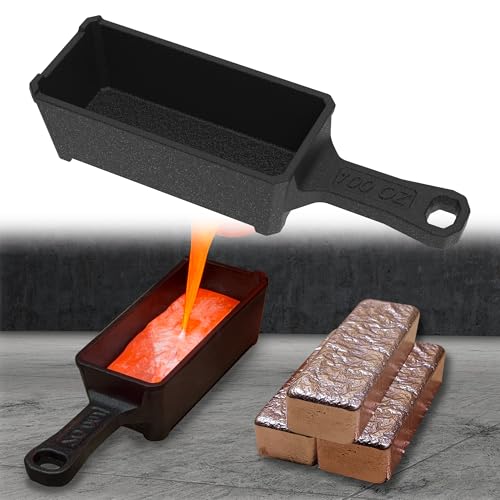
Capacity and construction are suited for copper and other non-ferrous metals. This cast iron mold holds up to 100 troy ounces and measures roughly 6.26″ x 2.86″ x 1.94″. Its design emphasizes high-temperature resistance and solid thermal conductivity to support repeated melting and casting tasks. The wide application notes it can handle gold, silver, copper, aluminum, brass, iron, and more, and can even function as a graphite crucible melting solution when needed. Built from premium cast iron, it emphasizes durability and heat tolerance for longer use between rests.
Bonbo 100 oz Gold Bar Loaf Ingot Mold

Widely used for smelting, casting, pouring, melting, and refining various non-ferrous metals, this 100-ounce mold emphasizes an upgraded handle design that improves control and reduces the risk of burns during operation. It features slight wall tapered sides to ease removal of ingots from the mold, and a structural steel build noted for smooth release—though it is not a graphite cavity, removal can be achieved by inversion when necessary. Appropriate for copper casting alongside gold, silver, and other metals.
Nelyrho 50 oz Cast Iron Loaf Ingot Mold

This 50-ounce option brings a compact choice for smaller copper batches or practice ingots. It shares the same cast iron construction noted for good thermal conductivity and high-temperature endurance. Its dimensions balance portability with a workable cavity for standard bar shapes, making it ideal for hobbyists refining copper or testing new alloy formulations before scaling up to larger ingots.
Molten Masters Graphite Ingot Mold, 5 kg

Graphite ingot molds offer excellent purity and high-temperature resilience, making them suitable for gold, silver, copper, aluminum, and brass. This 5 kg mold features a premium graphite composition with low ash content, preserving metal purity during melting. Its durable design supports repeated use in laboratories, jewelry making, and metal processing environments, with dimensions tailored for efficient melt and pour cycles.
Nelyrho 4 Pieces 1 kg Graphite Ingot Molds

This pack includes four identical graphite ingot molds, each holding 1 kg. Made from high-density, fine-grained graphite (99.9%), these molds are designed for high-purity outcomes with less ash interference. They provide a reliable option for refining copper ingots on a smaller scale, with easy release by inversion. The set supports consistent batch work and is well-suited for laboratories and small-scale metal processing tasks.
Hihitomorrow 100 oz Heavy Duty Ingot Mold

This heavy-duty steel ingot mold is designed for high-capacity use, holding up to 100 troy ounces of molten metal. It features a tapered design to simplify removal of cooled ingots and prevent sticking, which helps maintain a smooth workflow during copper casting. The construction emphasizes durability and anti-corrosion treatment to endure repeated high-temperature cycles in industrial or workshop settings.
Buying Guide: Key Purchase Considerations For Copper Ingot Molds
When selecting an ingot mold for copper, consider capacity, material, ease of release, heat resistance, and maintenance. Cast iron molds offer durability and strong heat conduction, suitable for longer casting sessions, while graphite molds excel in purity and smooth release for delicate metals. For larger copper batches, higher-capacity molds reduce the number of pours, but ensure your furnace and pouring setup can safely handle the weight. Molds with tapered edges or designed release features lessen the risk of damaging ingots during removal.
Factors to compare across options include:
- Capacity: Match to typical batch sizes; copper ingots often require substantial weight per bar.
- Material: Cast iron is rugged and heat-stable; graphite offers purity and lower ash interaction but requires careful handling to avoid chipping.
- Release design: Tapers and handles can prevent sticking and reduce burn risk during handling.
- Thermal performance: Materials with excellent thermal conductivity help even cooling and solidification.
- Durability and maintenance: Consider corrosion resistance, ease of cleaning, and whether coatings or treatments are needed.
Use cases vary from hobbyist experimentation with small copper ingots to repeated, higher-volume melting in a workshop. If you plan frequent changeovers or require quick turnover between ingot sizes, a set like the graphite options paired with a robust steel or cast iron option can offer flexibility. Always align your mold choice with your furnace capabilities, safety practices, and the specific copper alloy properties you work with.