Industrial variable speed screw compressors optimize energy use while delivering stable, high-quality compressed air. This guide highlights five top models suited for workshops and manufacturing environments, focusing on power, voltage compatibility, airflow, and maximum pressure. Learn what makes each unit a strong choice and how they compare for varying demand scenarios.
| Product | Brand | Voltage | Air Flow | Max Pressure | Notes |
|---|---|---|---|---|---|
| LRSD 10HP Rotary Screw Air Compressor | LRSD | 480V / 60Hz | 37.43 cfm | 125 psi | 3-phase with VSD |
| Bilowk 460V 10HP Screw Compressor | Bilowk | 460V / 60Hz | 39 cfm | 120 psi | 3-phase, soft start |
| HPDAVV 10HP Rotary Screw Compressor | HPDAVV | 230V / 60Hz (1ph or 3ph) | 39 cfm | 115 psi | VSD, flexible installs |
| LRSD TK22-8 30HP Rotary Screw | LRSD | 480V / 3P | 123 cfm | 125 psi | With refrigerated dryer |
| DCYL 7.5HP Movable Screw Compressor | DCYL | 230V / 60Hz (1ph) | 38 cfm | 120 psi | 30 gal tank, portable |
LRSD 10HP Rotary Screw Air Compressor

The LRSD unit delivers 10 horsepower with a 7.5KW motor designed for 480V/60Hz three-phase power. It produces about 37.43 cfm and a maximum of 125 psi. The inverter-powered variable frequency drive reduces energy use by adjusting motor speed to air demand, promoting efficiency in thermal processing, automotive wash bays, and general manufacturing. A compact footprint simplifies installation in space-constrained workshops, while the three-phase design optimizes peak performance for continuous operations.
Bilowk 460V 10HP Variable Speed Compressor
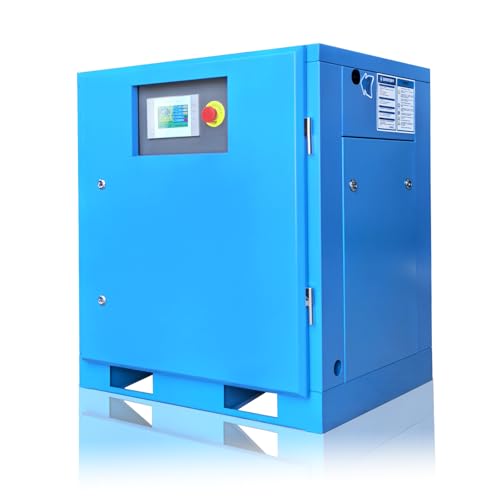
This Bilowk model operates at 460V/60Hz with 39 cfm output and a 120 psi max. It uses a soft-start inverter to minimize startup surges, stabilize pressure, and improve energy efficiency by modulating speed according to demand. It’s designed for quick installation and straightforward maintenance, making it suitable for metalworking shops, painting bays, and assembly lines with fluctuating air needs.
HPDAVV 10HP Universal Variable Speed Compressor

HPDAVV offers 10HP (7.5KW) with 230V input that supports 1ph or 3ph configurations and provides about 39 cfm at up to 115 psi. The permanent magnet VSD reduces operating costs when full capacity isn’t required, adjusting speed to actual air demand in varied processes such as chemical processing, electronics manufacturing, and textile finishing. It’s versatile for installations where single-phase power is the primary supply but three-phase options remain viable if needed.
LRSD TK22-8 30HP Rotary Screw Compressor

Featuring 30HP (22KW) at 480V three-phase, this unit delivers 123 CFM at 125 psi and includes a refrigerated dryer for moisture control. The variable speed drive optimizes energy use by matching output to air demand, reducing wear and downtime. This model is well-suited for high-demand continuous operations, large tooling setups, and production lines where consistent pressure and dry air are critical.
Dvasovio 20HP Fixed/Variable Dual-Mode Compressor
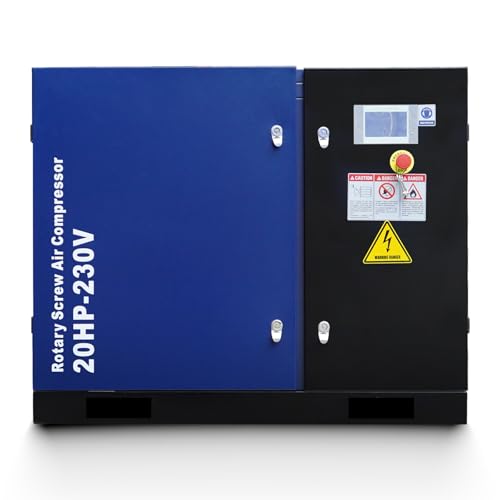
This 20HP unit provides 74 CFM at 125 psi, with a 230V 3-phase supply. It uses direct coupling between motor and airend to minimize energy losses and maintenance. A high-quality filtration and oil separation system helps reduce oil content in the output air, while the design supports steady performance under heavy use. It is particularly suitable for manufacturing floors with heavy pneumatic tools and continuous production needs.
Bilowk 10HP Single-Phase Variable Speed Unit
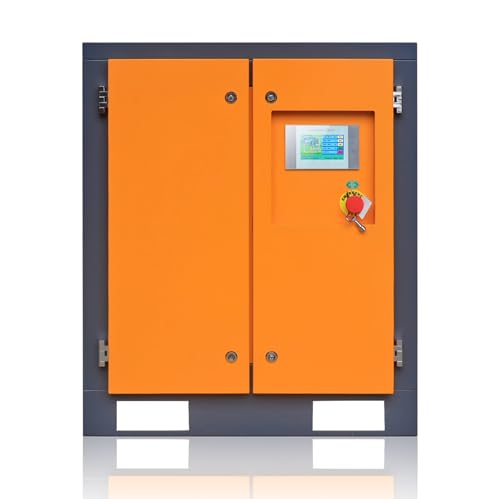
This model covers 208-230V single-phase operation with 39 CFM at 120 psi and a 1/2” output. It emphasizes energy efficiency through intelligent microcomputer control and an automatic loading/unloading cycle. The design supports quick startup, reduced noise, and continuous operation in environments where single-phase power is the norm and compact footprint matters.
Buying Guide
Key considerations when choosing a variable speed screw compressor include motor power, voltage compatibility, and three-phase versus single-phase support. Higher horsepower generally yields greater airflow (CFM) and pressure (psi), but the energy savings hinge on the compressor’s ability to match output to demand, typically via a variable frequency drive (VSD).
Capacity matching is essential: evaluate peak versus average air usage to prevent oversizing, which wastes energy, or undersizing, which leads to tool downtime. A soft-start feature reduces inrush currents and wear, while integrated dryers and filtration improve air quality and downstream equipment longevity.
Maintenance considerations matter: look for accessible filter elements, oil separators, and straightforward servicing schedules. Some units offer dual powering options (1ph or 3ph) to fit diverse facility electrical layouts. Mobility and installation ease can matter in smaller shops.
Noise, footprint, and alignment with your workflow are additional factors. For environments with fluctuating demand, a true VSD unit that modulates speed with real-time air use offers the most energy savings. For steady, high-volume tasks, larger fixed-speed units with efficient cooling and robust compressors can be a better long-term investment.
Finally, consider the availability of aftermarket parts and service networks. Choosing a reputable brand with accessible support helps minimize downtime and extends the life of the compressor system.